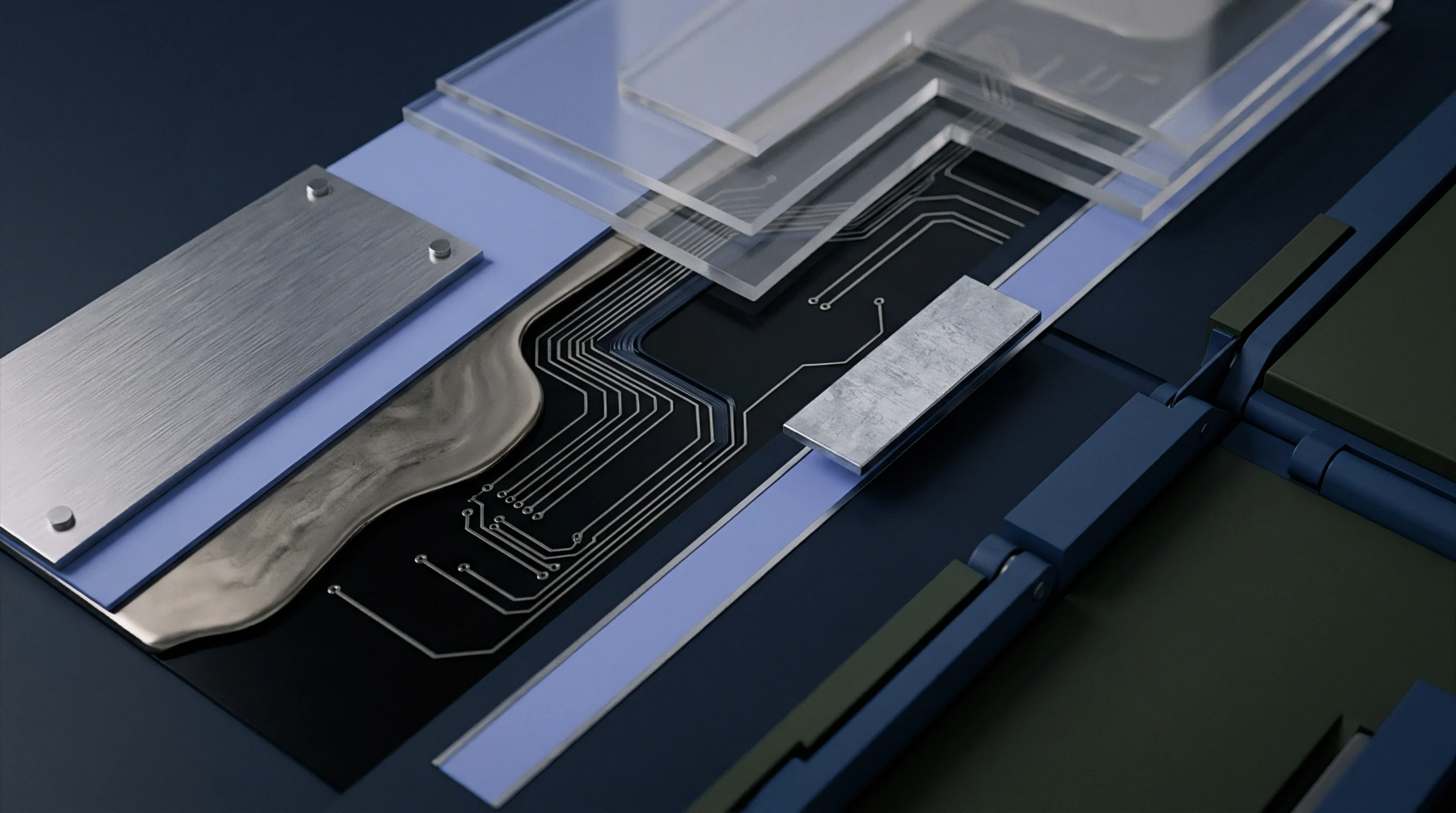
Mechanical Pressure
Hydraulic press closure during multi-layer board fabrication defines laminate compression, determining the consolidation of pre-preg and copper foil layers into a rigid structural composite. Precise tonnage applied at elevated temperatures forces liquid resin to wet glass fiber reinforcement completely, eliminating trapped air pockets that cause delamination during subsequent thermal stress. Automated controllers regulate platen parallelism and ramp rates to prevent resin starvation at board edges while maintaining uniform dielectric thickness across the entire panel area.
Optical inspection systems deployed after cooling detect internal voids and thickness anomalies by measuring acoustic wave propagation speed through the pressed panel. Operators adjust pressure profiles based on resin flow characteristics measured by rheometer tests prior to production runs. Complete resin cross-linking depends on holding the target force until exothermic reactions finish fully within the inner layers.
Physical Boundary
Maximum allowable pressure thresholds protect internal circuit traces from shear displacement and copper foil wrinkling during the consolidation cycle. Tooling pins maintain precise layer alignment while lateral forces push excess resin outward into designated flash gutters. Excessive tonnage damages fragile glass fabric bundles and reduces dielectric spacing below electrical performance limits, while insufficient force leaves microscopic voids that trap plating chemistry during subsequent through-hole processing.
Automated sensors monitor platen deflection continuously to compensate for thermal expansion of steel press plates during long production shifts. Thermal oil circulating through internal channels maintains consistent platen temperature distribution within tight tolerances to ensure even curing speeds across large panel formats.
Electrical Consequence
Inner layer impedance stability relies directly on the uniform resin thickness established during the initial pressing operation. Dielectric constants vary predictably when resin content remains tightly controlled between adjacent copper planes, preventing signal attenuation and skew in high-speed digital circuits. Post-press microsection analysis verifies that copper weight reduction meets specification limits without excessive thinning at circuit corners.
Final acceptance testing on finished printed circuit boards confirms that structural consolidation prevents moisture absorption and subsequent blistering during lead-free solder reflow assembly.