Positioning Measurement
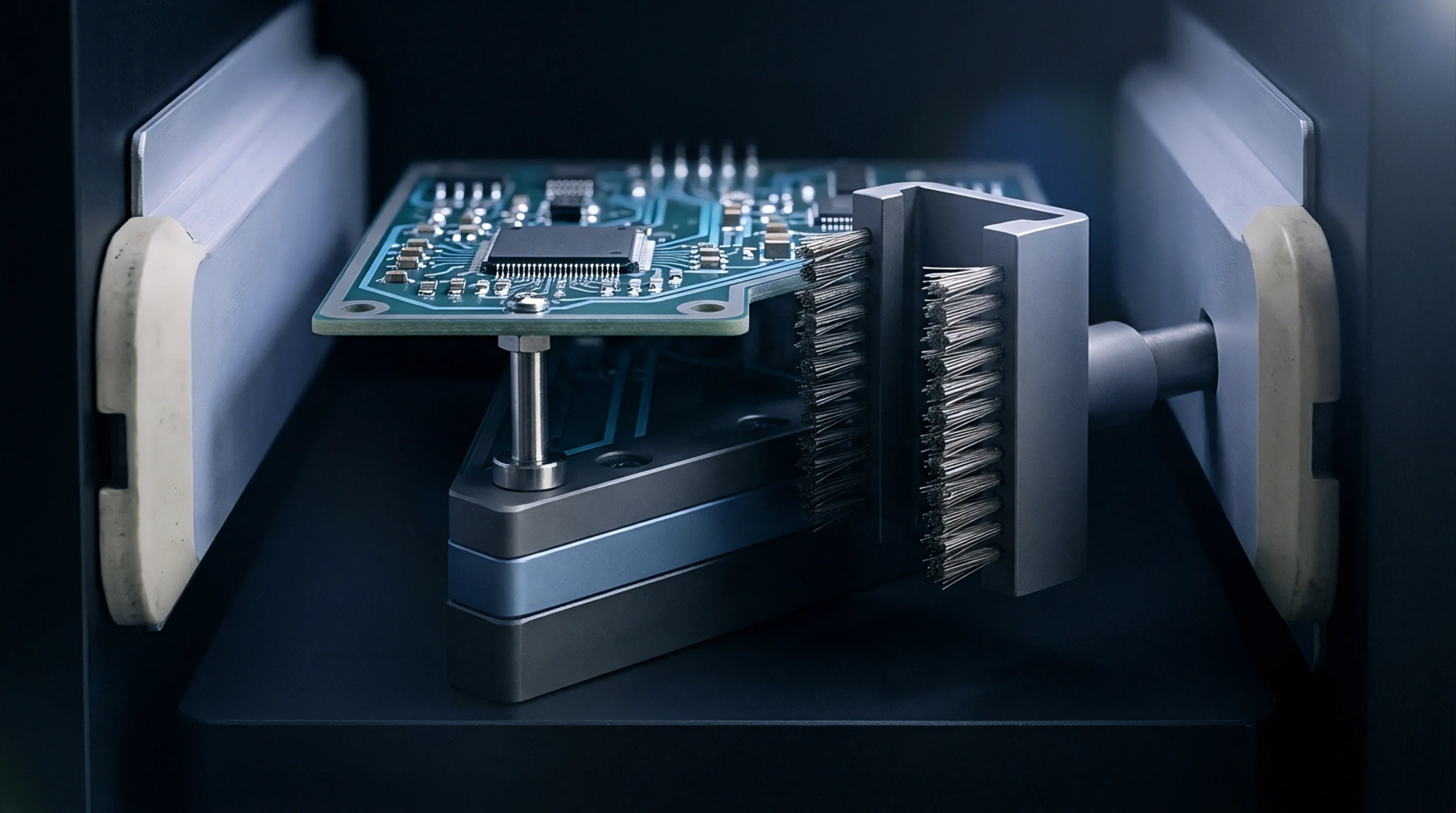
Absolute optical or inductive scales track physical displacement across high-precision machine axes by converting translational motion into discrete electronic coordinate signals. Linear encoders provide the feedback data necessary for closed-loop motion control during board fabrication, specifically enabling the microscopic accuracy required for drill positioning or pick and place alignment. These devices detect minute variances in slide movement while rejecting vibration or mechanical hysteresis that otherwise degrades registration during multi-layer PCB registration processes.
High-resolution optical sensors rely on a photo-detector array reading a glass grating to verify location, while inductive types operate through electromagnetic coils detecting variations in a ferromagnetic target. Accurate motion depends upon the signal integrity provided by these modules as the system compensates for thermal expansion or mechanical wear in the drive assembly. A single bit of electronic noise at the interface disrupts the entire trajectory loop, causing catastrophic head collisions or misaligned hole drilling on the substrate surface.
Calibration Requirement
Precise installation demands proper alignment of the reading head relative to the reference track to maintain the specified air gap. Deviation beyond the manufacturer limit creates a signal loss or intermittent errors during high-speed travel across the machine bed. Assembly personnel verify this gap using shims or digital dial gauges to ensure the gap remains constant throughout the entire travel length.
Periodic maintenance protocols require cleaning the scale surface because debris or dust particles block the light path, leading to erroneous counts or phantom positioning offsets. Technicians perform a homing routine to re-establish the zero reference point after power cycles to ensure that physical coordinates align with the software origin.
System Integration
Controller logic processes the output pulses to determine speed and direction through quadrature decoding or serial communication protocols. These sensors function as the bridge between software commands and physical machine execution. Reliability depends on shielding the cable assemblies from electrical interference generated by nearby servo motors or high-current switching components.
Grounding the sensor housing prevents common-mode noise from entering the control logic and corrupting the position state. Stable feedback loops depend on these components for reliable performance.