Resin Shift
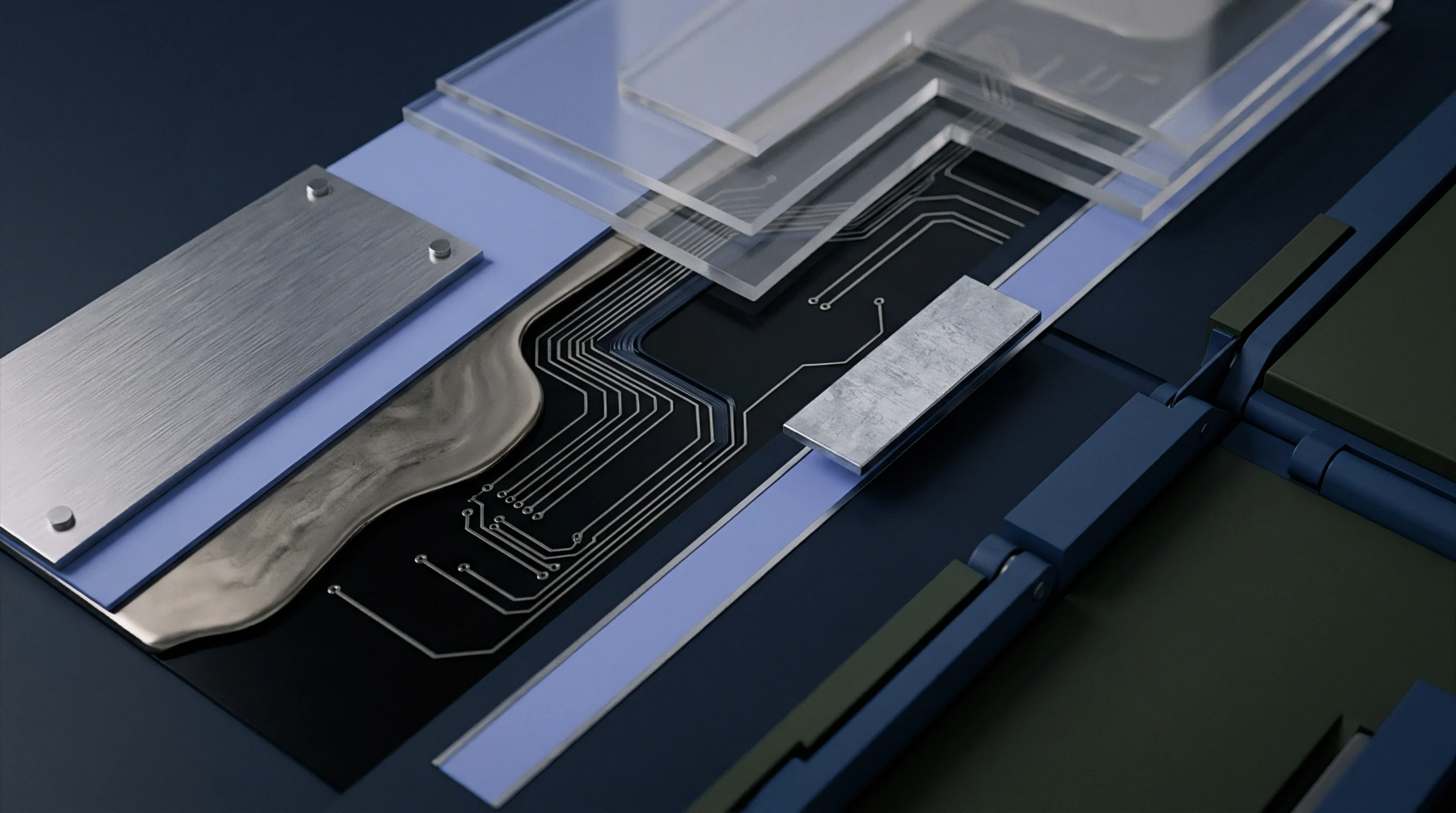
Dielectric degradation during thermal excursions describes loss tangent drift within high frequency printed circuit board laminates. Ceramic loaded hydrocarbon matrices experience progressive polymer chain relaxation when exposed to repeated infrared reflow cycles. Substrate molecular stability determines whether energy dissipation factors remain bounded within specified electrical performance margins.
Unbonded filler interfaces expand differentially under localized heat loads, creating microscopic voids that trap ambient moisture inside the dielectric core. Moisture absorption accelerates molecular dipole rotation under alternating electromagnetic fields, producing higher thermal output during operational signal transmission. High density interconnect fabricators monitor baseline dissipation factor shifts before committing multilayer stacks to final assembly operations.
Automated optical inspection equipment cannot detect internal molecular reorganization, requiring specialized resonant cavity perturbation tests on accompanying test coupons.
Thermal Gradient
Temperature differentials across thicker laminate panels induce uneven crosslinking density variations during laminate pressing. Polymer chains near outer copper planes cure faster than interior resin volumes due to differing thermal conductivity rates. Dielectric anisotropy develops when differential curing creates localized density gradients within the pressed board architecture.
Subsequent thermal processing reactivates unpolymerized monomer fractions, shifting the baseline dissipation factor upward across specific board zones. Signal propagation delays correlate directly with these localized dielectric constant variations established during initial material lamination. Process engineers adjust press temperature profiles to minimize structural asymmetry between top and bottom copper layers.
Performance Limit
Operational frequency thresholds dictate acceptable dissipation factor drift margins before insertion loss compromises signal integrity. High speed digital channels operating beyond twenty gigahertz exceed normal attenuation tolerances when underlying substrate polarization losses increase. Circuit designers apply safety margins during preliminary simulation phases to accommodate potential dielectric degradation expected over operational service lifetimes.
Final acceptance testing verifies that completed assemblies maintain targeted insertion loss parameters under worst case thermal aging conditions. Substrate suppliers guarantee specific dissipation factor stability metrics only when processing temperatures remain below recommended glass transition limits.