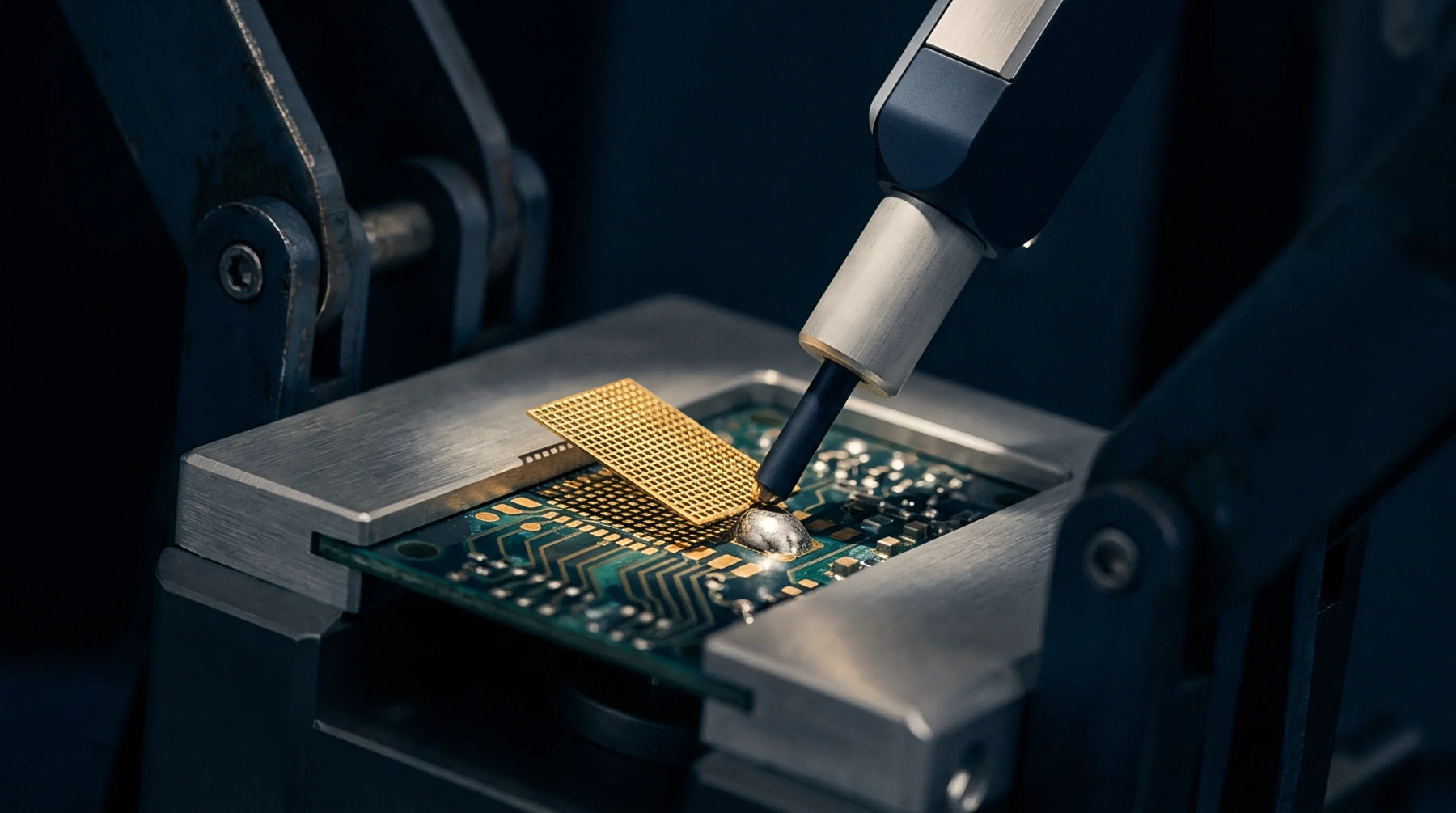
Continuity Validation
Via integrity inspection measures the electrical quality of plated through holes and microvias with milliohm precision. Micro-resistance hole testing detects subtle defects in the copper barrel that standard continuity checks might overlook. This technique is used to ensure the reliability of interconnections in dense, multilayer circuit boards.
Plating Quality
Small cracks or thin spots in the plating increase the electrical resistance of the vertical interconnect. During micro-resistance hole testing, a precise four-wire Kelvin measurement eliminates the influence of lead resistance and contact points. If the copper thickness in a via is uneven, the resistance value rises above the calculated baseline for a solid barrel.
This screening identifies potential failures before the board is populated with expensive components.
Thermal Cycling
Reliability assessments often use this method to monitor the degradation of joints during environmental stress. Micro-resistance hole testing is performed before and after thermal shock to see if the expansion of the resin has caused the copper to fracture. A change in resistance of more than 10 percent usually indicates a major structural weakness in the via.
This data helps engineers adjust the drilling and desmear processes to improve the bond between the copper and the inner layers. High density interconnect designs rely on this precision to maintain performance over the life of the product.