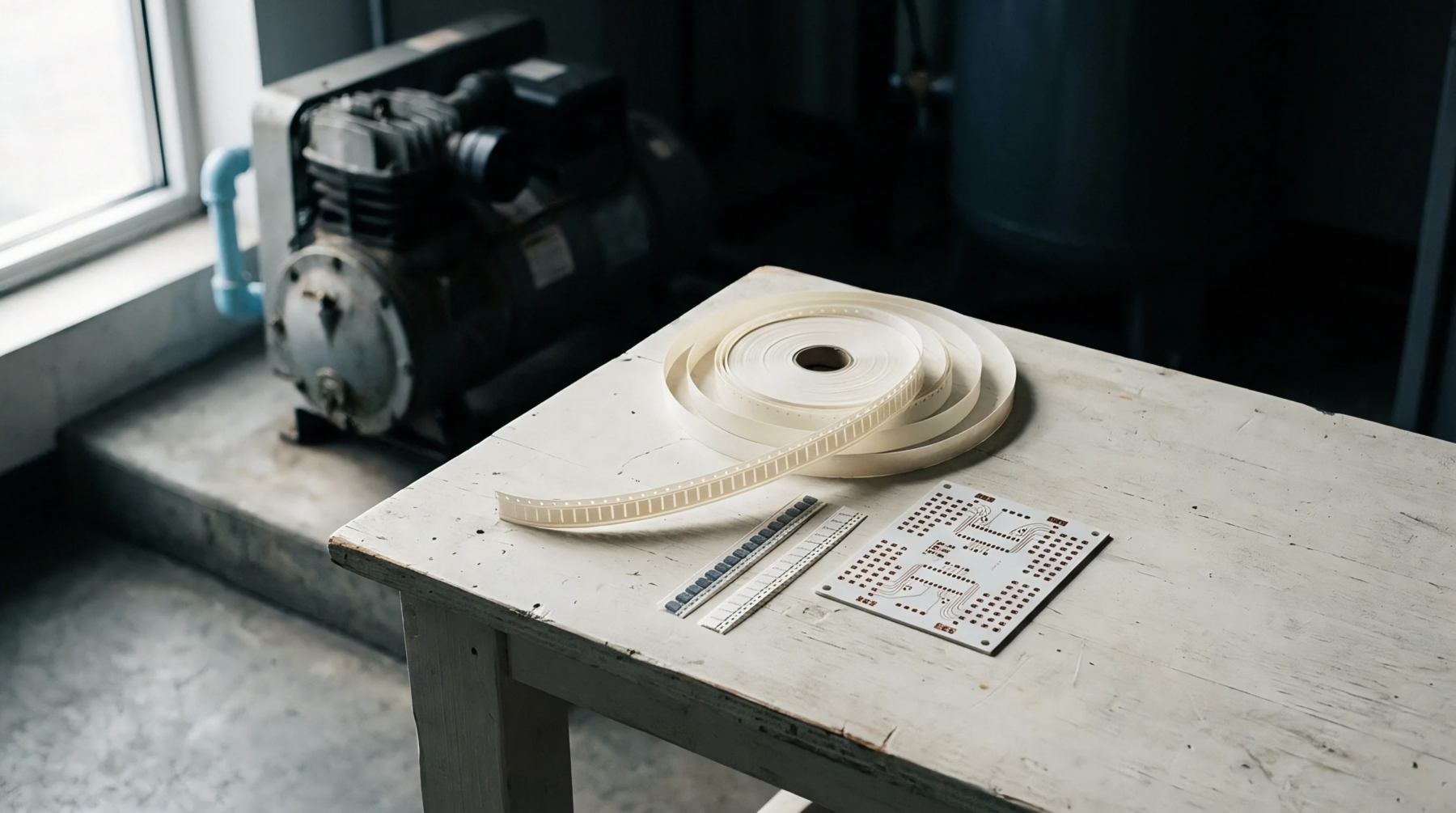
Laminate Fracturing
Microscopic fractures that develop in the resin matrix or along the reinforcement fibers of a printed circuit board represent a subtle form of material degradation. Repetitive thermal or mechanical stresses trigger microcracking, breaking the molecular bonds in the epoxy. This damage appears as tiny voids that do not immediately disrupt electrical continuity but weaken the structural integrity of the board.
It typically originates around points of high stress concentration, such as plated through-holes or sharp trace corners, where different expansion rates force the polymer to crack. Left unaddressed, these microscopic voids coalesce into larger fissures that can sever fine copper traces running through the inner layers.
Stress Generators
Localized tension arising from the expansion mismatch between copper, glass, and epoxy drives the growth of internal fractures. During reflow soldering, the temperature can exceed the glass transition point of the resin, inducing large volumetric expansion. The copper barrels of vias resist this expansion, creating shear loads that initiate cracks in the surrounding epoxy.
Mechanical strain from panel separation or connector insertion similarly triggers microcracking in fragile board areas, especially where fiber bundles are sparse.
Reliability Risk
Internal fissures increase the risk of board failure over extended operating lifetimes. These small cracks act as conduits for humidity, allowing moisture and chemicals to penetrate deep into the laminate. This ingress of moisture can lead to copper migration, resulting in short circuits.