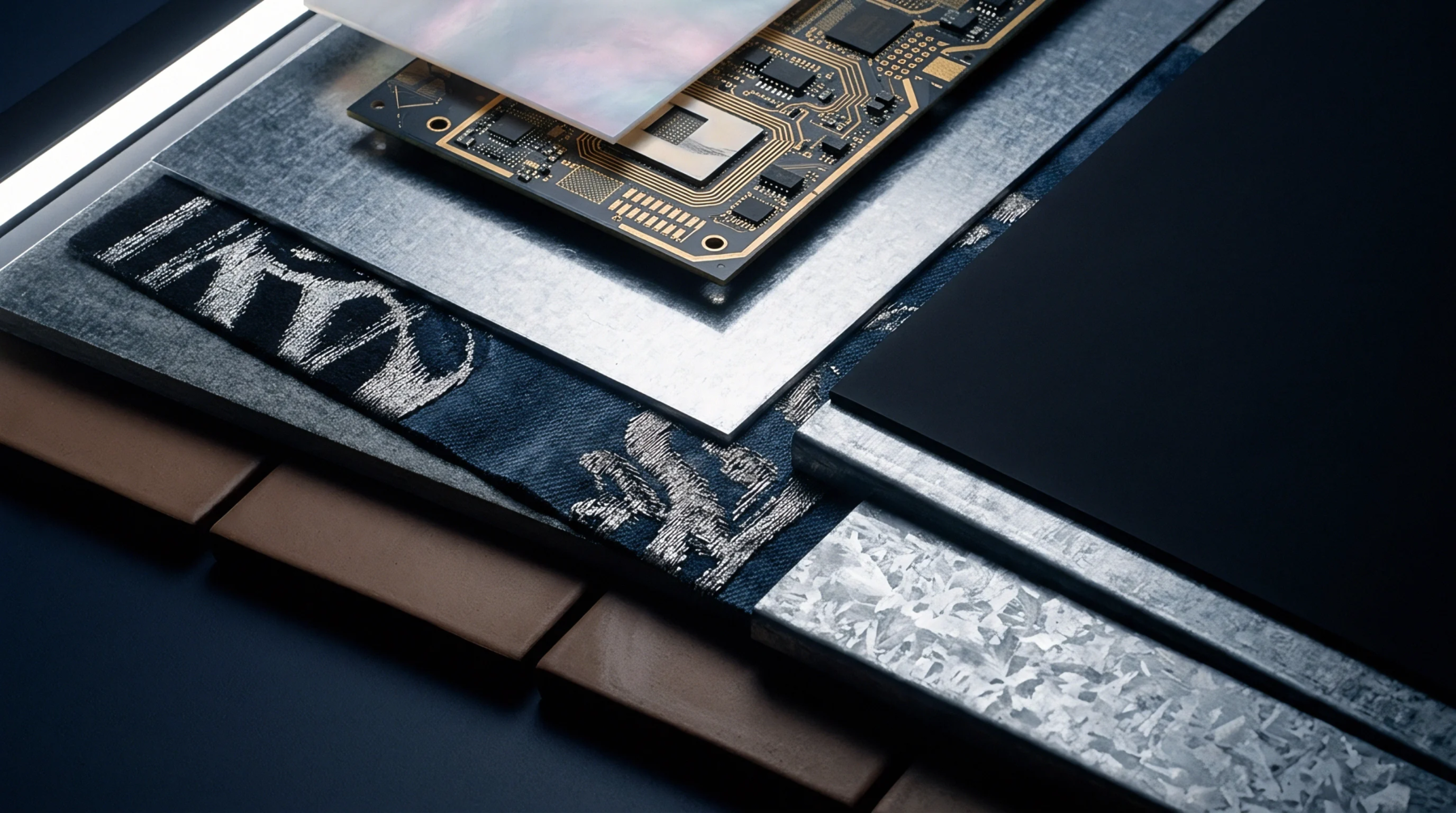
Thermal Consolidation
Heat and hydraulic pressure merge individual prepreg sheets and copper foils into a single solid rigid body during multilayer board lamination. Hydraulic presses apply uniform vertical force up to four hundred pounds per square inch while heated platens raise internal core temperatures above one hundred eighty degrees Celsius. Epoxy resin matrices inside the glass fabric first soften into a low viscosity fluid, flow freely to fill microscopic voids around etched internal circuitry patterns, and subsequently crosslink into an infusible thermoset polymer network.
Resin Rheology
Viscosity reduction profiles dictate whether trapped air pockets escape completely before the polymer gels under load. Rapid temperature ramps cause premature resin hardening that traps volatile reaction byproducts inside dielectric layers, while sluggish thermal cycles allow excessive resin to bleed out past the board edges and starve internal tracks of required dielectric thickness. High glass transition temperature materials demand precise dwell times at intermediate temperatures to achieve uniform molecular weight advancement across the entire panel area without inducing excessive warpage.
Dimensional Stability
Differential thermal expansion rates between woven glass fiber bundles, copper planes, and curing epoxy systems generate internal mechanical stresses during cool down phases. Automated optical inspection equipment measures post etch and post lamination feature shifts to verify that positional registration between outer layer artwork and buried inner layer pads remains within positional tolerances specified by IPC standards. Post lamination bake cycles relieve residual elastic strain distributions before subsequent mechanical drilling operations begin.