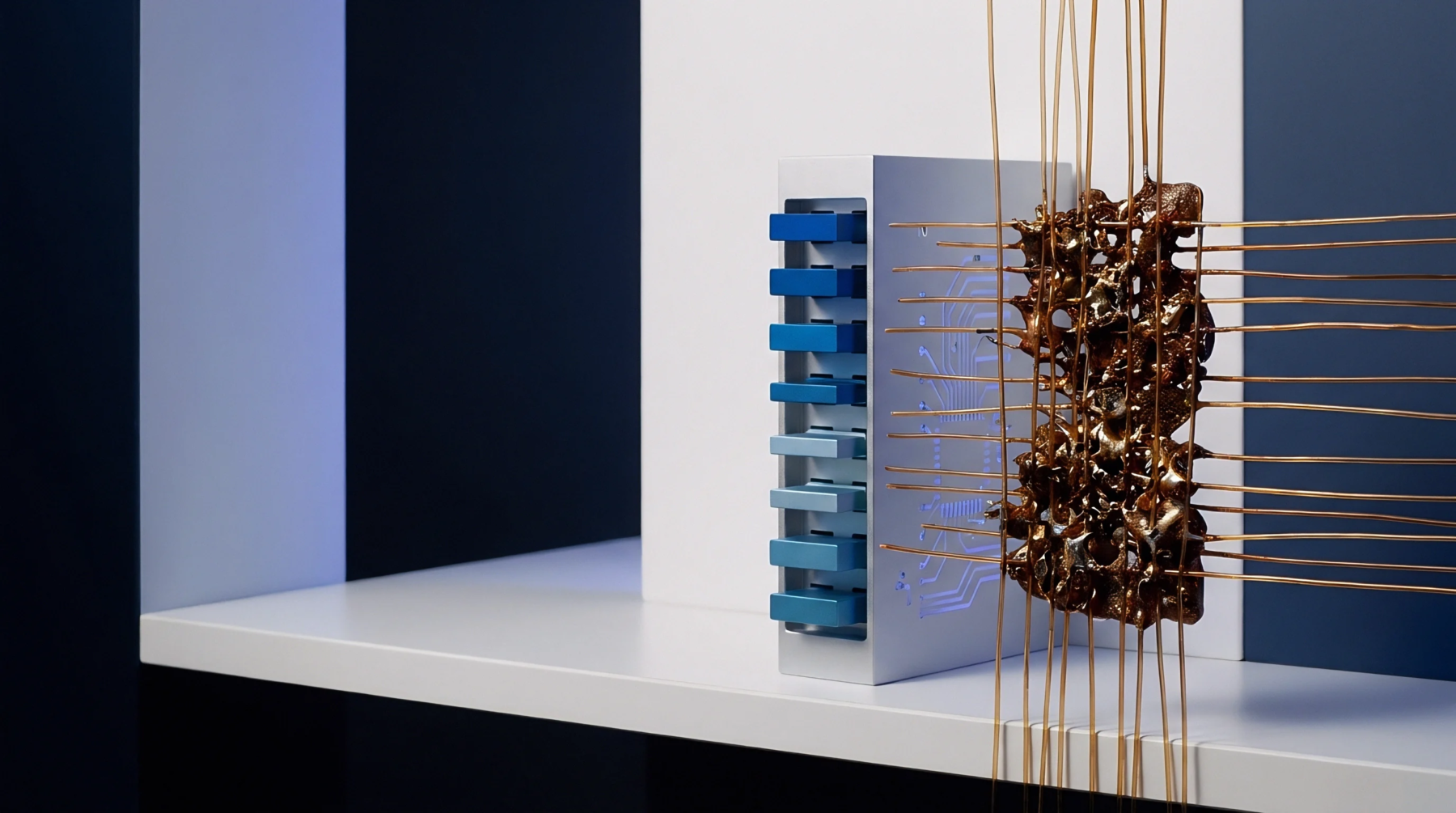
Light Path Deviation
An optical phenomenon describes the deflection of light rays as they pass through medium layers with varying refractive indices. In high-temperature optical metrology, optical ray bending occurs when intense heat from a heating chamber creates air density gradients above the inspected board. This deflection alters the perceived position of the board features on the sensor array, introducing measurement errors.
Thermal Distortion Effect
As the air directly above a hot printed circuit board heats up, its density decreases, causing a corresponding drop in its refractive index relative to the cooler air higher up. Light passing through this non-uniform thermal boundary layer curves away from its original straight path, a behavior known as optical ray bending. This distortion is particularly problematic during real-time warpage measurements because the apparent displacement of the substrate is exaggerated or masked by the bent light.
To minimize this effect, inspection systems often use active air circulation or specialized chamber designs to keep the air temperature uniform.
Metrology Error Correction
Correcting for this deviation involves using mathematical calibration algorithms that account for the temperature profile of the air. These software corrections restore the accuracy of the measurements without requiring physical modifications to the sensor system. This process ensures that warp measurements remain reliable even at high reflow temperatures.