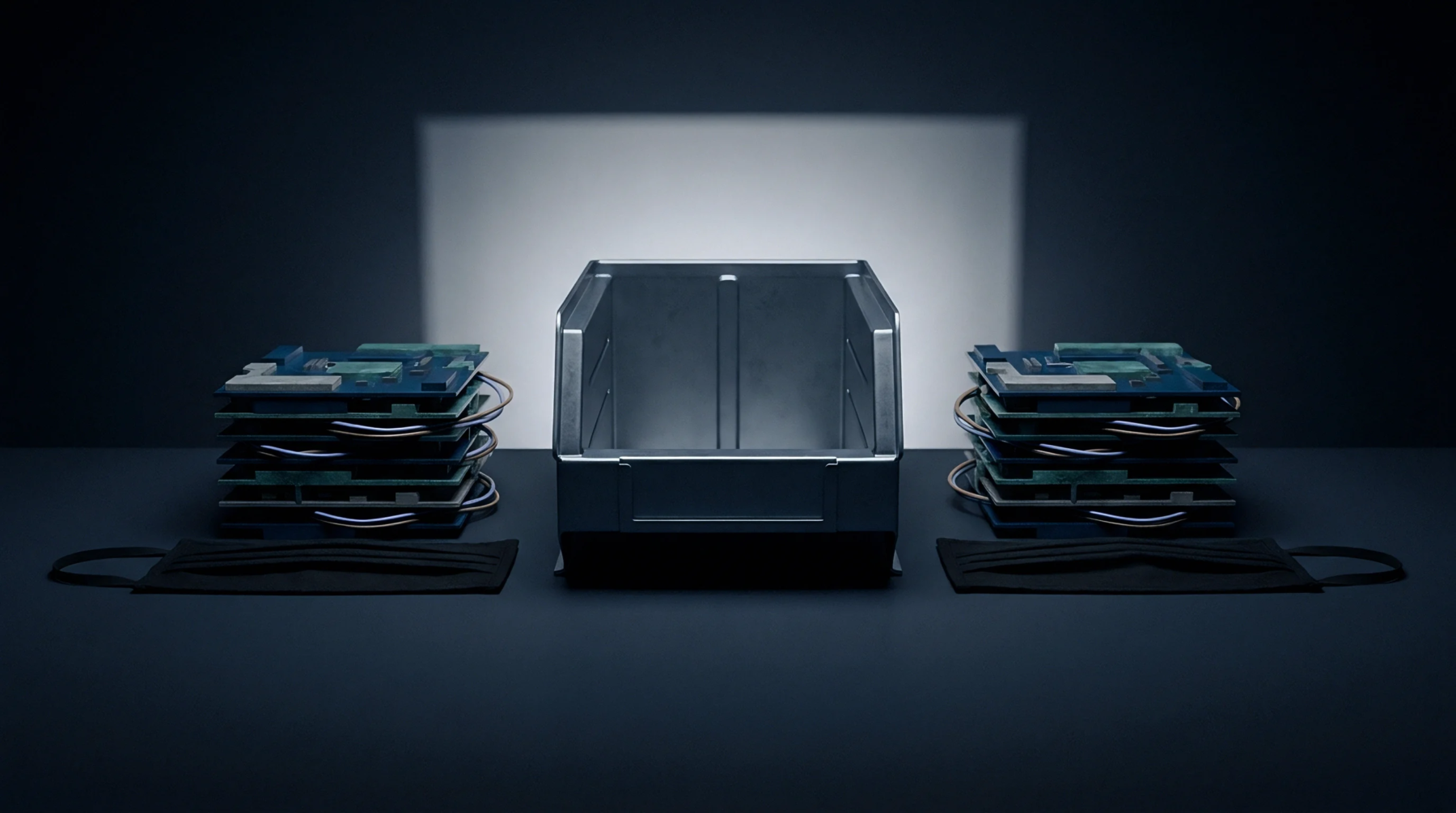
Dimensional Contraction
Pre-baking substrate core materials against standardized baseline measurements determines permanent length reductions caused by resin curing and moisture loss. Dimensional contraction, observed as panel thermal shrinkage, occurs when exposed polymer dielectrics undergo elevated temperature baking before or during panel fabrication. Unclad flexible cores contract significantly along machine and transverse grain directions when internal stresses release during thermal cycles.
Dimensional Hysteresis
Thermal processing drives out absorbed moisture and relieves residual manufacturing stresses stored inside polyimide or epoxy resins. As temperature rises beyond the material glass transition point, polymer chains relax into more compact spatial configurations. Permanent dimensional loss remains after panels cool back to room temperature, causing total panel dimensions to contract relative to initial raw sheet measurements.
Material manufacturers publish coefficient of thermal shrinkage values, but actual dimensional changes vary depending on foil coverage and laminate thickness.
Registration Recovery
Uncontrolled dimensional loss across production panels disrupts outer layer photolithography alignment and drill target acquisition. When innerlayers shrink beyond expected design tolerances, mechanical drill bits miss tiny copper capture pads, causing micro-breakout and open circuits. Process engineers mitigate panel thermal shrinkage by pre-baking raw dielectric laminates prior to circuit pattern imaging operations.
Baking raw sheets stabilizes the substrate material by driving out volatile compounds and pre-shrinking the polymer structure before critical photolithography steps. Fabricators apply negative scaling factors to photolithography artwork to ensure that post-bake circuit features contract precisely into target coordinate locations.