Mechanical Testing
Application of a sliding force parallel to the surface of a laminated specimen provides a measurement of the interlaminar bond strength. During this evaluation, parallel plate shear testing determines the maximum load the cured resin matrix can withstand before failing along its boundaries.
Deformation Mode
Stress concentrations during this test are concentrated along the central plane of the specimen to force a shear failure rather than a bending failure. A failure that occurs through the resin matrix indicates a strong resin-to-copper bond, whereas a clean separation at the copper interface indicates poor surface preparation. This distinction is critical because boards with poor interfacial adhesion are prone to delamination when exposed to the thermal shock of solder reflow.
The results help optimize copper treatment chemical lines.
Laboratory Protocol
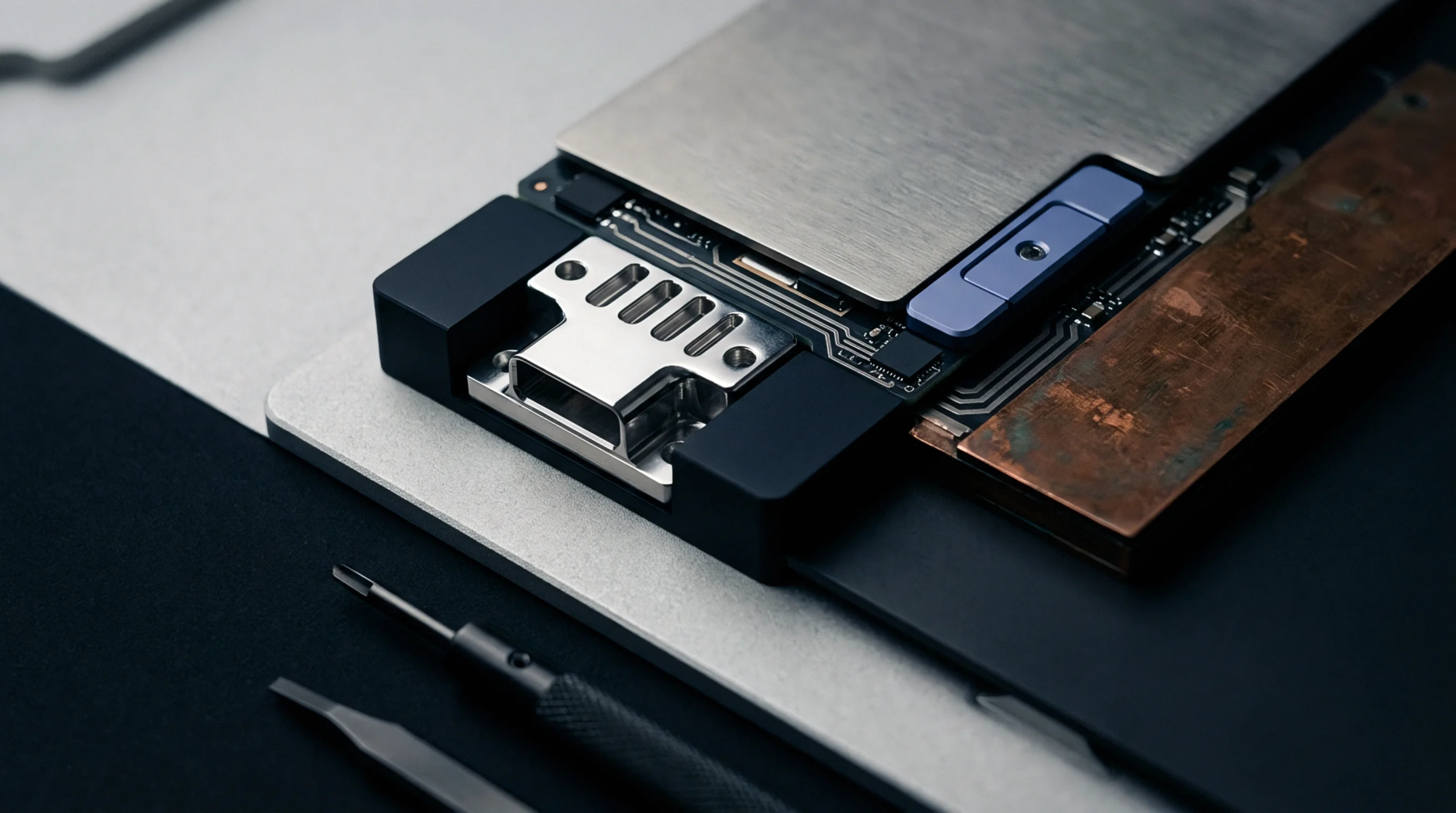
The specimen is mounted in a specialized test fixture that secures the top and bottom plates of the sample holder to prevent axial rotation. An automated tester applies a displacement-controlled load at a slow, uniform rate while recording both the applied force and the resulting displacement. This data is used to calculate the shear strength of the bond in megapascals and to plot the load-deformation curve.
These curves are then compared against baseline values to monitor the stability of the lamination process over time.