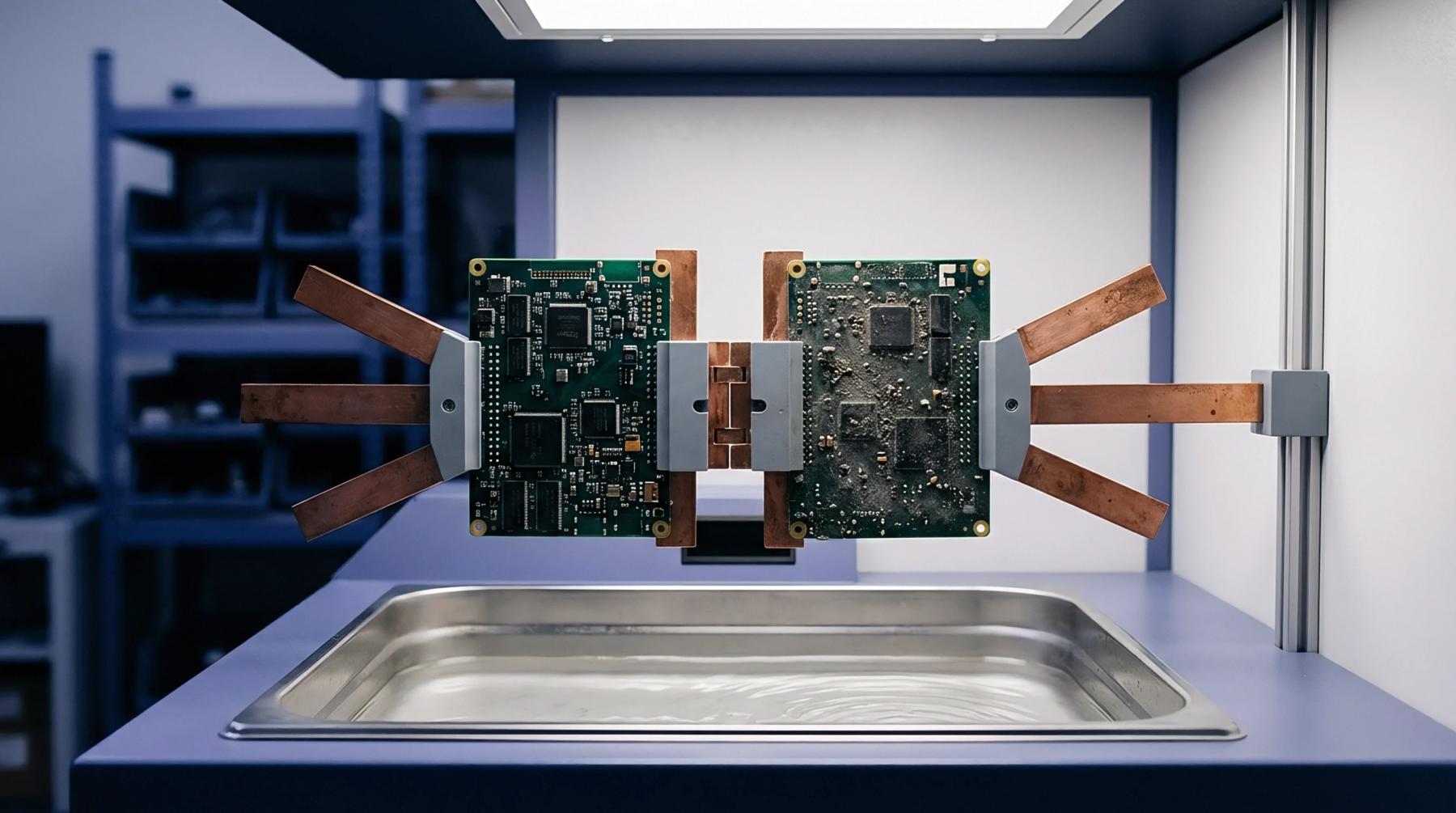
Verification Process
Formal qualification protocols confirm that populated printed circuit board assemblies satisfy physical design specifications, thermal limits, signal integrity standards and operational reliability requirements under simulated field conditions. Conducting PCB assembly validation establishes compliance through functional testing, thermal cycling, environmental stress screening and automated optical inspection. Validation activities apply strictly to completed populated assemblies, ending after formal qualification approval for volume production.
Testing Execution
Qualification engineers subject test assemblies to accelerated life testing, exposing populated boards to rapid thermal ramp rates, elevated humidity and multi-axis mechanical vibration. Functional test fixtures execute edge-connector signal injection while monitoring real-time voltage rails, logic states and high-speed bus communication protocols. Automated X-ray inspection evaluates solder joint void percentages, head-in-pillow defects, pin bridging and barrel fill completeness across hidden ball grid array arrays.
Failure analysis of non-conforming test units isolates whether defect origins stem from component solderability issues, thermal profiling errors or trace routing crosstalk.
Production Consequence
Rigorous qualification reduces downstream warranty exposure and field service intervention by identifying design vulnerabilities before mass assembly deployment. Design adjustments triggered by test findings optimize thermal pad geometry and solder stencil apertures prior to full-rate production. Validated manufacturing processes achieve stable yields and consistent product performance.