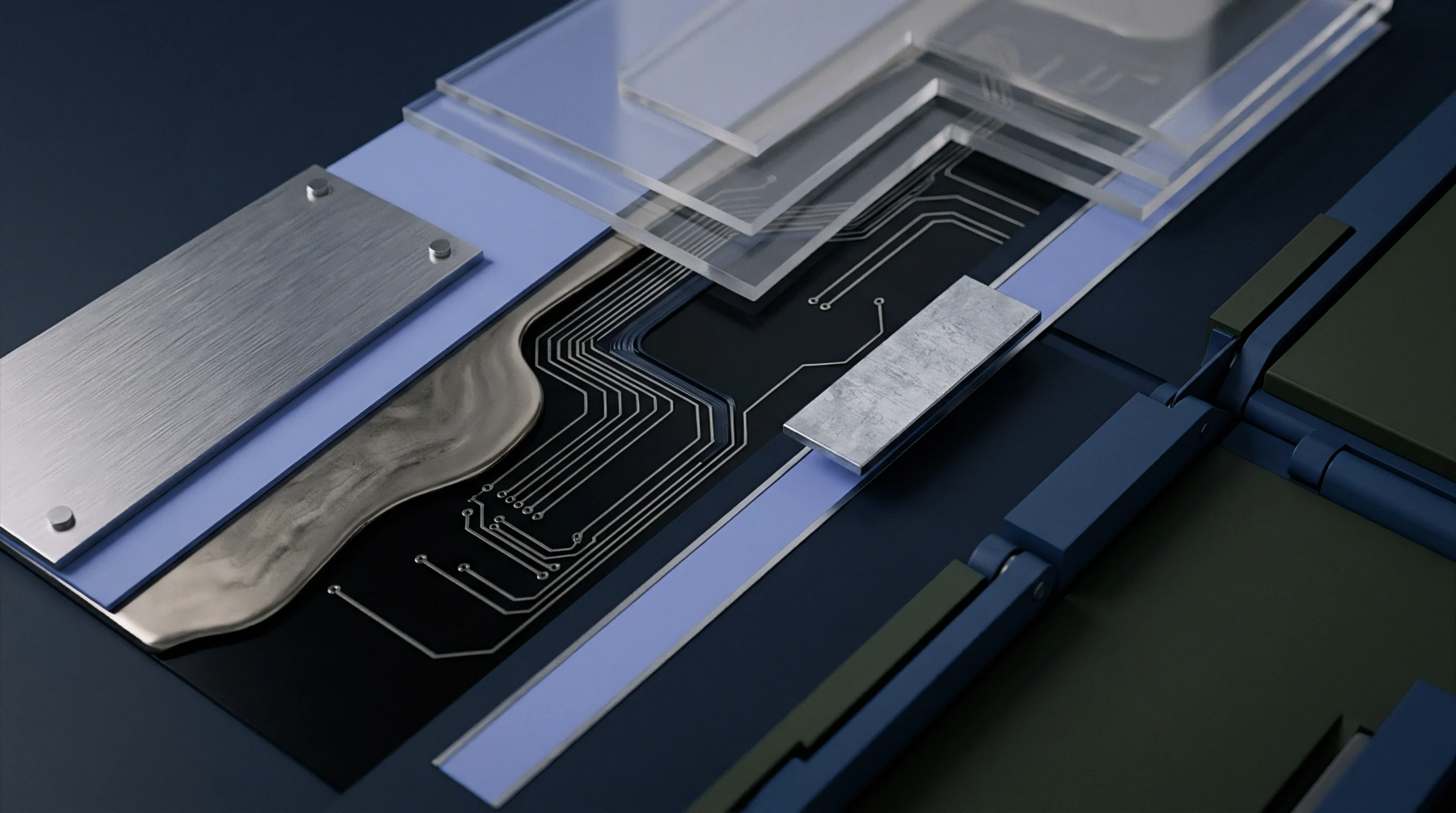
Fabrication Process
High-pressure vacuum lamination consolidates prepreg layers and inner-layer copper cores into a unified rigid panel. During multilayer printed circuit board fabrication, press cycle lamination applies precise thermal and hydraulic profiles to flow and cure thermosetting resin systems. Vacuum chambers evacuate trapped air and volatile byproducts prior to heating, preventing internal voids and delamination defects.
Precise control over heating rates ensures resin flows evenly into copper clearance areas before cross-linking locks the molecular structure. Inadequate lamination parameters cause thickness variations that disrupt characteristic impedance targets across the board surface.
Thermal Profile
Multistage temperature ramps control resin viscosity transitions from solid glass state to low-viscosity liquid and finally to cured polymer. Initial heating rates must match varnish flow kinetics, allowing liquid resin to displace air while wetting copper trace sidewalls. Sustained dwell temperatures at peak curing points complete cross-linking reactions, establishing target mechanical rigidity and glass transition limits.
Controlled cooling ramps prevent residual thermal stresses from inducing panel warpage or bow after pressure release. Automated temperature monitoring across platen surfaces ensures uniform thermal energy distribution across all panel locations.
Pressure Control
Hydraulic platens maintain controlled mechanical pressure profiles during varnish liquefaction and gelation phases. Excessive pressure squeezes resin out of panel edges, producing starved areas with low breakdown voltage.