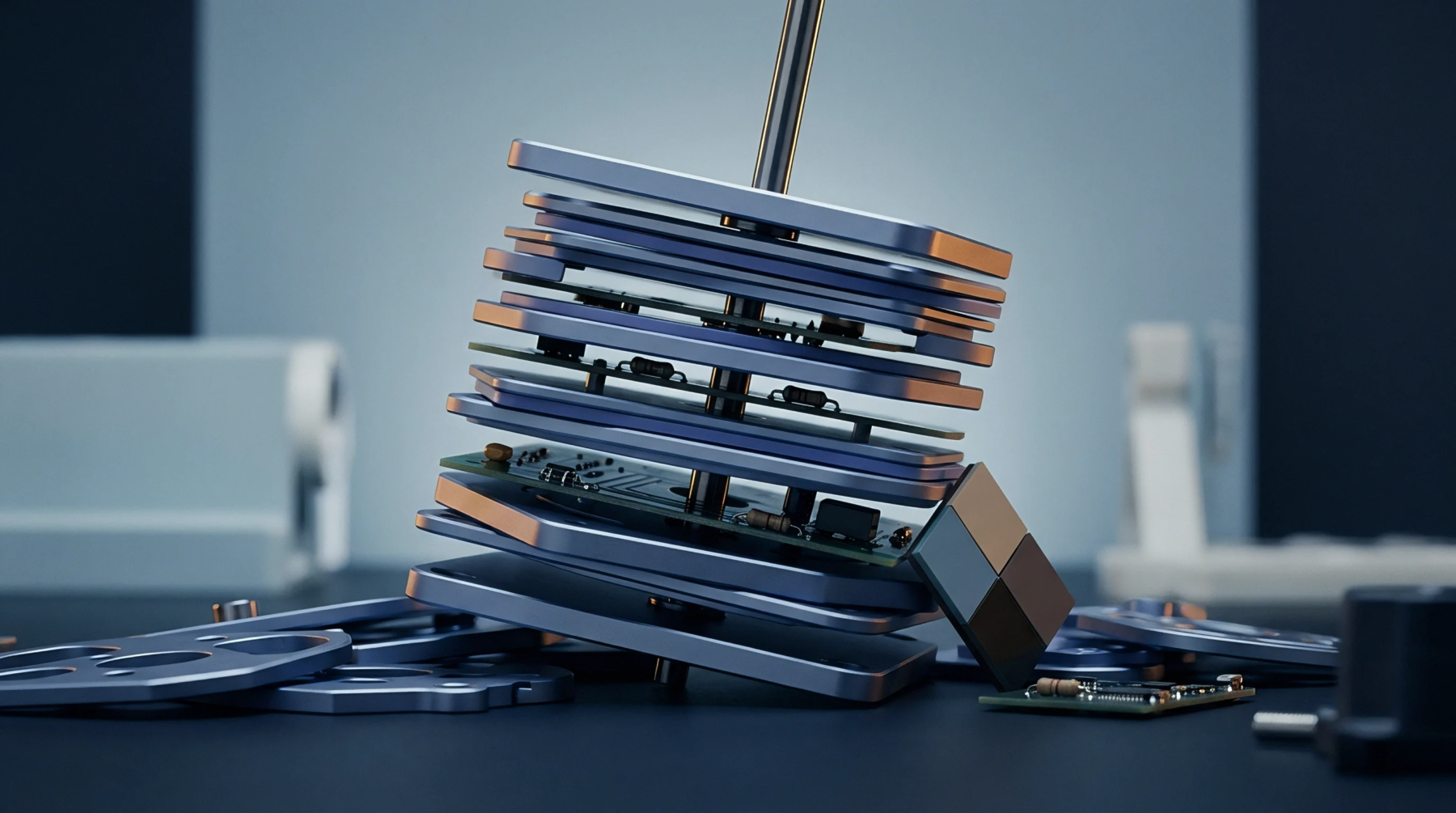
Geometric Correction
Mathematical transformations applied to raw x-ray data resolve the misalignment between the source, the sample, the stage and the detector. Every x-ray image captures a two-dimensional projection of a three-dimensional object, and projection matrix compensation adjusts the digital model to account for real-world hardware deviations.
System Alignment
Calibration procedures determine the exact relationship between the physical coordinates of the machine and the optical path of the radiation. A phantom target with known dimensions provides the reference points needed to calculate the necessary adjustments. During the reconstruction of a circuit board, projection matrix compensation ensures that features from different angles align perfectly in the virtual space.
Without this adjustment, the overlapping images would produce artifacts that mask defects like micro-cracks or cold solder joints.
Reconstruction Accuracy
Advanced reconstruction algorithms integrate the corrected projection data to build a high-fidelity volumetric representation of the internal traces. The software performs these calculations in real time to maintain a high throughput on the production line. High-resolution imaging of dense assemblies requires a stable matrix to avoid the introduction of false positives during inspection.
Consistent application of projection matrix compensation allows the system to achieve sub-micron voxel sizes across the entire field of view. These deviations include non-perpendicularity of the axes or small shifts in the focal spot location.