Metrology Process
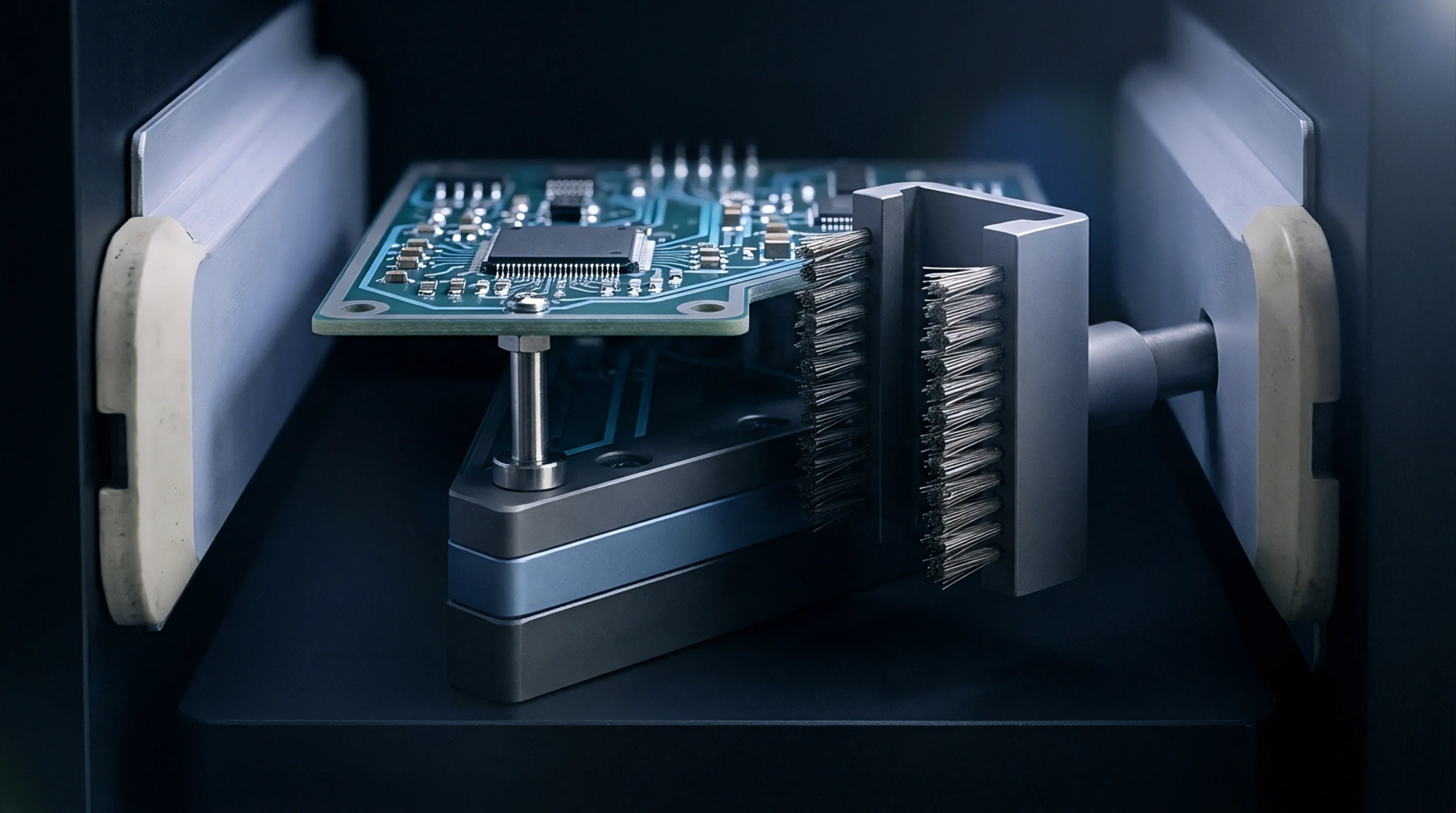
High-frequency material testing establishes the precise electrical and thermal properties of fluoropolymer laminates used in microwave printed circuit boards. This evaluation, termed PTFE substrate characterization, measures relative permittivity and loss tangent up to millimeter-wave frequencies. It requires specialized fixturing because the mechanical soft nature of polyesters and fluoropolymers makes them susceptible to deformation under clamping pressure.
Knowing the exact material behavior allows designers to build high-performance antennas and RF filters with predictable phase response. The testing must isolate the anisotropic behavior of the material, which has different dielectric properties along both the thickness and planar axes due to the direction of internal glass fibers.
Thermal Behavior
Temperature changes cause a unique transition in fluoropolymer structures around nineteen degrees Celsius, where the dielectric constant shifts abruptly. Characterization programs map this behavior to prevent phase errors in aerospace and outdoor transceivers. The thermal expansion of the material must also be aligned with copper to prevent stress on plated through-holes during thermal cycling.
This behavior is documented through thermal-dielectric curves.
Quality Control
Incoming inspection labs use this characterization to detect laminate batches that deviate from the design sheet. If the dielectric constant varies by more than one percent, the board will suffer from detuned circuits. Test coupons on the panel border are measured to verify the material after lamination.
It acts as the final gate before shipping the boards to assembly.