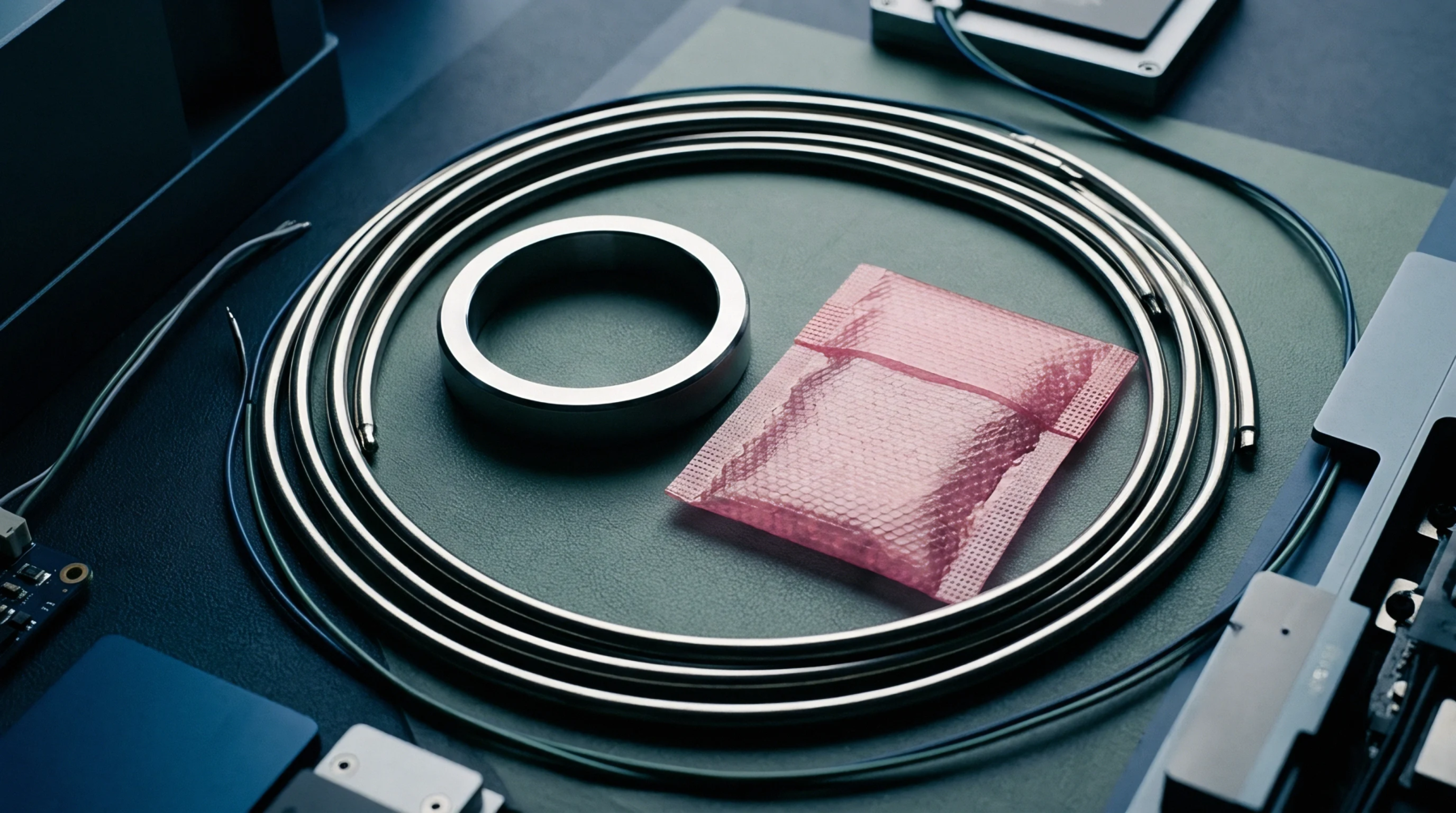
Dielectric Substrate
Fluoropolymer base resin exhibits an exceptionally low dielectric constant and low dissipation factor at high frequencies. This material, widely known as polytetrafluoroethylene or ptfe, is used as a substrate for high-speed, high-frequency printed circuit boards. Its electrical properties remain stable across a broad range of temperatures and frequencies, making it ideal for radar and telecommunications applications.
However, its low surface energy makes it highly resistant to bonding, which complicates the lamination process during multi-layer board fabrication. Special bonding films and pressure cycles must be applied to secure the stackup without causing board warping.
Thermal Stability
Chemical treatment is required to prepare the fluoropolymer surface for copper plating and adhesion. Plasmochemical etching or sodium-based solutions are used to modify the surface chemistry, allowing the copper to form a reliable bond. Without this step, the metal layers would delaminate under thermal stress during assembly.
Process Integration
Mechanical stability is another consideration, as the pure polymer is relatively soft and prone to cold flow under pressure. To overcome this limitation, manufacturers often reinforce the substrate with woven glass or ceramic fillers. These fillers improve the dimensional stability of the board and help maintain precise trace geometry during thermal cycles.