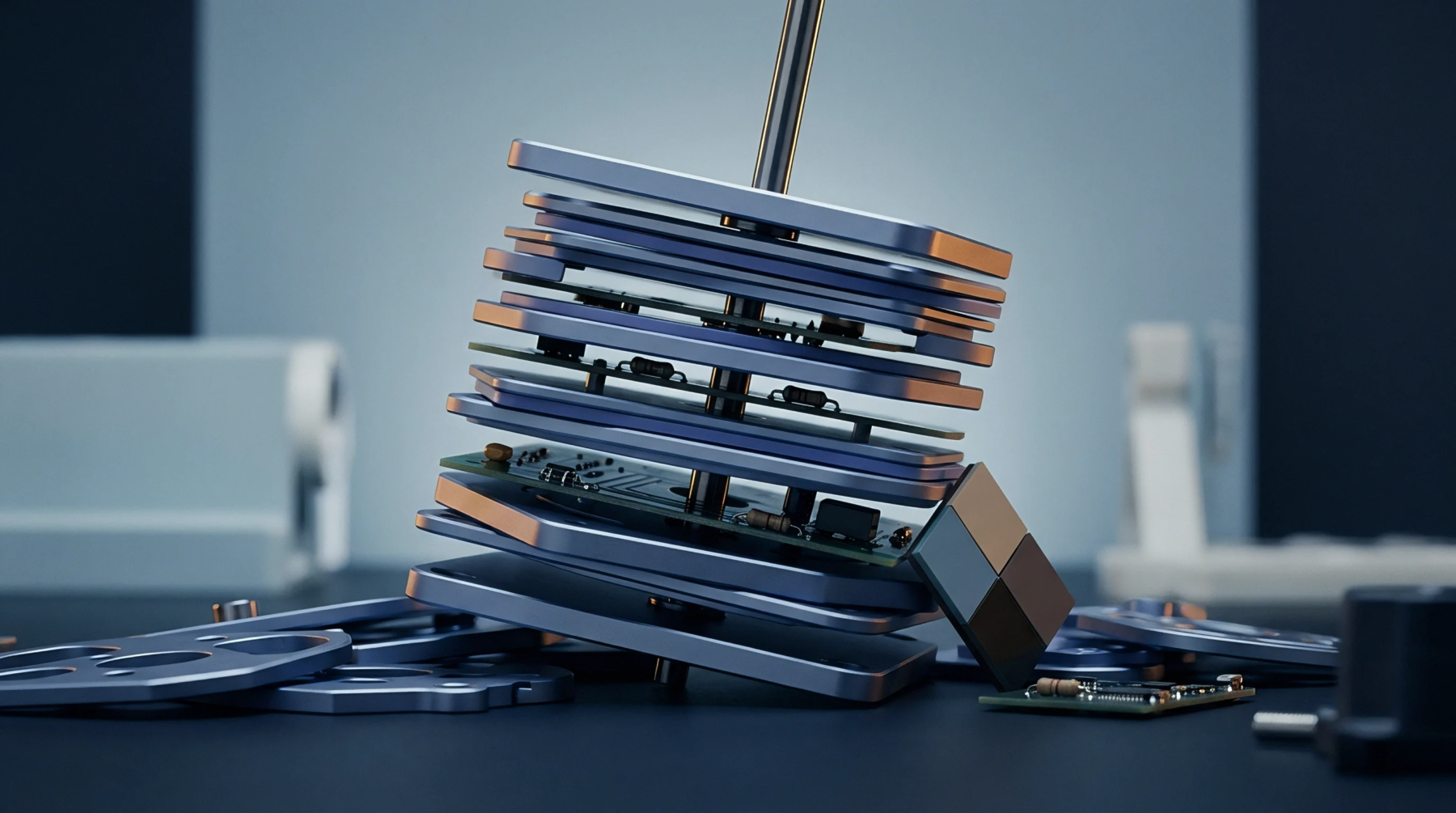
Pressure Failure
Structural delamination and subsequent package cracking caused by the rapid expansion of trapped moisture during high-temperature soldering represent a major failure mechanism in surface mount components. When a moisture-sensitive device is heated during assembly, reflow popcorning occurs as the liquid water vaporizes and generates high internal pressure. This pressure exceeds the adhesion strength of the plastic-to-metal interfaces, leading to package rupture.
Failure Mechanism
Water molecules absorbed from atmospheric humidity accumulate at internal material boundaries, such as the die paddle or the lead frame. During reflow popcorning, temperatures exceeding two hundred degrees Celsius cause this trapped water to vaporize instantly. The resulting steam pressure expands against the encapsulation, causing the polymer to dome and separate from the metal substrate before cracking open with an audible sound.
This catastrophic stress can shear bond wires and break internal silicon dies, causing immediate electrical failure of the device.
Mitigation Control
Protective packaging and controlled storage times prevent components from absorbing critical levels of humidity. Engineers utilize dry-packing and dry-baking to keep internal moisture below the critical threshold for reflow popcorning. Standard moisture sensitivity levels are assigned to components to guide their handling and prevent this destructive failure during the automated assembly process.