Laminate Displacement
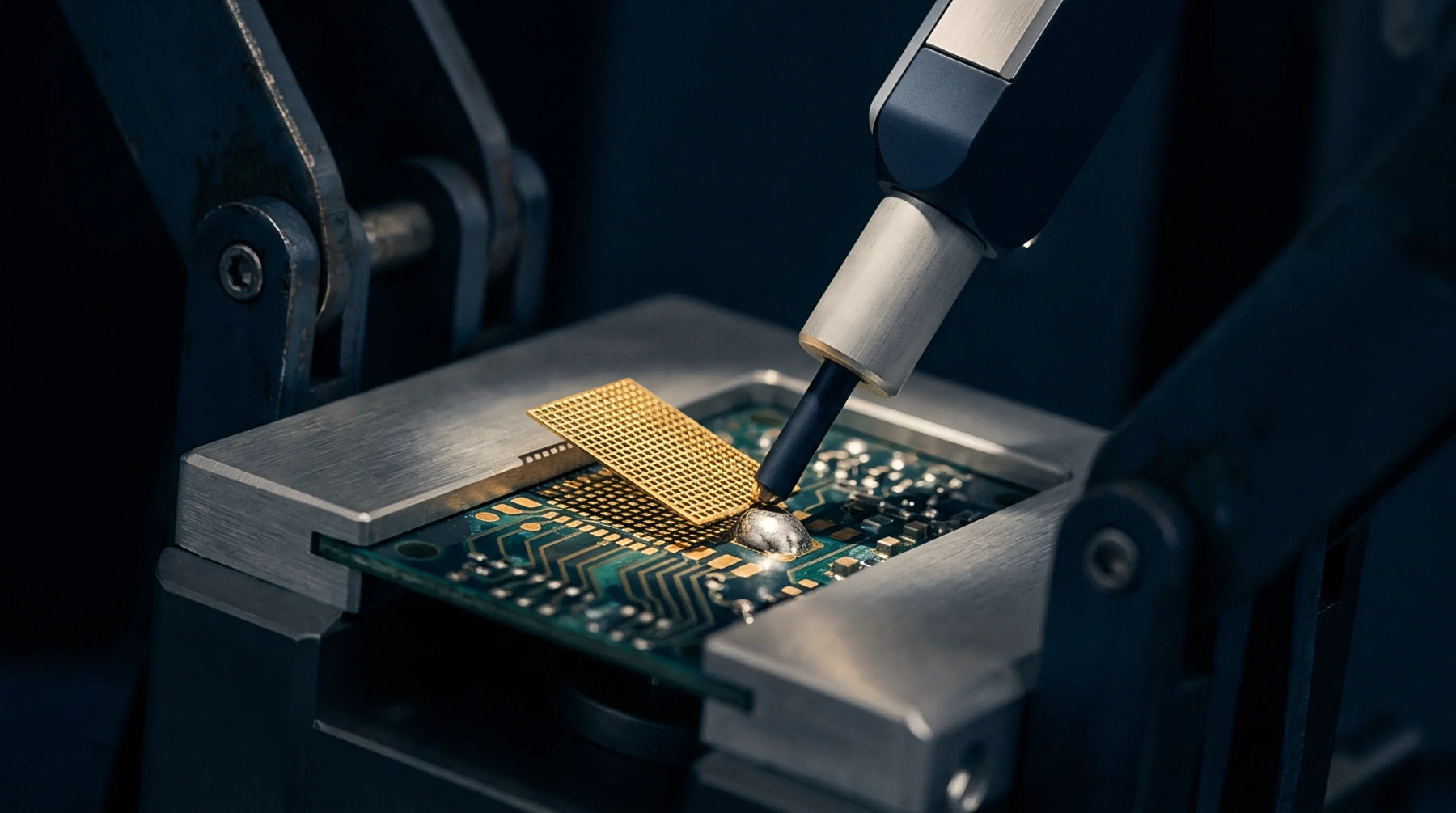
Prepreg material undergoes a physical migration during the application of heat and pressure within a multilayer lamination cycle. Resin squeeze flow describes the exit of excess polymer matrix from the bond ply layers as the press platens consolidate the layup. This movement fills the voids between internal circuit patterns to prevent air entrapment or localized starved regions.
Proper control of the viscosity and gel time prevents the expulsion of too much material, which would otherwise lead to laminate thinning or dielectric thickness violations. Engineers calibrate the heating rate to ensure the resin remains in a mobile state for the required duration before polymerization locks the structure.
Viscosity Control
Material rheology dictates the stability of the inner layers during the compression phase. High thermal ramp rates reduce the window for this behavior, potentially causing insufficient filling of circuit trenches. Conversely, slow ramps might lead to excessive drainage, where the fluid resin leaves the bond line entirely.
Fabrication shops monitor the melt flow index of the prepreg to predict how the stackup responds to standard pressure profiles. Deviations in this mechanical migration force adjustments to the copper foil balancing or the total stack height design.
Process Consequence
Mechanical failure arises when the resin distribution falls outside the specified tolerances for board thickness and impedance uniformity. Excessive removal of the binder leaves the fiberglass weave exposed or susceptible to delamination under thermal stress. Insufficient movement leaves voids that degrade the moisture resistance and signal integrity of the finished circuit.
Production yield depends upon the balance between the initial resin content of the prepreg and the total cavity volume provided by the etched circuit traces. Accurate prediction of this flow ensures that the final assembly maintains the electrical performance targets established during the design phase.