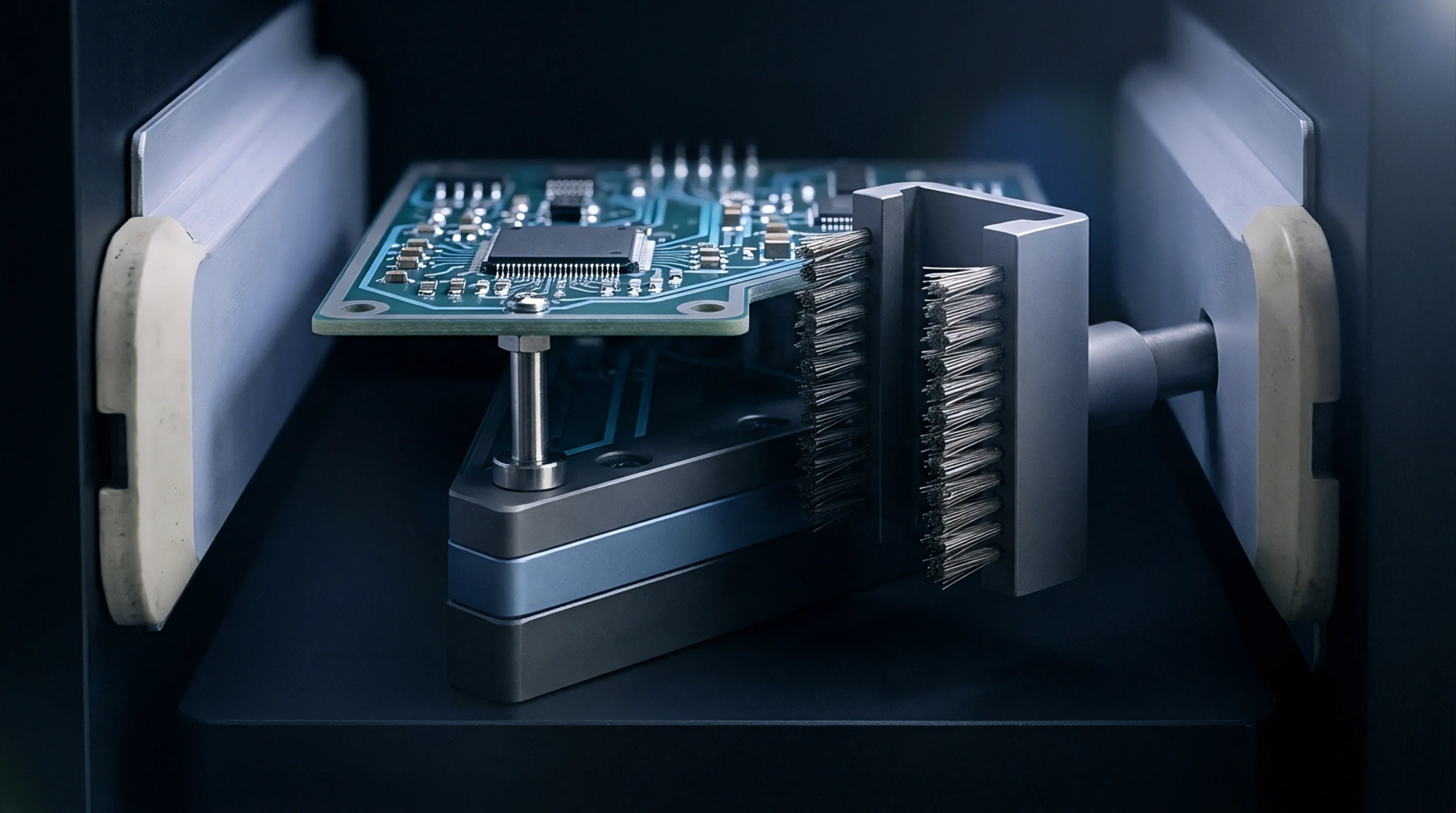
High Frequency Material
Ceramic-filled hydrocarbon laminates designed for demanding electrical performance provide a highly stable alternative to standard glass-epoxy substrates in high-speed and RF applications. Using Rogers RO4003C allows design engineers to maintain precise trace impedance and low dielectric losses at gigahertz frequencies. This material features a low thermal coefficient of dielectric constant, which prevents electrical performance drift over temperature changes.
Mechanical Performance
The glass-reinforced structure of the laminate is mechanically stable, matching the expansion characteristics of copper. This compatibility reduces stress on plated through-holes and minimizes trace cracking during lead-free reflow cycles. Unlike some polytetrafluoroethylene materials, it does not require specialized chemical treatments before plating, which makes it compatible with standard manufacturing processes.
Assembly Application
Multi-layer boards utilizing this material exhibit low water absorption, making them suitable for long-term reliability in harsh environments. The low dissipation factor ensures that signal attenuation is kept to a minimum in microwave applications. Consequently, the material is frequently selected for automotive radar and high-speed digital backplanes where transmission losses must be carefully controlled.
By integrating this substrate into complex multi-layer designs, boards can achieve both high thermal robustness and outstanding electrical performance without the elevated fabrication costs associated with pure PTFE laminates.