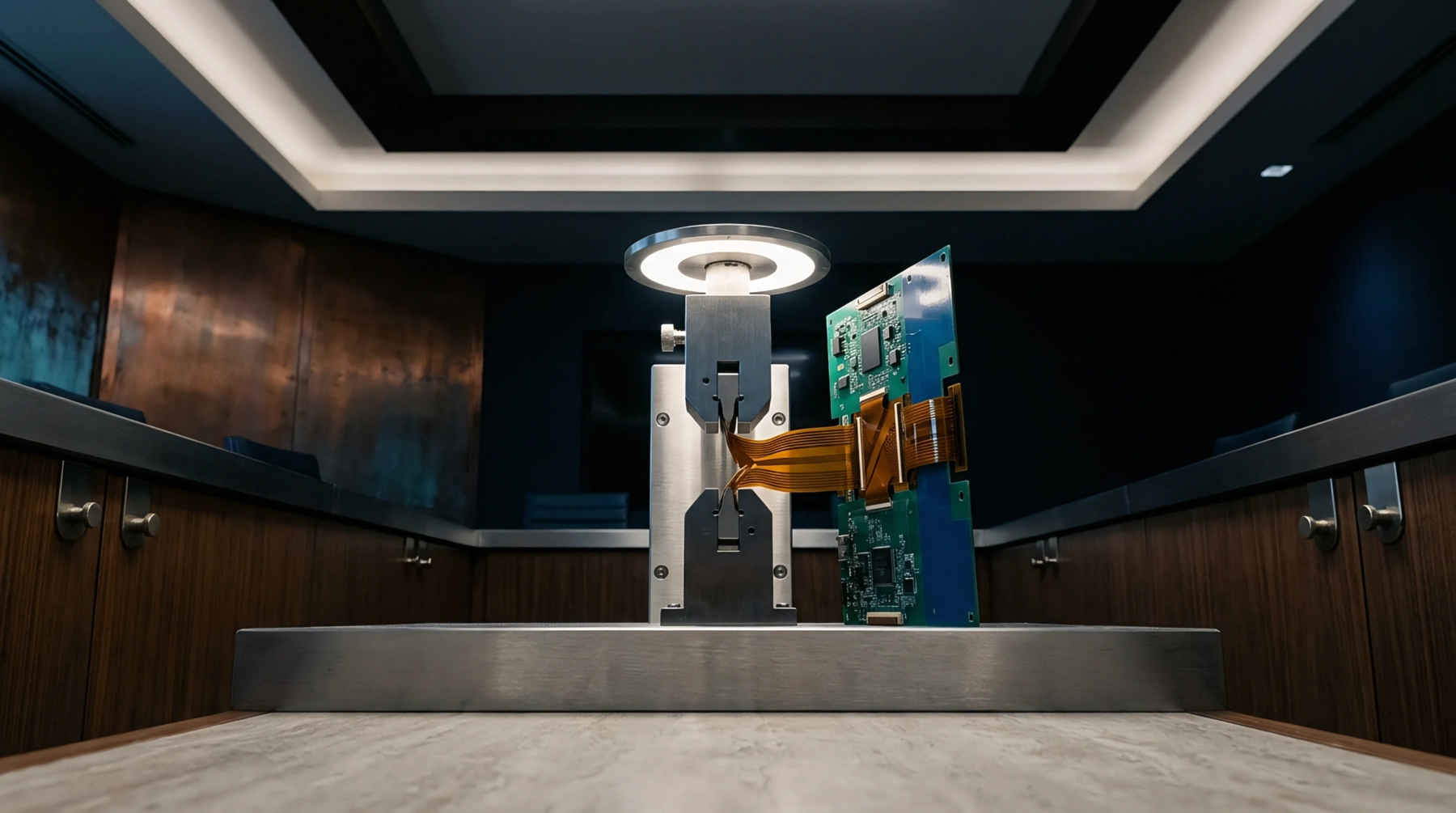
Squeegee Speed Pressure Matrix
Printer calibration defines the mechanical interaction between paste deposition blades and stencil apertures during surface mount technology fabrication. Squeegee speed pressure matrix sets the numerical thresholds for downward force and translational velocity across varying paste viscosities. Board fabrication facilities apply these parameters to prevent aperture bridging and insufficient volume defects during the printing stroke.
Automated optical inspection systems verify the resulting paste height and area coverage against acceptable production tolerances. Board manufacturers rely on this operational threshold to maintain deposit uniformity across fine pitch component pads.
Thrust Vector Calibration
Downward force calculation governs the mechanical deflection of the metallic or polyurethane blade during paste transfer. Squeegee speed pressure matrix determines the exact vertical load applied per linear inch of the printing tool. Excessive downward force bows the blade center and causes paste scooping inside small apertures.
Insufficient downward force leaves residual paste films on the stencil surface and generates bridging faults between adjacent pads. Print heads compensate for board warpage by dynamically adjusting these downward loads during the forward stroke.
Velocity Boundary Limits
Translational speed controls the hydrodynamic rolling motion of the solder paste cylinder ahead of the blade edge. Squeegee speed pressure matrix dictates how fast the tool traverses the stencil without causing paste slump or air entrapment. High velocities prevent proper paste release from square aperture walls and lead to starved joints on micro ball grid array components.
Low velocities increase cycle times beyond acceptable manufacturing limits and alter the thixotropic behavior of the printing medium. Solder paste manufacturers specify the maximum operational velocity to ensure complete cavity fill before the blade passes.