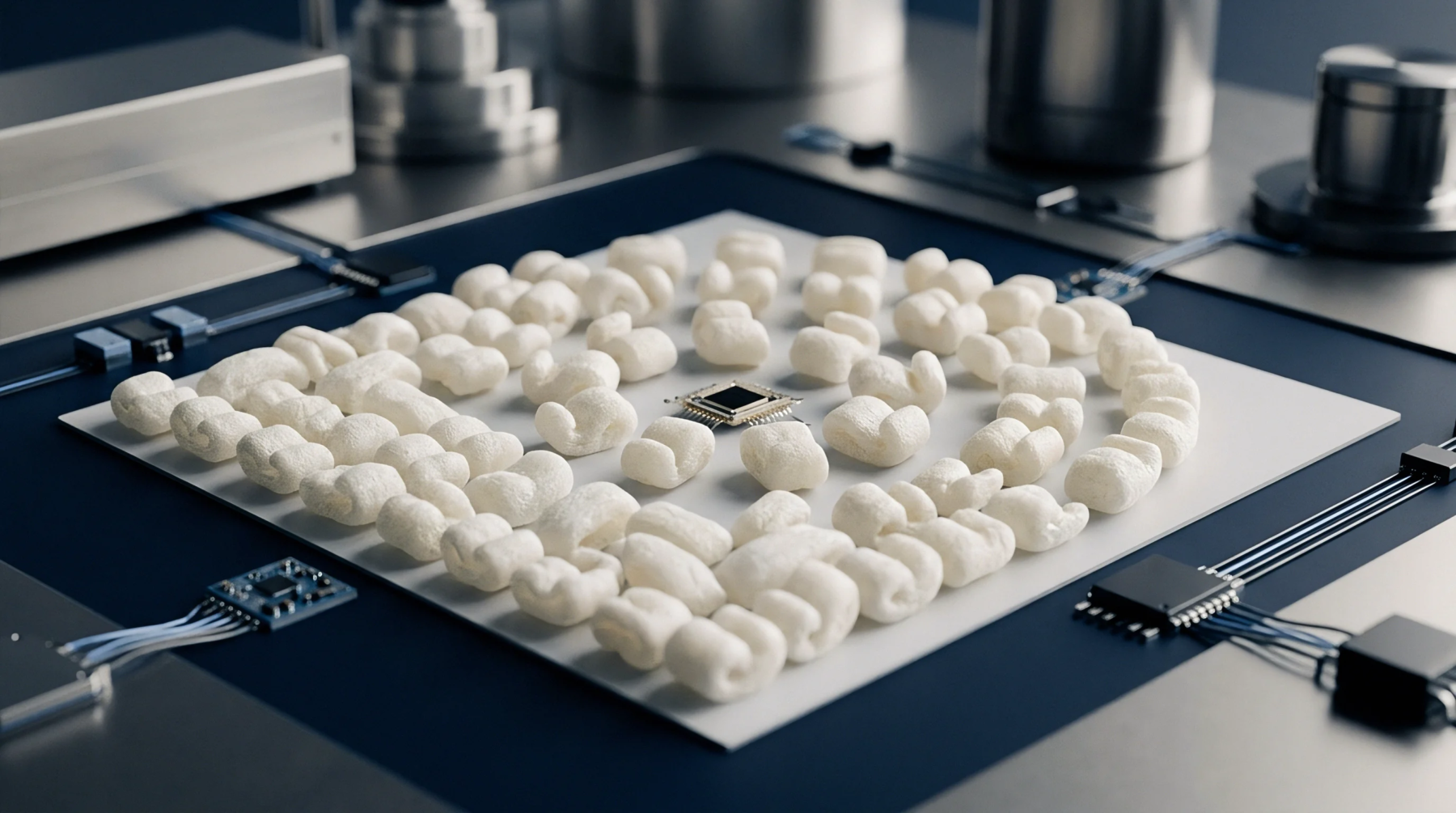
Moisture Vaporization
High-pressure steam generated by the rapid heating of trapped moisture within a plastic microelectronic package during solder reflow can overcome the internal bond strength and force the material interfaces apart. This steam pressure delamination, commonly referred to as the popcorning effect, occurs when components that have absorbed atmospheric water are exposed to the intense temperatures of the assembly oven. If the resulting vapor pressure exceeds the adhesion limit of the mold compound to the leadframe, the package cracks or swells.
Internal Expansion
Water vapor molecules diffuse through the porous organic resin of the component package over time when exposed to ambient conditions. During the rapid heating stage of the reflow cycle, these trapped molecules vaporize, creating localized steam pockets that exert massive mechanical force against the surrounding resin. If this force is too great, it tears the mold compound away from the silicon die or the leadframe, creating a large internal void that can propagate to the package exterior.
Testing for this defect is typically performed using scanning acoustic microscopy or cross-sectional analysis.
Exposure Control
Strict storage procedures, including the use of moisture-barrier bags and dry nitrogen cabinets, protect components from moisture absorption before reflow. If components exceed their floor life, they must be baked to remove moisture.