Viscoelastic Transition
Analytical curves from dynamic mechanical analysis show how the stiffness of a polymer decreases as temperatures rise. A storage modulus drop occurs when a resin system transitions from a glassy state to a rubbery state near its glass transition temperature. This change marks the loss of the material’s ability to store elastic energy.
Phase Change
Molecular mobility increases as the polymer chains gain enough thermal energy to move past one another. During the storage modulus drop, the mechanical properties of the PCB laminate shift from a hard and brittle condition to a soft and compliant one. This transition is usually measured in pascals and represents several orders of magnitude in stiffness change.
Mechanical Rigidity
Engineering calculations for lead free soldering must account for the state of the board at peak reflow temperatures. The storage modulus drop determines how much a board will sag or warp when it is unsupported in the oven. Laminates with a high glass transition temperature delay this drop to a higher thermal point, which protects the integrity of fine pitch solder joints.
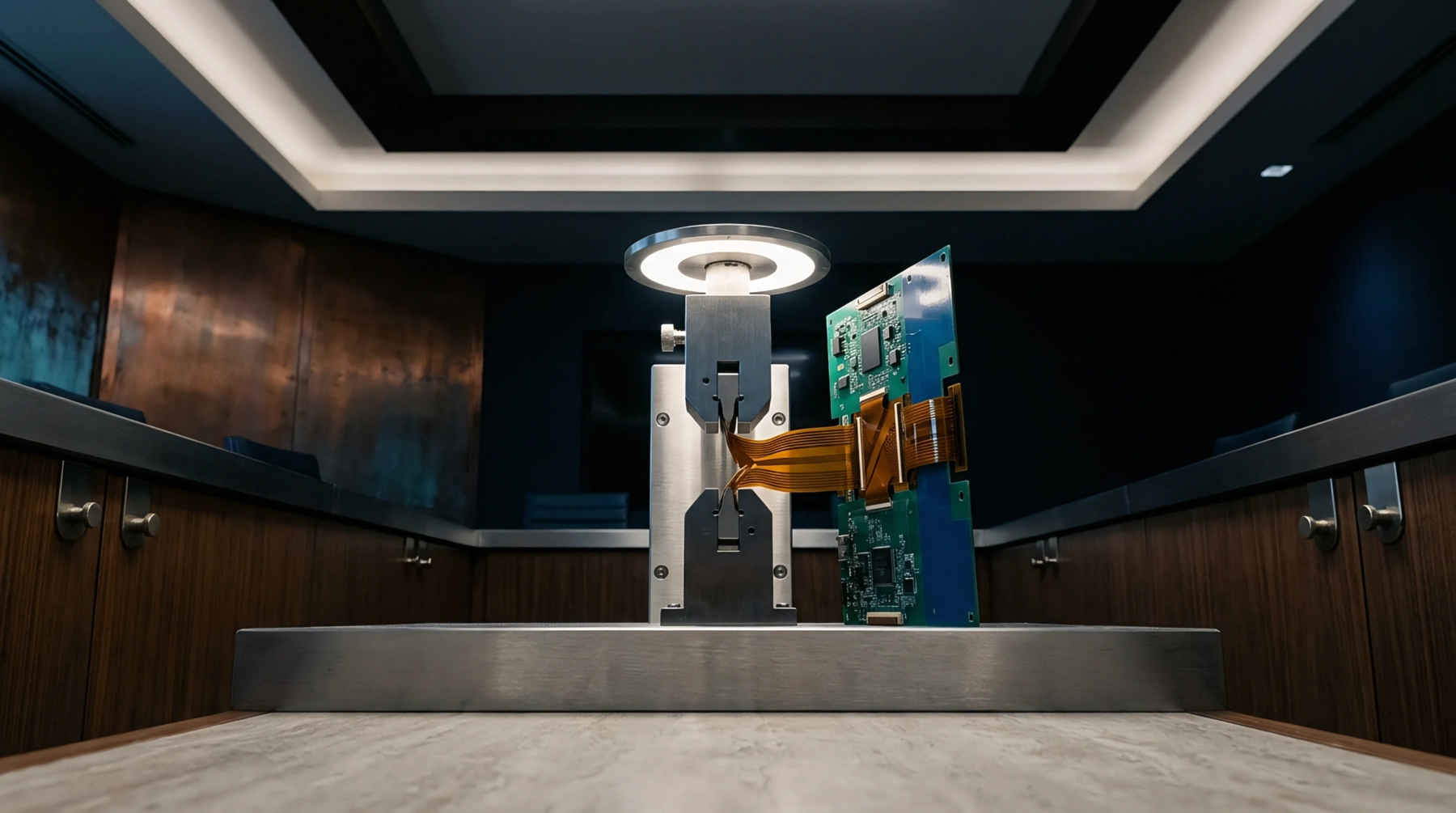
Testing involves applying a small oscillating force to a sample while ramping the temperature at a steady rate. The resulting plot shows exactly where the material loses its structural capacity. Designers use this information to choose materials that remain stable during the assembly process and the intended operating environment.
Stability depends on this limit.