Material Deformation Metric
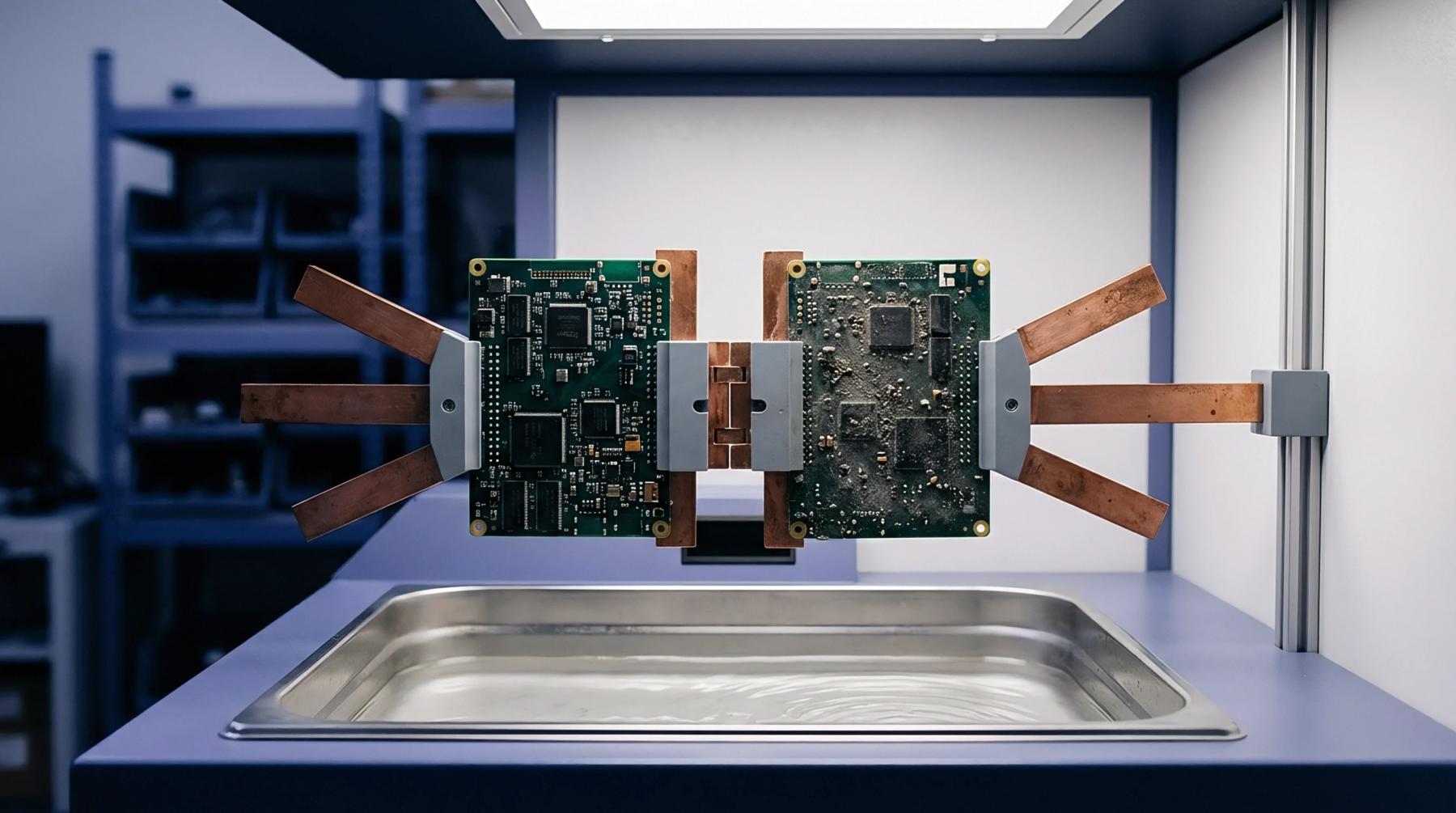
Transient mechanical displacement measurements define the operational integrity of copper traces and solder joints under cyclic thermal expansion during accelerated life testing of finished printed circuit board assemblies. Strain rate monitoring tracks the time derivative of surface deformation to identify the onset of fatigue cracking long before electrical continuity breaks down. Engineers deploy these gauges directly onto the localized stress concentrations found at ball grid array interface points or component corners.
High resolution data capture reveals whether the copper structure maintains plastic ductility during the rapid heating phases of power cycling. If the measured velocity of deformation exceeds the allowable threshold, the assembly faces structural degradation across its mounting pads. Precise data collection ensures that cyclic displacement stays within the elastic region to preserve the reliability of interconnects.
Thermal Load Analysis
Component expansion mismatches trigger internal stresses whenever the assembly temperature shifts between cold storage and maximum operating heat. Measuring how fast these stresses accumulate provides the velocity component for durability models. A laser extensometer or a foil gauge records the shift in distance across a gap on the substrate while the oven cycles.
Sensors record the displacement at microstrain per second to map the behavior of the dielectric laminate against the metallic features. This process eliminates the guesswork associated with static load calculations alone because the speed of thermal shock dictates the mechanical response of the materials. Slower transitions allow for stress relaxation through molecular realignment whereas rapid spikes force sudden dislocations within the metallic lattice.
The resulting velocity data correlates with the frequency of cycle fatigue in the field.
Structural Integrity Boundary
Verification protocols mandate strict adherence to these deformation limits to prevent early field failures in complex electronics systems. Production managers audit the resulting data profiles to determine the exact number of cycles required to induce permanent substrate warpage. When the measured strain velocity exceeds defined limits during qualification, the assembly design fails the requirements for long term deployment.
This specific metric remains the primary tool for validating solder alloy performance under extreme thermomechanical stress conditions.