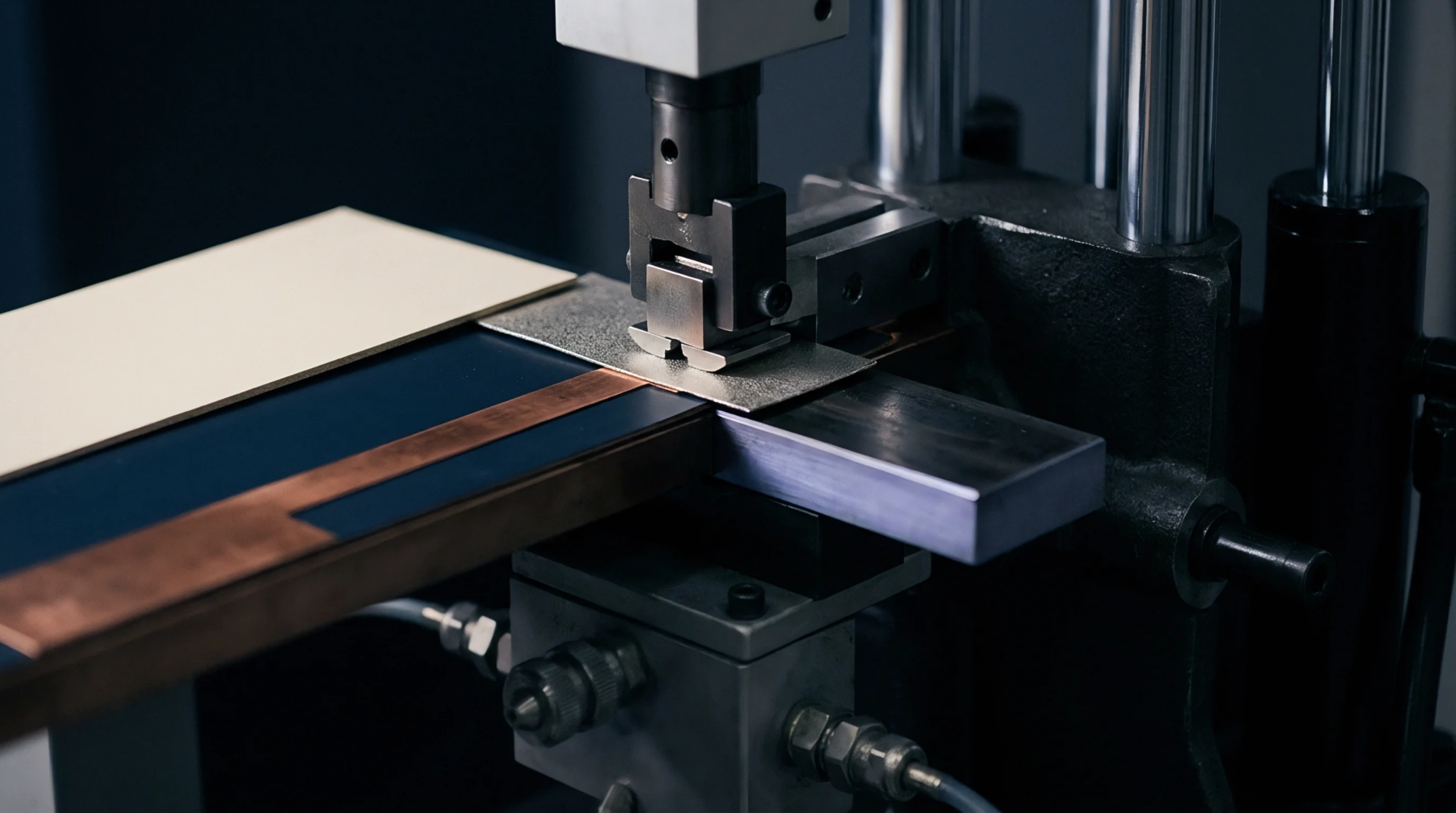
Acid Dissolution
Liquid chemical removal of unmasked copper foil from printed circuit board panels relies on controlled aqueous reactions to define circuitry traces. Subtractive wet etching executes this chemical reduction by driving oxidants like cupric chloride or ferric chloride across the bare copper surfaces until the desired line widths emerge. Chemical bath temperature and conveyor speed govern the dissolution rate, while nozzle pressure maintains steady fluid agitation across the substrate.
Undercutting occurs when the liquid etchant eats laterally beneath the photoresist layer, creating trapezoidal cross sections instead of vertical sidewalls. Process engineers adjust etchant chemistry and chemical replenishment rates to minimize this lateral attack and prevent bridging between closely spaced conductors.
Etch Factor
Geometric precision of finished copper traces depends heavily on the ratio between vertical etch depth and horizontal undercut. Subtractive wet etching introduces distinct manufacturing variations that demand strict optical measurement during outer layer processing. Automated optical inspection equipment measures trace width reduction after chemical processing to verify that dimensional tolerances remain within acceptable engineering limits.
Overetching produces thinner copper lines with reduced current carrying capacity, whereas underetching leaves residual metal bridges that cause electrical shorts. Process control coupons placed on the production panel yield destructive cross section samples for microscopic evaluation of sidewall angles and copper foil thickness.
Etchant Regeneration
Chemical replenishment systems maintain bath stability by continuously oxidizing cuprous ions back into cupric ions during high volume production runs. Subtractive wet etching generates spent solutions laden with dissolved copper, requiring closed loop recovery units to precipitate metal or reclaim crystal byproducts. Specific gravity sensors monitor dissolved copper concentration inside the reaction chamber and trigger automated valve adjustments for hydrochloric acid additions.
Waste treatment facilities neutralize rinse waters before discharge to comply with local environmental regulations governing heavy metal disposal. Solution exhaustion alters etch rates unpredictably, making real time chemical monitoring essential for preventing yield loss on high density multilayer circuit boards.