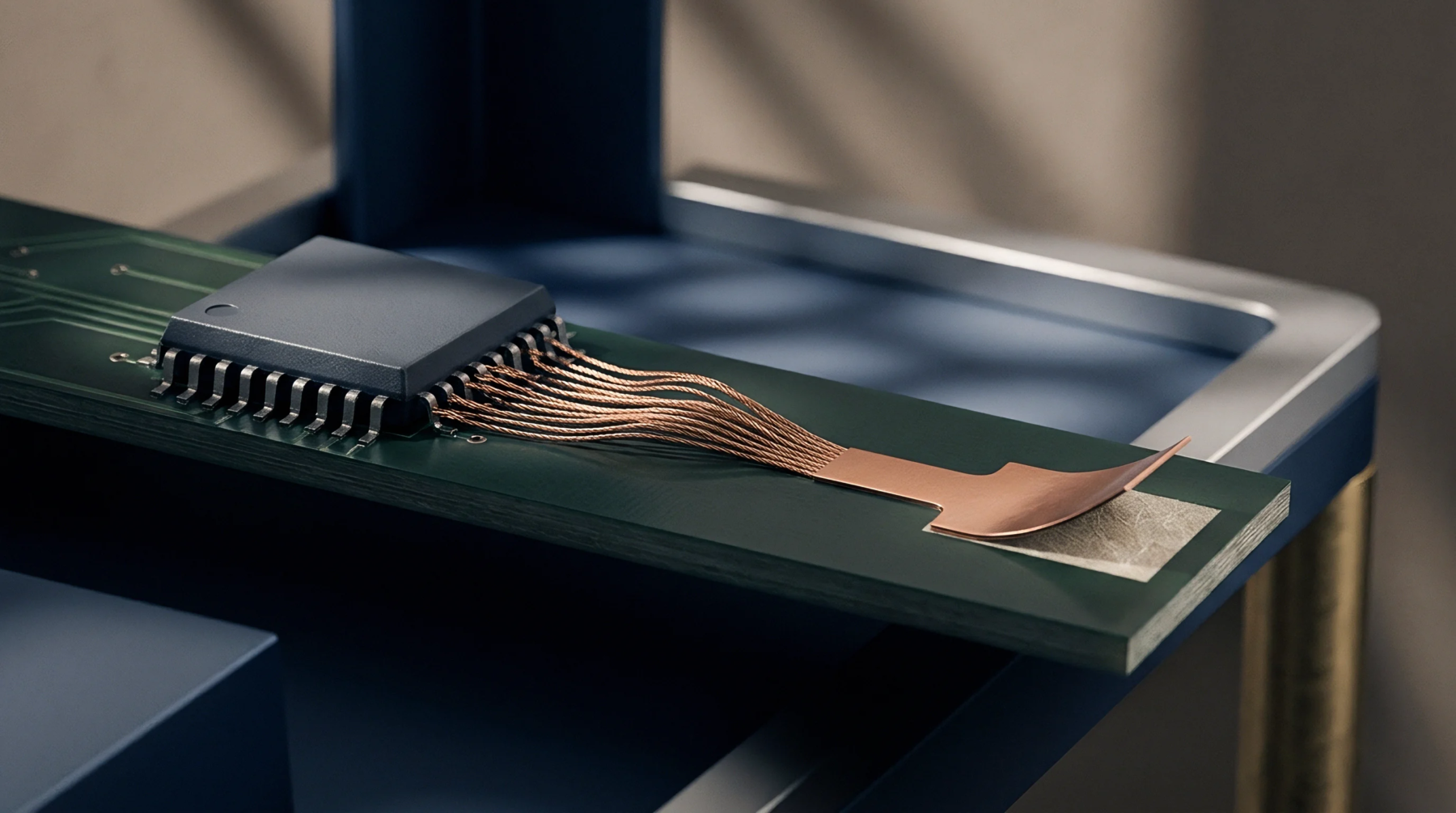
Substrate Material
Polymeric base structures provide the mechanical support and electrical insulation for conductive circuits in flexible and rigid-flex assemblies. Synthetic resin carriers usually consist of polyimide or polyester films that withstand the temperatures of lead-free soldering. They offer a combination of thinness and durability that traditional glass-reinforced epoxy laminates cannot match.
Thermal Resistance
Stability under heat is a requirement for materials used in modern electronics manufacturing. High performance synthetic resin carriers resist shrinking or warping when exposed to the 260 degree Celsius peaks of a reflow profile. The moisture absorption rate must also be low to prevent delamination or the formation of blisters during the assembly process.
Application Scope
Wearable technology and aerospace sensors rely on these materials to fit into non-standard enclosures. Because synthetic resin carriers are flexible they allow the circuit to bend around corners or fold into compact spaces. Engineers specify the thickness and tensile strength of the carrier to ensure the finished assembly can survive millions of flexural cycles.
The choice of adhesive between the copper and the resin also influences the long-term bond strength of the circuit. Specialized manufacturing equipment handles these thin films to prevent stretching during the etching and plating phases.