Heterogeneous Substrate Core Lamination Dynamics and Resin Gradient Phase Extraction
Heterogeneous core lamination requires synchronized thermal ramps to align flow windows and prevent resin phase extraction along substrate interfaces.


Melt
Thermodynamic mismatch between low-loss hydrocarbon ceramics and high-performance polyimides during co-lamination causes non-uniform rheological shear across core boundaries. When dissimilar prepreg systems press against rigid inner-layer cores under thermal ramps exceeding three degrees Celsius per minute, their viscosity curves diverge sharply. High-Tg FR-4 matrices achieve gelation while soft fluoropolymer or hydrocarbon systems remain near their fluid minimums.
Pressure gradients inside the multi-platen vacuum hydraulic press drive liquid resin away from high-density copper geometries into lower-density relief zones. Matrix migration leaves dry glass filaments along core faces and alters local fiber-to-resin ratios.
Phase extraction occurs when low-molecular-weight epoxy oligomers and crosslinking agents separate from the bulk resin matrix. Polymerization rates differ across the laminate interface. The matrix softens rapidly.
Uncured fractions flow laterally into micro-voids along the foil surface, forming a resin-rich interface layer with altered mechanical and electrical properties. Secondary phase separation alters the dielectric constant along the signal path, creating unaccounted impedance shifts in high-frequency transmission lines. Structural integrity suffers because the depleted interface exhibits reduced inter-laminar shear strength.
Viscosity mismatches across core interfaces drive low-molecular-weight resin fractions into internal foil relief structures.
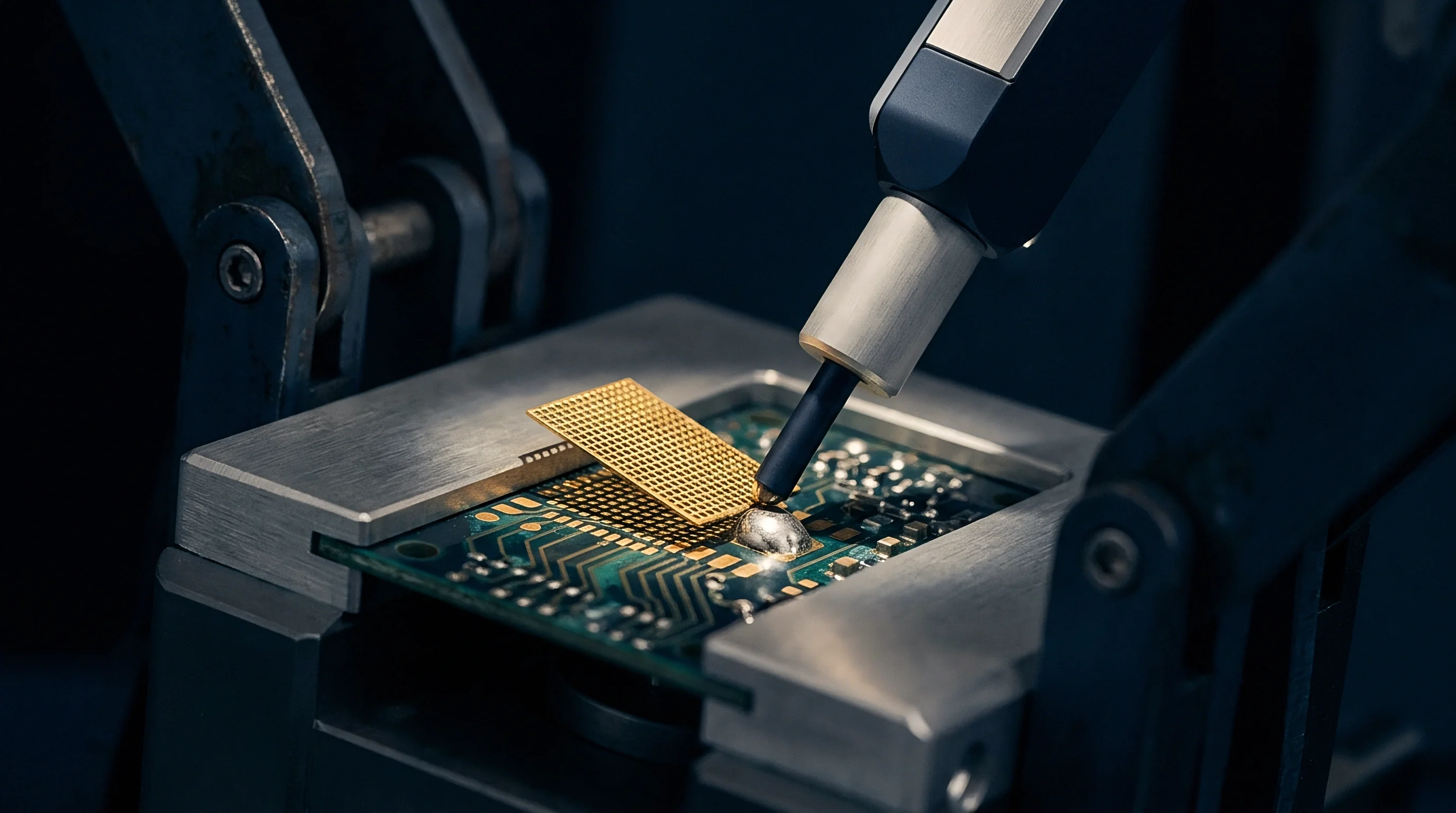
Rheological Asymmetry in Hybrid Stackups
Viscosity transitions occurring in adjacent prepreg plies create localized pressure differentials across the bond line. Hydrocarbon resins cure through free radicals. Standard epoxy networks rely on amine or anhydride crosslinking reactions.
When these systems meet in a heterogeneous stackup, the softening points fail to align. The lower-viscosity material flows prematurely under applied platen force. Resin bleeds into clearance voids around copper power planes, depleting resin volume at trace corners.
Differential glass transition temperatures exacerbate layer movement during the cool-down cycle. Core shrinkage occurs asynchronously. The stiffer core imposes residual shear stresses on the softer core interface, initiating micro-fractures along the boundary layer.
Glass weave distortion follows as fluid resin carries reinforcement yarns out of axial alignment. Precise registration between drilling targets and inner-layer pads becomes compromised when resin displacement forces core layers to shift laterally.
Mismanaging resin flow rates across heterogeneous material boundaries results in delamination failure during assembly reflow cycles, generating total scrap losses across entire panel production runs.


Pressure
Hydraulic multi-platen system force distribution changes dramatically when soft fluoropolymer cores interface with rigid thermoset glass matrices. Pressure applied at the platen faces translates into uneven compaction stress within the composite stackup. High-density trace regions absorb elevated localized forces.
Clearance voids receive diminished compaction force. Viscosity drops before polymerization begins. Resin flows toward regions of low hydrostatic pressure, stripping low-molecular-weight components from the bulk polymer matrix.
Gradient extraction alters the chemical stoichiometry along core-prepreg junctions. Low-viscosity fractions carry catalyst additives away from the bulk core face. Incomplete crosslinking occurs in depleted matrix zones, reducing glass transition temperatures by fifteen to twenty-five degrees Celsius.
Voiding increases near laminate boundaries. Moisture absorption rates spike within resin-depleted cavities during surface finish processing, promoting electrochemical migration under bias voltage.

Force Distribution across Core Interfaces
Compaction stress during the early thermal ramp concentrates along high-density weave intersections. Heavy glass yarns press into soft core materials, creating local thickness reductions. Pressure gradients force resin lateral movement.
Thin prepregs show higher squeeze-out rates. The table below outlines the rheological behavior and minimum viscosity parameters for common heterogeneous core and prepreg combinations evaluated under standard vacuum-hydraulic press cycles.
| Laminate Grade | Resin System Type | Viscosity Minimum (Pa.s) | Gelation Temperature (deg C) | Flow Window (s at 3 deg C/min) |
|---|---|---|---|---|
| Hydrocarbon Ceramic | Thermoset Hydrocarbon | 140 | 162 | 110 |
| High-Tg FR-4 | Polyfunctional Epoxy | 18 | 138 | 210 |
| PTFE Filled Glass | Thermoplastic Fluoropolymer | 850 | 280 | 45 |
| Non-MDA Polyimide | Polyimide Thermoset | 120 | 195 | 160 |
Visco-Elastic Flow Differentials
Polymer gelation timing determines whether resin fills internal copper relief voids or extracts low-molecular-weight fractions out of the composite. Fast-reacting prepregs harden before low-viscosity cores complete hydraulic filling. Air entrapment occurs along signal trace sidewalls.
Vacuum pressure removes entrained volatiles. Excessive vacuum acceleration can strip lightweight solvents from modified resin systems, inducing micro-porosity in the bond line.
Controlling hydraulic force profiles prevents matrix migration along composite boundaries. Fabricators utilize multi-stage pressure cycles to equalize flow velocities. Low pressure applied during the initial thermal ramp allows uniform heat transfer without inducing aggressive resin squeeze-out.
Full compaction force applies only when all resin systems in the stackup enter their mutual flow window.
- Interfacial resin depletion occurs when high-viscosity prepregs squeeze lower-viscosity core matrices away from high-density copper features during initial hydraulic compaction.
- Glass weave telegraphing arises as glass bundles press into softened core faces, causing periodic dielectric thickness variations along transmission lines.
- Volatile void entrapment stems from premature surface gelation that seals internal escape pathways before vacuum systems exhaust low-boiling-point resin constituents.
- Stoichiometric migration develops when active curing agents dissolve into adjacent liquid phases, leaving unreacted resin fractions along boundary zones.
Material suppliers frequently attribute internal voiding to improper fabricator press acceleration rather than admitting inherent formulation imbalances between resin systems.
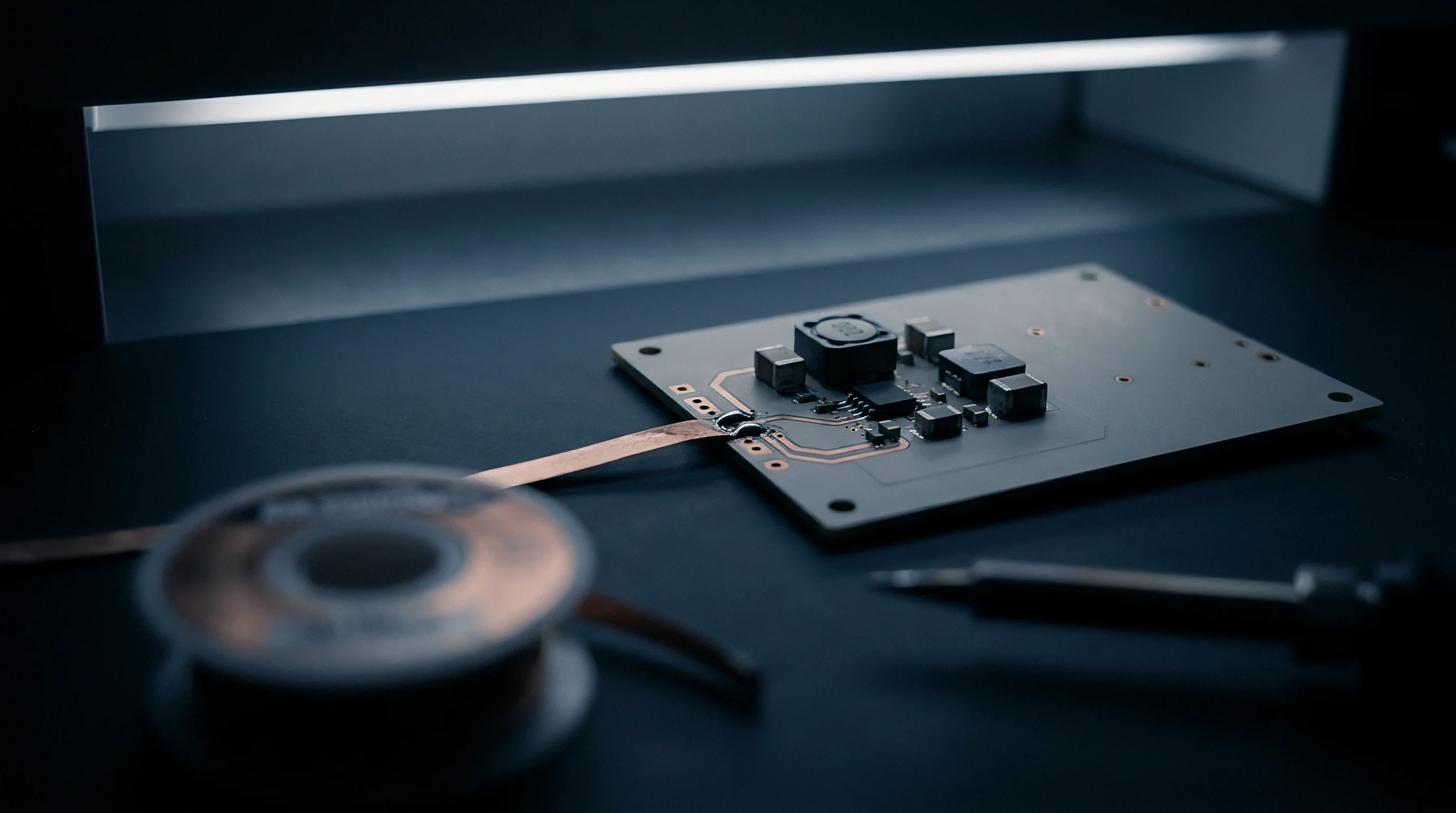

Bleed
Low-viscosity resin components migrate laterally along the glass fabric filaments when thermal ramps exceed five degrees Celsius per minute. Resin bleed alters the dimensional profile of internal core boundaries, distorting clearance channels around high-voltage vias. Microsections demonstrate that phase extraction creates a density gradient across the dielectric interface.
Dielectric constants vary continuously across this boundary layer rather than exhibiting an abrupt step transition.
Phase separation concentrates uncrosslinked oligomers along the copper foil treatment layer. Reduced chemical bonding between the epoxy matrix and copper oxide treatments degrades peel strength. Thermal cycling induces delamination along these weakened interfaces.
Differential thermal expansion induces shear stress. Signal traces on outer layers experience impedance fluctuations caused by non-uniform dielectric backing.
IPC-4101 Clause 3.8.1 rejects laminate core lots displaying resin phase separation wider than fifty micrometres along internal interfaces.

Will Differential Thermal Expansion Cause Interfacial Phase Extraction?
Internal stresses building along heterogeneous core boundaries force uncrosslinked epoxy oligomers out of the matrix before peak cure occurs. Glass transitions occur at different temperatures. Soft hydrocarbon cores expand rapidly along the Z-axis while adjacent polyimide cores remain rigid.
This volumetric mismatch generates local pressure spikes that extract lower-molecular-weight fractions from the curing thermoset matrix.
Phase extraction depletes resin from the core surface, exposing glass micro-fibers directly to adjacent copper foil teeth. Mechanical anchorage drops. Laser drill beams scatter off exposed glass filaments during blind via formation, creating irregular hole geometries and ragged barrel walls.
Desmear chemistry attacks the depleted resin interface aggressively, undercuting copper pads and triggering plating folds during electrodeposition.
- Bake inner cores at one hundred and fifty degrees Celsius for four hours to eliminate moisture and residual solvents before lay-up assembly.
- Apply silane coupling agents to exposed copper clearance zones to stabilize the chemical bond between mismatched resin interfaces.
- Ramp platen temperature at one point two degrees Celsius per minute to synchronize minimum viscosity windows across all hybrid core layers.
- Hold hydraulic pressure at zero point five megapascals during initial resin liquefaction to limit lateral fluid displacement before applying full compaction force.

Quantifying the Gradient Dielectric Shift
Cross-sectional microsections evaluated with energy-dispersive X-ray spectroscopy reveal localized variations in resin density extending up to eighty micrometres from the foil boundary. Extractable low-molecular-weight fractions alter the effective permittivity of the dielectric medium. Signal propagation speed varies across differential pair conductors, introducing phase skew in high-speed digital buses.
Polymer extraction alters local dielectric values.
| Distance from Core Boundary (um) | Extractable Low-MW Fraction (%) | Local Resin Density (g/cm3) | Local Dielectric Constant (10 GHz) | Local Dissipation Factor (10 GHz) |
|---|---|---|---|---|
| 0 (Interface Boundary) | 14.2 | 1.12 | 3.82 | 0.0085 |
| 20 | 9.8 | 1.18 | 3.65 | 0.0062 |
| 40 | 5.1 | 1.22 | 3.52 | 0.0041 |
| 60 | 2.3 | 1.25 | 3.48 | 0.0038 |
| 80 (Bulk Material) | 1.1 | 1.26 | 3.46 | 0.0037 |
Stackup calculations assuming a constant dielectric value yield inaccurate impedance predictions for multi-gigahertz designs. A twelve-layer hybrid stackup incorporating hydrocarbon RF cores over high-Tg FR-4 digital cores displays nominal fifty-ohm trace impedance calculated at forty-six point two ohms when resin extraction occurs. The six percent impedance error stems directly from the resin-dense layer formed adjacent to the RF trace.
Solder mask clearance demands tight tolerance.
Interfacial resin depletion increases localized dielectric loss tangent figures by up to one hundred and thirty percent within forty micrometres of the core boundary. High-frequency signals attenuation accelerates. Heat accumulation along narrow trace channels intensifies thermal degradation risks during continuous high-power operation.
IPC-6012 Section 3.3.2 specifies a maximum allowable core void size of 75 micrometres, forcing lot rejection whenever resin phase extraction leaves unreinforced dielectric cavities along trace walls.


Kinetics
Cure progression rates dictate the window during which resin gradient separation can occur. Differential scanning calorimetry traces confirm that crosslinking reaction speeds vary significantly between epoxy, polyimide, and hydrocarbon chemistries. When thermal energy enters the lamination stackup, low-molecular-weight fractions soften first.
Kinetic reaction order governs the polymerization rate. Rapid crosslinking closes the flow window, preventing extensive matrix phase extraction.
Slow reaction kinetics leave the resin in a low-viscosity state for extended durations under elevated pressure. Fluid matrix escapes along the outer edges of the manufacturing panel. Squeeze-out forces structural glass styles against internal copper features, driving signal trace conductors directly into contact with glass bundles.
Glass weave skew manifests as differential traces cross alternating glass knuckles and resin-rich pockets.
At a heating rate of 3 degrees Celsius per minute, hydrocarbon prepreg reaches its minimum viscosity of 140 Pascal-seconds at 162 degrees Celsius.
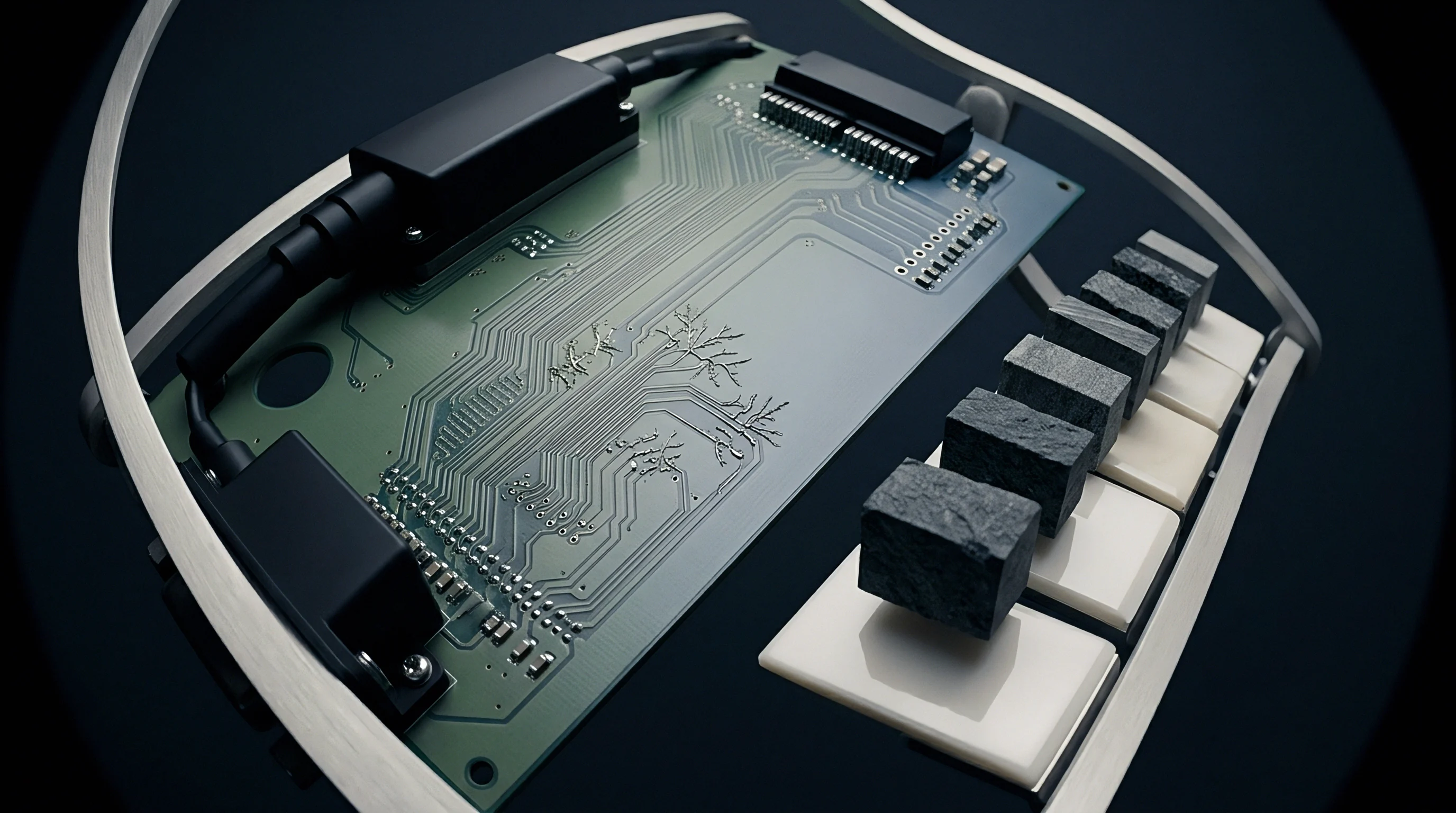
Thermal Cycle Calibration and Isothermal Holds
Staging the platen temperature at intermediate plateaus stabilizes resin viscosity across dissimilar prepreg chemistry packages. Thermal equilibrations eliminate internal temperature gradients across multi-opening press loads. Outer panels in press book assemblies absorb heat faster than center panels.
Isothermal holds equalize core temperatures, aligning the flow windows of all composite layers before applying final hydraulic force.
Vacuum pressure must be sustained below twenty millibars throughout the initial heating phase to prevent moisture vaporization. Water vapor trapped within low-viscosity resin pockets expands during cure, generating microscopic blister voids. Blister voids reduce breakdown voltage strength across thin core dielectrics, causing electrical shorts during high-voltage isolation testing.
- Load press books into multi-platen vacuum chambers pre-heated to sixty degrees Celsius.
- Evacuate press chamber to fifteen millibars absolute pressure for twenty minutes prior to heating.
- Ramp temperature at one point eight degrees Celsius per minute to one hundred and thirty-five degrees Celsius.
- Maintain isothermal hold for thirty minutes under zero point six megapascals hydraulic pressure.
- Increase hydraulic pressure to two point one megapascals and ramp temperature to one hundred and ninety-five degrees Celsius.
- Hold peak temperature and pressure for ninety minutes to achieve complete polymer crosslinking.
- Cool assembly under full compaction pressure at two point five degrees Celsius per minute until temperature drops below seventy degrees Celsius.
Differential Scanning Calorimetry Verification
Enthalpy curves extracted from cured core coupons confirm complete crosslinking across both thermoset and thermoplastic phases. Unreacted monomer residues indicate incomplete curing caused by local stoichiometric alterations. Extractable oligomers act as plasticizers inside the cured matrix, reducing thermal resistance parameters including T260, T288, and time-to-delamination values under solder reflow conditions.
Re-evaluating cure profiles ensures that interface zones achieve full thermal stability. Dynamic mechanical analysis reveals glass transition temperature degradation in zones affected by resin phase extraction. Registration shifts destroy fine line features.
Board designs exposed to multiple reflow cycles suffer inter-laminar separation when interface transition temperatures drop below operating environments.
Whether secondary post-cure baking can fully stabilize crosslinking in extracted low-molecular-weight resin gradients without degrading adjacent copper foil adhesion remains unproven in high-frequency field environments.

Margin
Financial losses in hybrid core manufacturing stem primarily from localized impedance variations caused by resin depletion. Yield metrics drop when panel margins exhibit edge bleed exceeding established tolerance thresholds. Outer panel edges experience extreme hydrostatic pressure gradients, driving massive resin migration away from active array areas.
Panel edges yield lower mechanical stability. Scrap rates surge when trace impedance on peripheral boards strays outside standard ten percent tolerance bands.
Material utilization efficiency decreases when large border dams are added to mitigate resin migration. Border dams isolate active circuits from pressure drops at panel edges. High laminate costs amplify yield penalties.
Soft core materials priced above two hundred dollars per square metre penalize panel layouts that sacrifice usable board area for flow-control structures.
Wider picture-frame dams on internal layers restrict lateral resin displacement across soft core substrates.
Panel Array Edge Waste and Boundary Dams
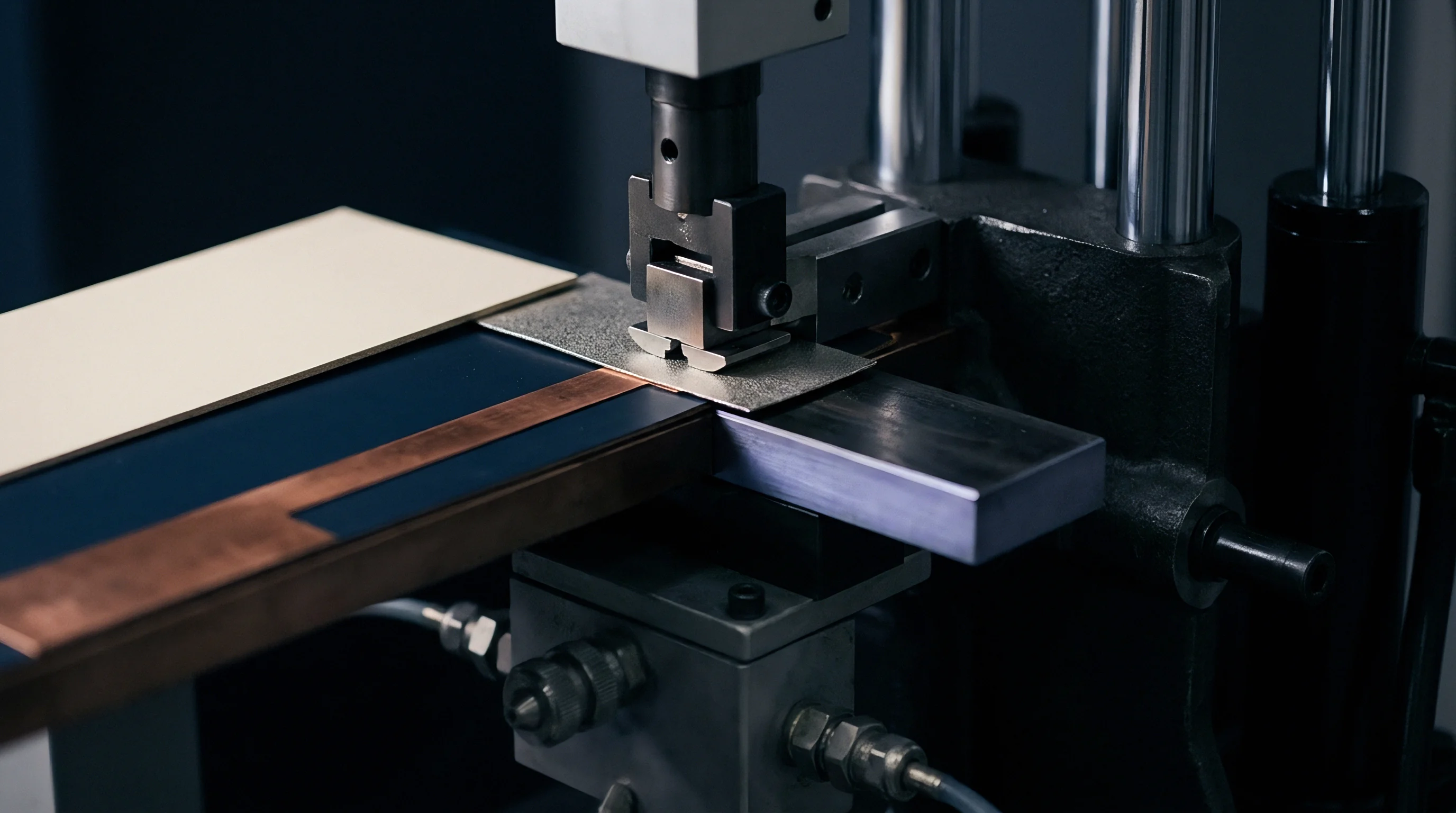
Peripheral copper picture frames placed on internal core layers act as physical barriers against excessive resin escape. Copper thief patterns equalize internal pressure distribution across the panel surface. Dense copper frames restrict lateral resin flow, keeping low-viscosity matrix material within active board contours.
Dam width requirements scale directly with the viscosity difference between adjacent prepreg layers.
| Core Combination | Dam Clearance (mm) | Usable Array Area (%) | Panel Yield Rating (%) | Landed Board Unit Cost ($) |
|---|---|---|---|---|
| Standard FR-4 Core Pair | 5.0 | 78.5 | 94.2 | 12.40 |
| Hydrocarbon / FR-4 Hybrid | 12.5 | 68.2 | 82.1 | 28.90 |
| PTFE / Polyimide Hybrid | 20.0 | 58.4 | 69.5 | 64.10 |
| Data derived from standard 18×24 inch production panels using 1-ounce internal copper layers and 1.6 mm finished board thickness under IPC Class 3 inspection criteria. | ||||
Yield Mechanics and Commercial Risk Distribution
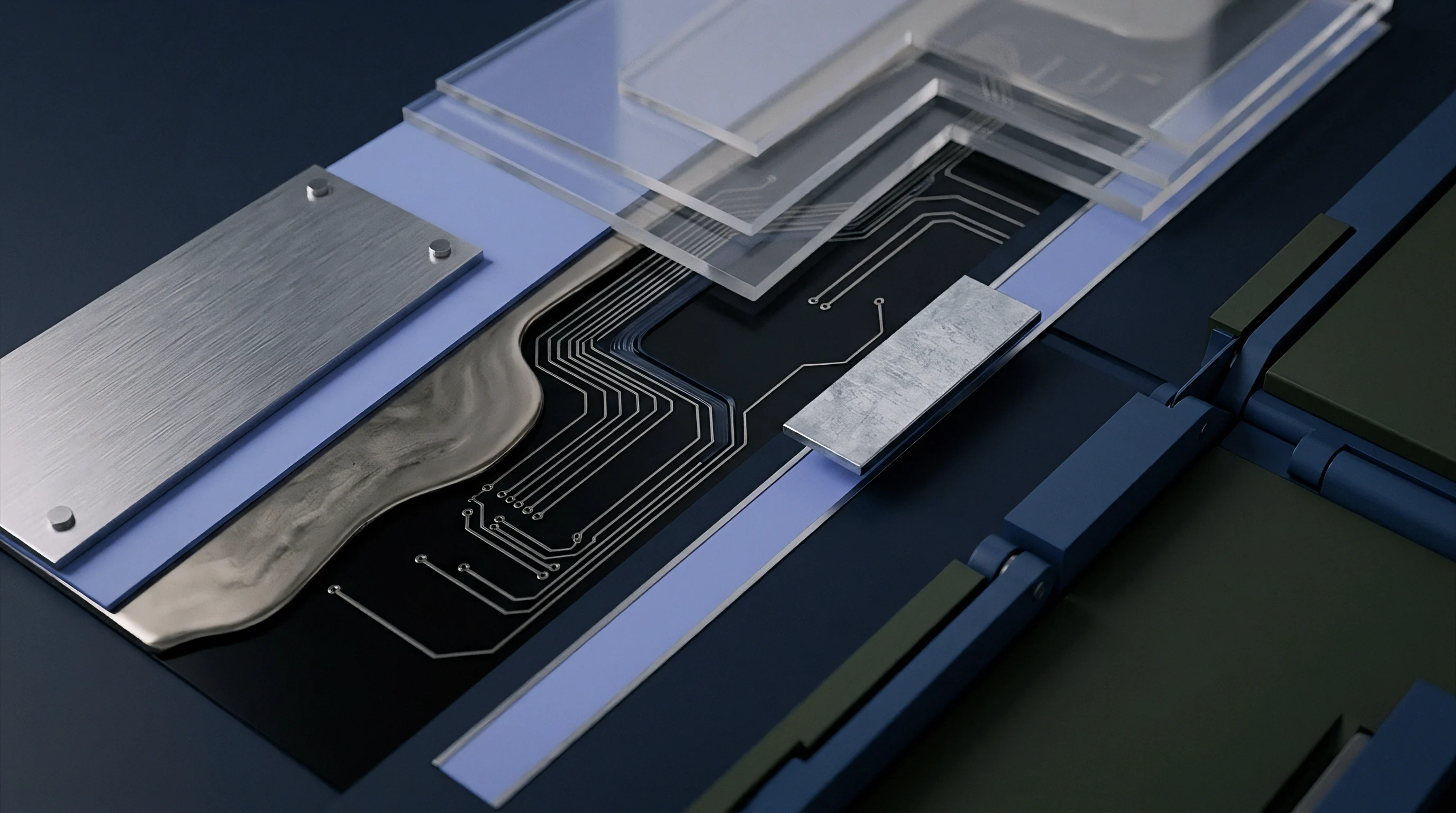
Scrap allowances written into master supply agreements frequently fail to cover the high material cost of specialized microwave laminates. Fabricators build risk margins directly into unit quotes when processing complex heterogeneous stackups. Impedance variations trigger signal degradation.
Unanticipated resin extraction during lamination forces additional panel testing, increasing baseline quality assurance costs by up to eighteen percent across the production lot.
Optimizing lamination parameters preserves margin by maximizing usable panel area and reducing electrical fallout. Design teams and purchasing managers prevent cost overruns by specifying flow-restrictive prepreg variants during initial stackup architecture layout. Proper material selection minimizes resin phase separation, maintaining dielectric uniformity across the entire panel surface.
Thicker outer dams preserve internal dielectric uniformity whenever soft core materials interface with high-pressure glass prepregs.