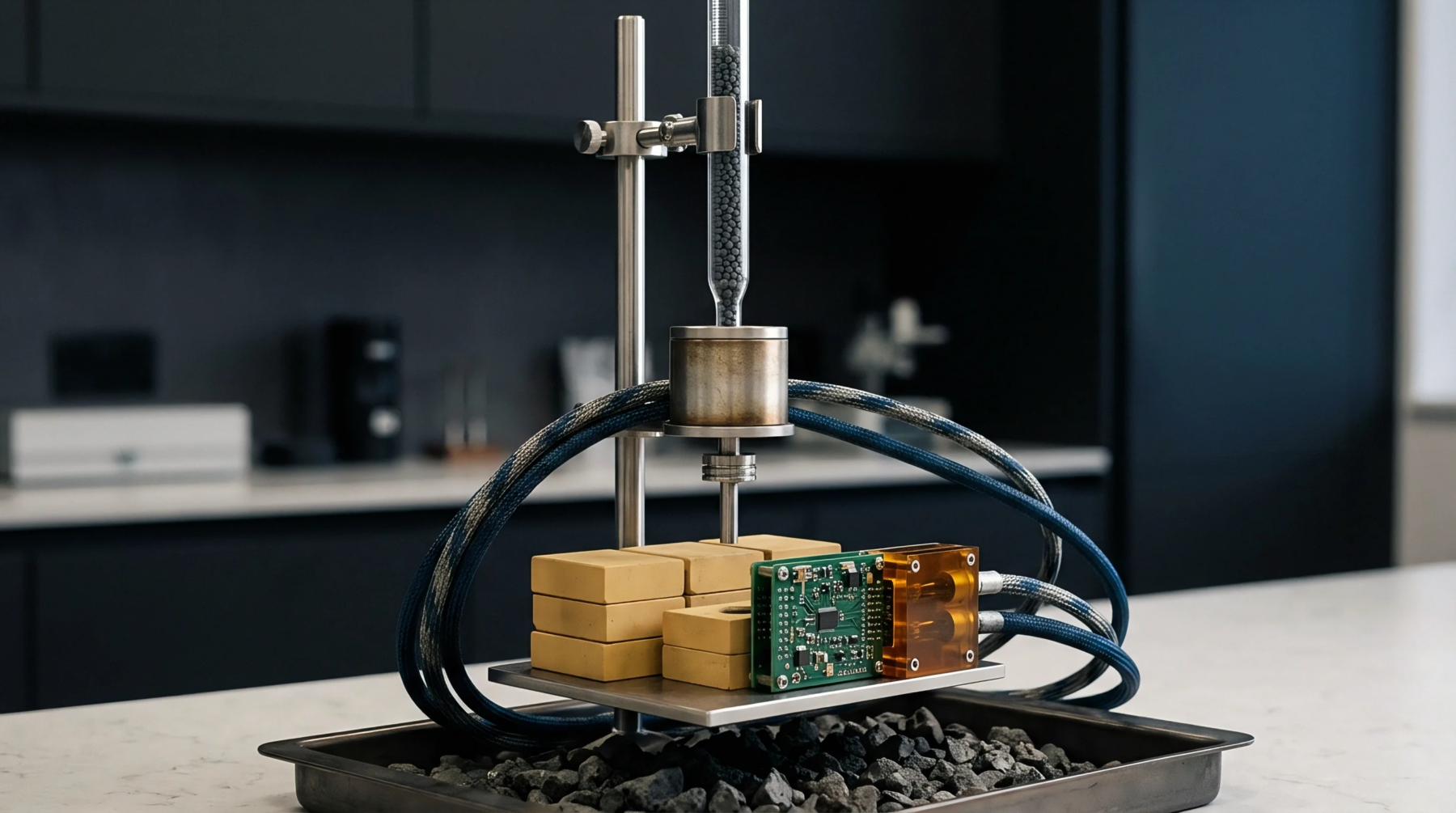
Fluid Force
Mechanical insertion systems utilize controlled physical force to secure compliant pin connectors into multi-layer printed circuit boards. Applying hydraulic pressure allows press-fit machines to generate the consistent, controlled tonnage needed for these heavy insertions. The system translates pressurized fluid flow into linear force via a piston assembly.
This method maintains a uniform rate of descent throughout the entire press cycle.
Assembly Integration
Automated tooling monitors this mechanical force continuously to prevent board cracking or pin buckling. In automated backplane assembly, hydraulic pressure ensures that the connector is fully seated to the correct depth. The machinery records the force-vs-distance curve for each press operation to verify that insertion limits are respected.
This logging allows operators to detect weak joints or oversized holes immediately. The hydraulic cylinder must maintain a steady rate of travel, preventing the sudden shock loads that could fracture internal copper planes or break ceramic bypass capacitors.
Process Boundaries
Sudden spikes in pressure usually indicate misalignment or bent pins that block proper insertion. When hydraulic pressure exceeds a pre-set threshold, the machine halts the sequence to protect the board from catastrophic fracturing. This safety threshold varies depending on board thickness and the total pin count of the connector.
Reliable joint formation is achieved only when the hydraulic system operates within these defined force boundaries.