Lumped Heating Rate
The duration required for a physical body to reach approximately sixty-three point two percent of its final steady-state temperature change in response to a step-function thermal input defines its transient thermal inertia. Mathematical modeling uses the thermal time constant to characterize heating and cooling rates of bare circuit boards, mounted components, and automated soldering equipment during thermal processing. The metric applies across convection reflow ovens, selective soldering nozzles, and post-assembly power cycling operations.
Calculations govern temperature transitions between initial thermal balance and steady-state operating equilibrium. The measurement becomes inapplicable under uneven spatial heating where lumped thermal capacity assumptions break down.
Process Dynamics
Physical mass, specific heat capacity, surface area, and convective heat transfer coefficients dictate the transient thermal response of an assembly. Thick multi-layer printed circuit boards containing continuous heavy copper power planes possess large thermal mass, resulting in extended thermal time constants compared to thin, low-layer-count substrates. During convection reflow profiling, components with widely varying time constants experience divergent heating trajectories, creating localized temperature deltas across the board surface.
Small discrete passive chips heat up rapidly, whereas large ball grid arrays and shielded power inductors lag significantly behind ambient oven zone temperatures. Soldering profiles must incorporate sufficient soak time to allow assemblies with divergent time constants to reach thermal equilibrium before crossing the liquidus threshold. Failure to balance these rates causes tombstoning on small components or incomplete solder melting beneath massive packages.
Profiling Conformance
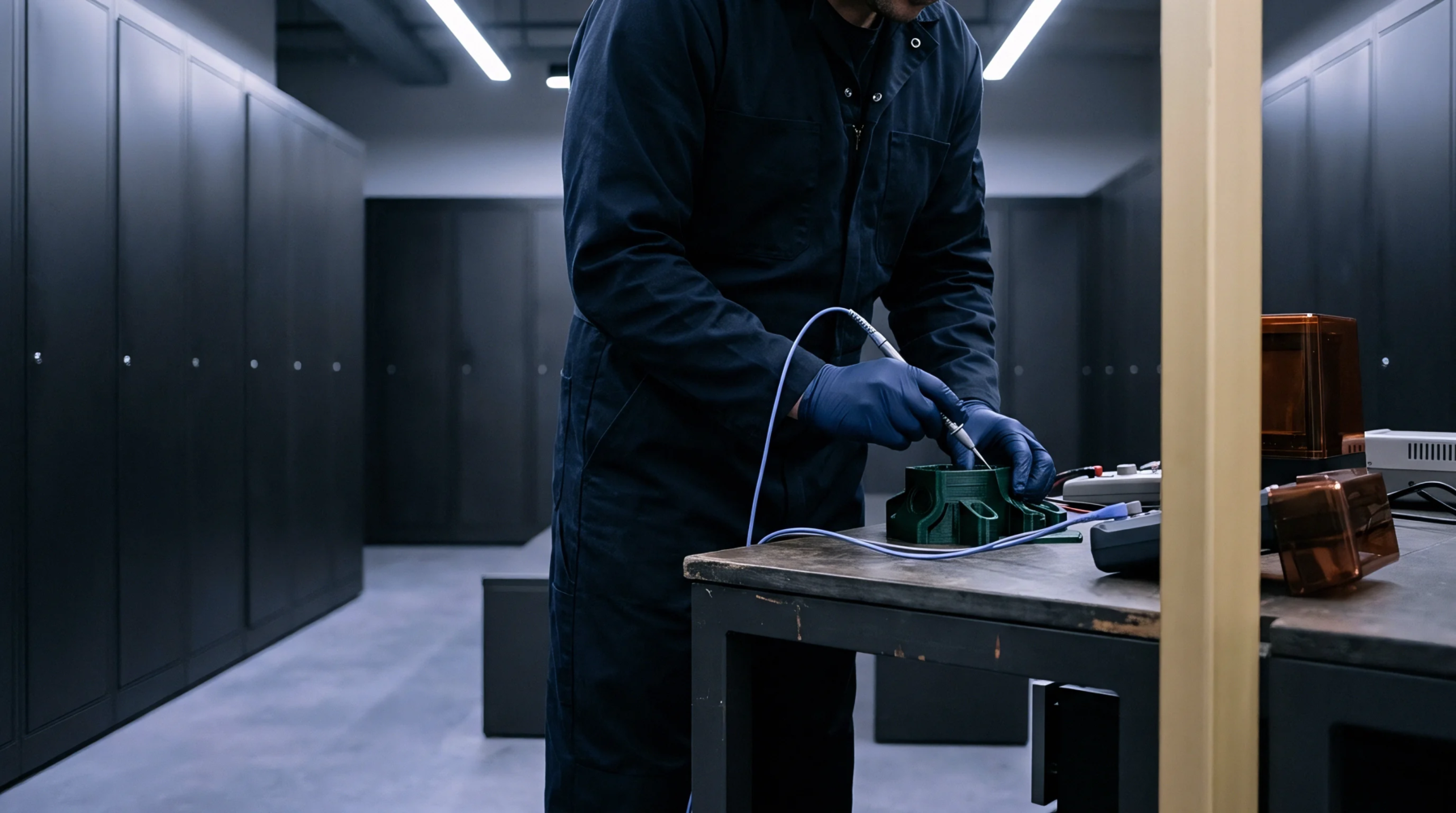
Process profiling instruments connect calibrated trailing thermocouples to multiple positions on populated test boards to record thermal response curves across reflow belts. Recorded heating profiles yield exact time constant values through exponential decay and rise calculations matching empirical data. J-STD-020 defines component moisture and reflow sensitivity classifications, establishing maximum ramp rates that assemblies can withstand without inducing package delamination or die popcorning.
Solder joint inspection verifies whether joints achieved adequate dwell time above liquidus across both low and high time-constant components. Conformance mandates that reflow profiles achieve wetting angles below ninety degrees across all package footprints without exceeding maximum peak temperatures. Thermal profiling fails process verification if trailing thermocouples reveal time-constant variations exceeding allowable process window indices.