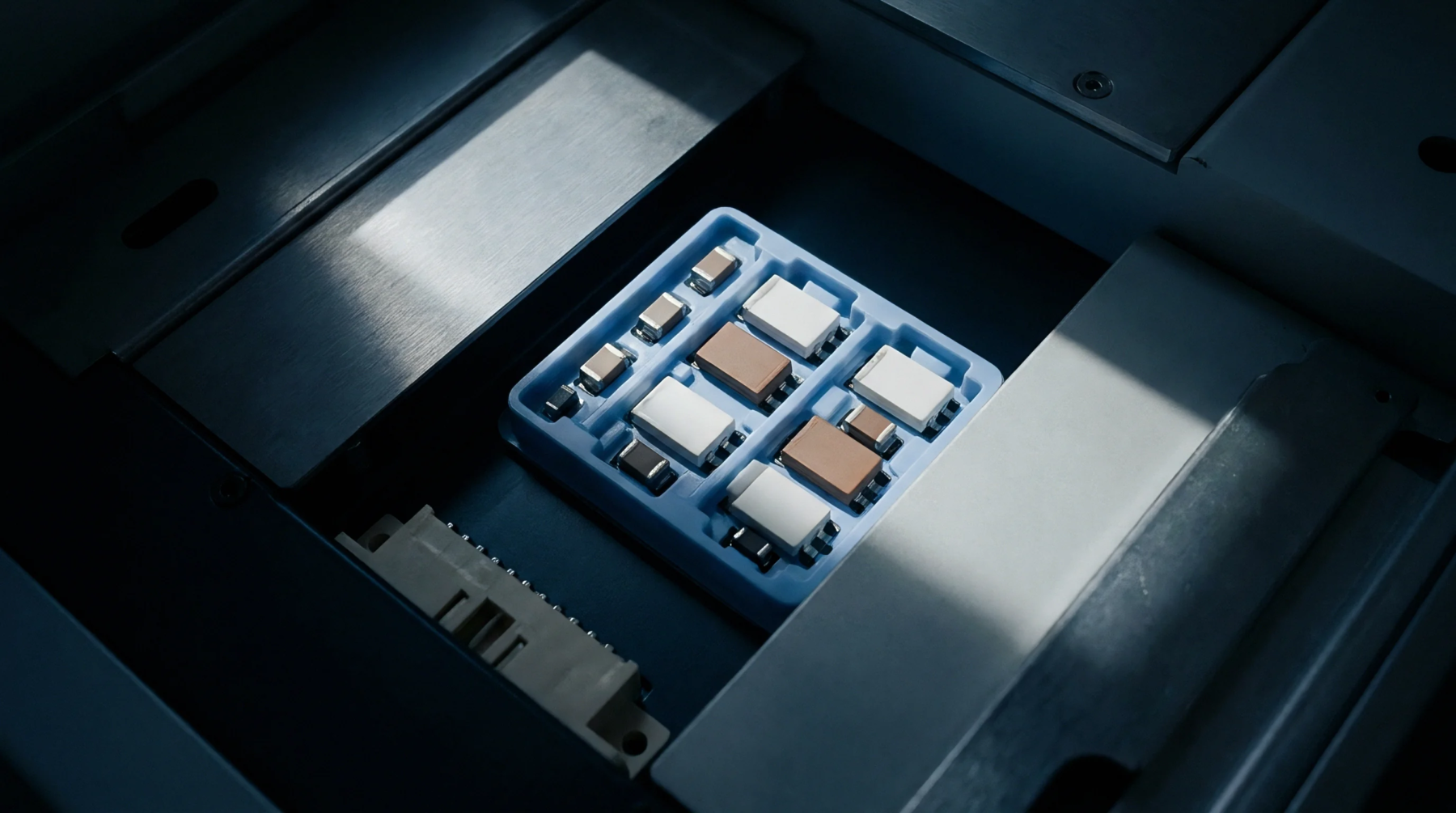
Compliance Interface
Compressible dielectric sheets manage thermal impedance between high-heat semiconductor packages and metal heat spreaders during power module assembly. Thermal transfer cushion pads provide a conformable contact surface that fills microscopic gaps on uneven contact faces. These materials reduce the total thermal resistance by displacing interstitial air while maintaining electrical isolation.
Mechanical pressure applied by mounting hardware secures the assembly to ensure consistent thickness throughout the lifespan of the component.
Interface Mechanics
Surface topography on cast or extruded heat sinks creates non-uniform contact zones that inhibit heat conduction from the chip surface. Thermal transfer cushion pads overcome this variation by deforming under torque to create a continuous bridge across the thermal path. Soft polymer matrices loaded with ceramic particles exhibit high compliance to permit full contact with brittle silicon dies without excessive clamping force.
Internal reinforcement structures prevent lateral flow or extrusion when thermal expansion occurs during extended duty cycles. Operators regulate the thickness of the bond line by controlling the fastener torque applied to the stack.
Performance Boundaries
Environmental conditions such as extreme temperature fluctuations or moisture ingress affect the long-term stability of the interface material. Thermal transfer cushion pads degrade through outgassing or hardening when the internal polymer structure exceeds its designated maximum operating temperature. Permanent material deformation limits the ability of the pad to recover after the removal of the clamping load.
Proper selection criteria necessitate an analysis of the peak junction temperature against the specific thermal conductivity rating of the chosen pad grade. High reliability applications require materials that resist oxidation and retain flexibility under continuous thermal cycling.