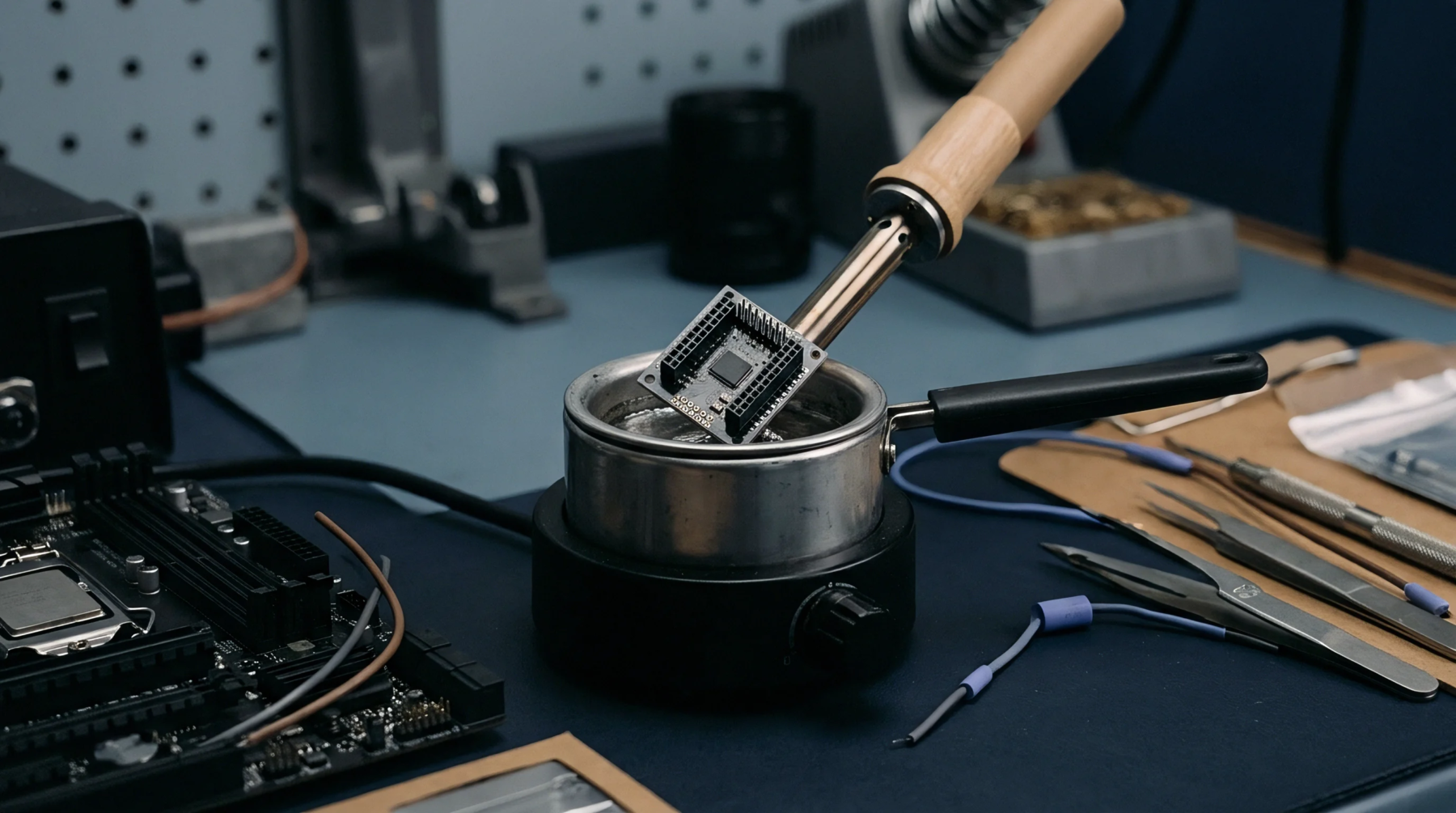
Temperature Surge
A rapid, localized rise in temperature during a soldering or rework operation can cause immediate thermomechanical damage to sensitive electronic components. During hand-soldering of surface mount devices, a transient thermal spike can exceed the maximum temperature rating of the silicon die or plastic package. This temperature surge leads to internal delamination or micro-cracking of the package mold compound.
Thermal Stress
The duration and magnitude of this localized heating are governed by the thermal mass of the pad, the solder alloy used, and the dwell time of the soldering iron tip. In automated selective soldering, managing the transient thermal spike is achieved by optimizing the preheating phase and controlling the solder pot contact time. If the temperature ramp rate exceeds three degrees Celsius per second, the risk of thermal shock increases dramatically.
This thermomechanical stress can fracture delicate ceramic capacitors or lift copper traces from the board.
Reliability Assessment
Real-time thermal profiling of the board during the soldering cycle ensures that the maximum temperature remains within safe limits. Post-soldering inspection using acoustic microscopy or visual examination checks for any signs of internal damage. This quality control step ensures that the thermal stress does not compromise the long-term reliability of the assembly.