Signal Attenuation
Insulation chemistry defines the primary measure of dissipation factor at high radio frequencies. An ultra-low loss dielectric achieves this performance through molecular structures that prevent energy absorption within the laminate substrate. Polymer chains in these materials exhibit nonpolar characteristics which minimize dipole rotation when alternating electromagnetic fields pass through the material.
Engineers select this substrate when circuit designs require minimal signal degradation during high speed data transmission. Substrate thickness impacts the impedance control and maintains the required signal integrity for long trace lengths.
Fabrication Tolerance
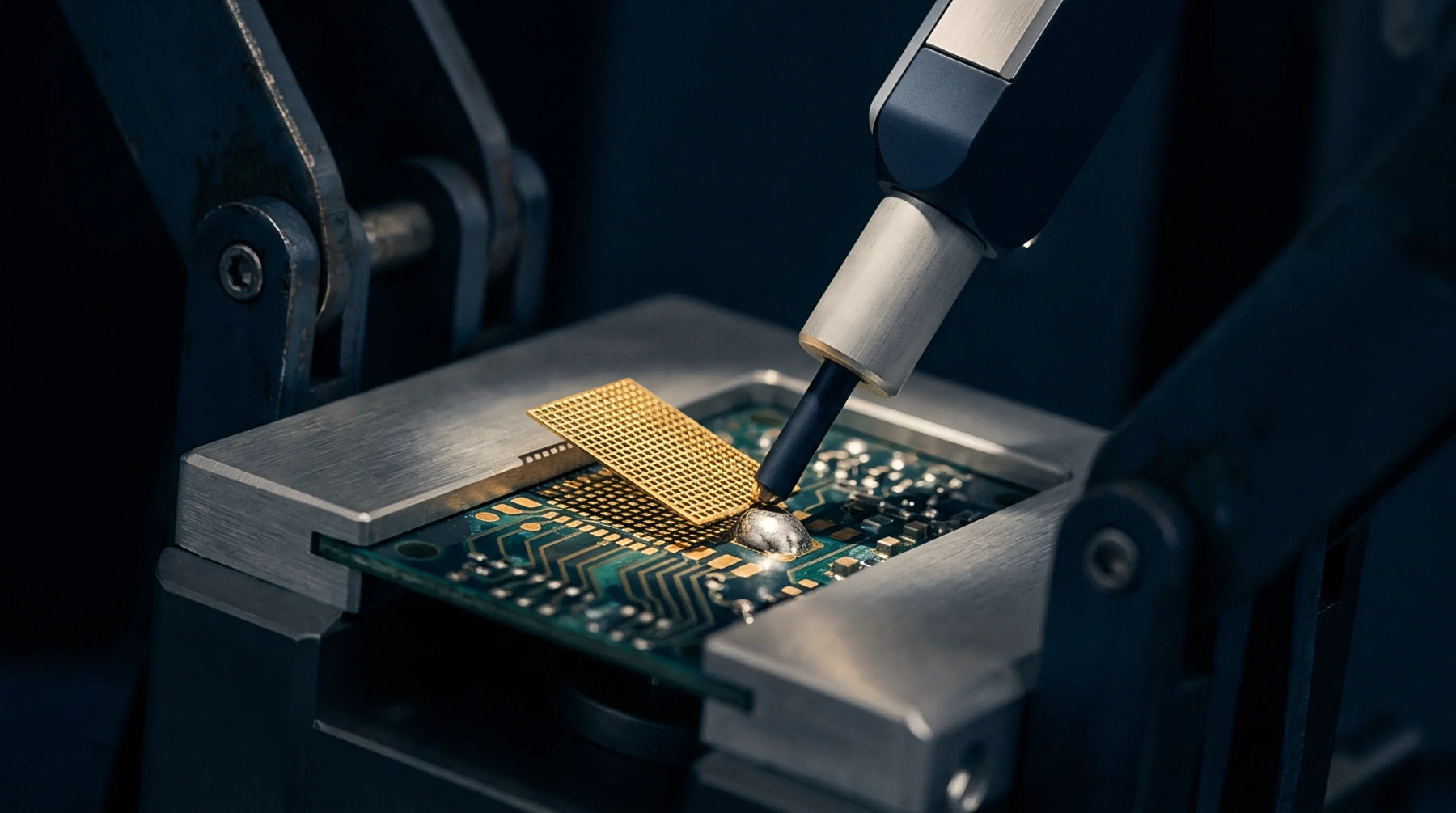
Etching copper circuits onto these base materials demands precise control over chemical bath parameters to prevent surface roughness. High frequency currents travel primarily along the outer layer of the conductor due to skin effect, so any irregular bonding interface increases insertion loss beyond the target limit. Manufacturers employ specialized plasma treatment to prepare the surface without introducing impurities that create dielectric leakage.
Processing equipment tracks thermal expansion coefficients to ensure copper adhesion remains stable throughout multiple lamination cycles. Vacuum presses consolidate these layers while maintaining the precise spacing required for controlled impedance geometries.
Performance Expectation
Transmission lines built with these materials sustain amplitude levels across gigahertz bands that standard glass fibre composites cannot support. Energy waste decreases as the dissipation factor drops below the threshold of zero point zero zero one. Designers verify this capability by measuring the phase delay and return loss of test coupons fabricated from the production batch.
Consistent performance across the entire surface area of the printed circuit board remains the primary criterion for success in millimeter wave applications. Precise resin distribution within the weave of the reinforcement fabric guarantees that the effective permittivity remains uniform across the design.