Simulation Technique
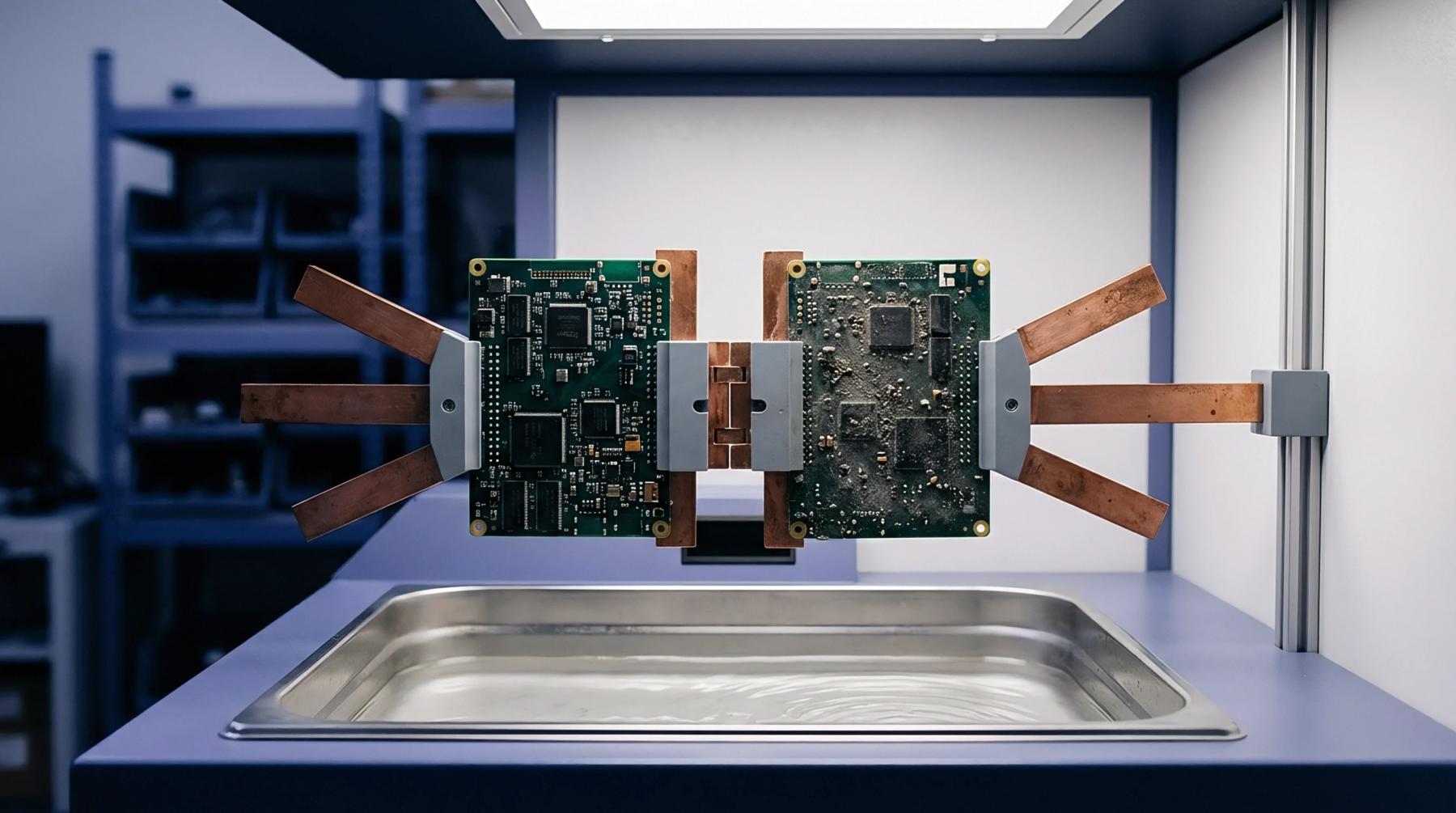
Software-based diagnostic modeling estimates electrical voltages and signals at nodes that cannot be physically accessed by test hardware. In modern electronic assemblies, virtual probing uses mathematical models and existing measurement points to calculate the signals at hidden nodes. This technique replaces the need to place physical spring probes on dense circuit boards.
It helps test engineers evaluate signal integrity without risking mechanical damage to the assembly. This mathematical modeling calculates transient voltages by analyzing adjacent signals and component state machines, allowing virtual access to buried circuit traces.
Calculated Advantage
Calculated values from these software runs are derived by feeding the inputs and outputs of the physical circuit into a digital model of the board. This method allows the tester to check internal nodes of fine-pitch components like ball grid arrays without adding physical test points that would consume valuable board space. By using these calculations, developers can maintain high test coverage while working on highly integrated, compact designs.
Technical Boundary
Limitations of this method arise when the mathematical model cannot account for all physical parasitics or trace variations. Real-world trace impedance and manufacturing tolerances can cause deviations between simulated and actual signal behavior. For this reason, virtual measurements are used as a complement to, rather than a full replacement for, physical electrical testing.