Thermal Footprint
Thermal dissipation across printed circuit board assemblies relies heavily on solder joint integrity, where voiding percentage measures the total trapped gas area relative to the total pad intersection. X-ray inspection systems quantify this internal porosity within reflowed bottom termination components like quad flat no-leads and ball grid array packages. Excessive gaseous pockets restrict both electrical conductivity and thermal transfer paths from the semiconductor junction to the internal copper planes.
Higher thermal resistance forces operating temperatures upward during high power switching operations. Designers establish maximum allowable limits in procurement specifications to prevent premature field failure caused by localized overheating.
Structural Threshold
Mechanical reliability under cyclic thermal shock depends entirely on the unbroken metallic volume holding the component to the circuit board. Voids act as stress concentrators during board flexing and thermal expansion mismatch between silicon dies and laminate substrates. Cracks initiate at the perimeter of internal pockets and propagate rapidly through the remaining solder fillet under vibration loads.
IPC standards govern acceptable limits for these discontinuities based on the class of electronic hardware being manufactured. Automotive applications demand lower void thresholds than commercial office equipment due to harsher vibration profiles and extended operational lifespans.
Process Optimization
Paste deposition parameters and thermal profile characteristics directly influence the formation of gas pockets during the reflow phase. Reducing entrapped volatiles requires precise control over the preheat soak duration and peak temperature dwell times inside the convection oven. Stencil aperture design also dictates flux release behavior and prevents excessive solvent entrapment beneath large thermal pads.
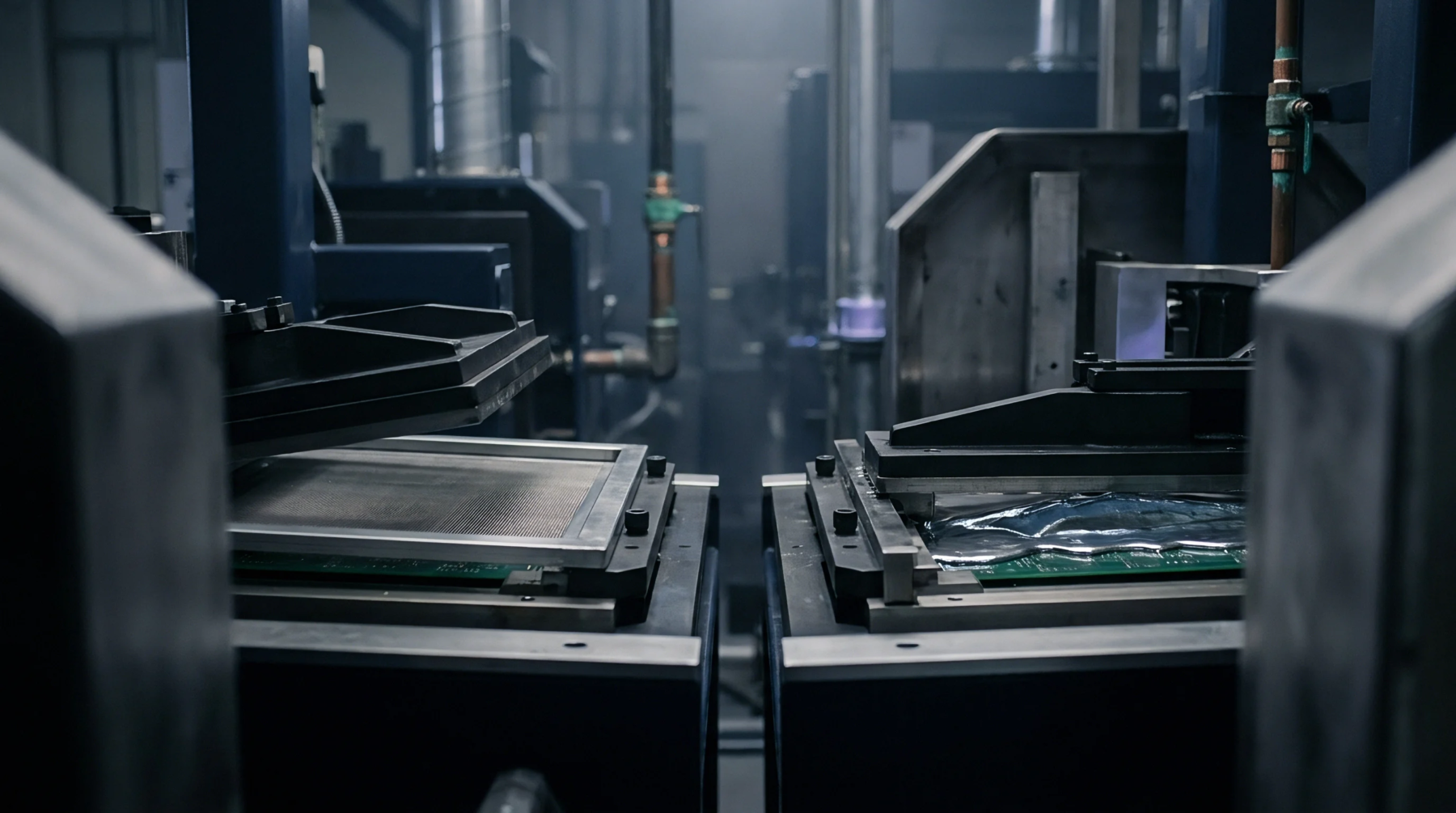
Vacuum assisted reflow systems eliminate residual bubbles by drawing down the chamber pressure while the alloy remains in a liquid state. Operators adjust conveyor speeds and temperature zones until computed defect rates align with contractual quality requirements.