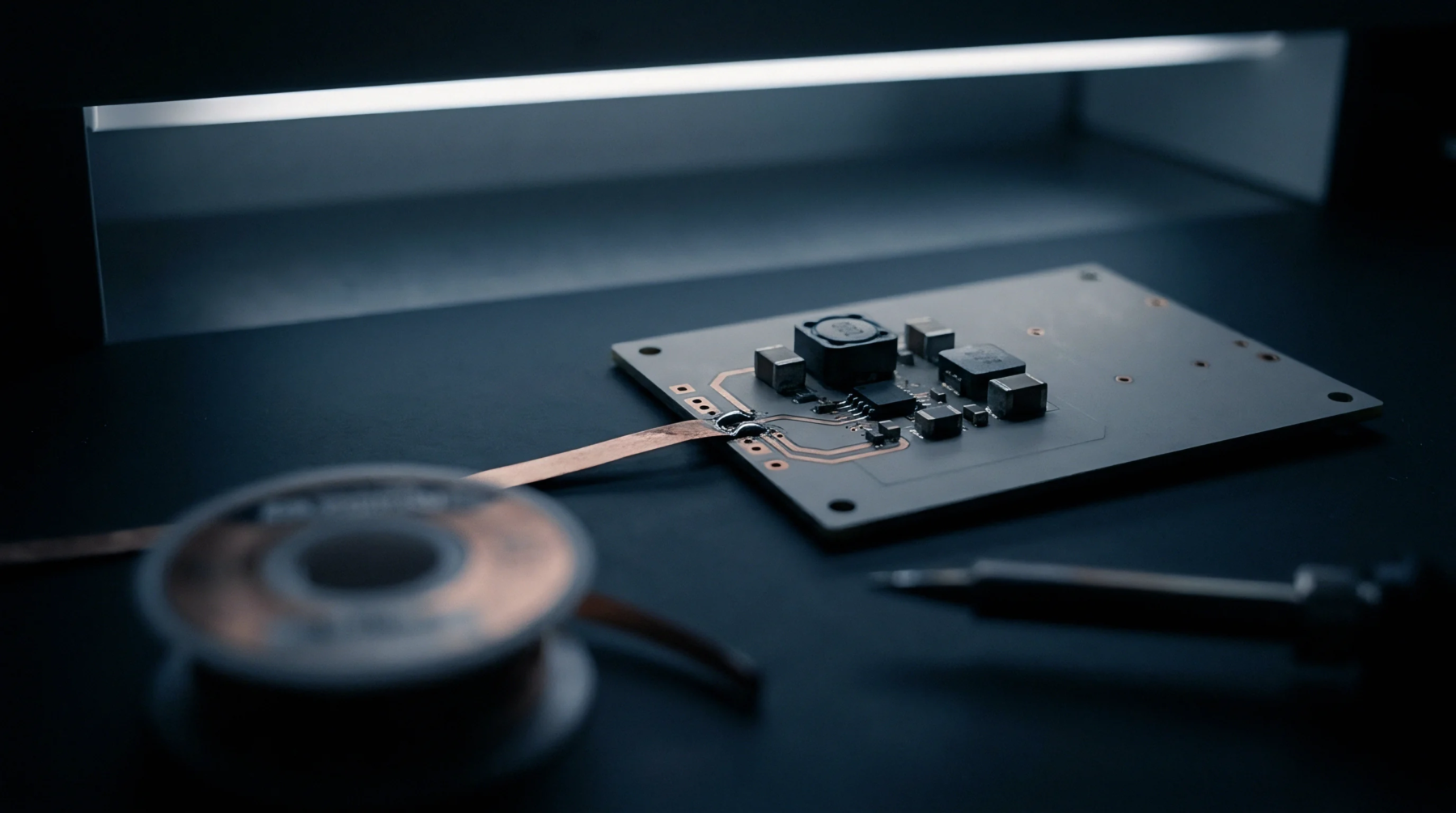
Interface Geometry
Numerical analysis of the contact point between liquid solder and a copper pad determines the quality of the metallurgical bond. Performing a wetting angle calculation involves measuring the angle formed where the solder fillet meets the printed circuit board surface. This value indicates whether the surfaces were clean and reached the correct temperature for the solder to flow properly.
Acceptance Criterion
IPC standards generally require an angle of ninety degrees or less for a joint to be considered acceptable. A wetting angle calculation that results in a larger value suggests a non-wetting condition where the solder has balled up rather than spreading. This often points to oxidation on the component lead or the board pad.
In extreme cases, the solder barely touches the surface (creating a cold joint that will fail prematurely).
Reliability Prediction
Engineers use high-resolution cross-section images to perform this measurement with high precision. The wetting angle calculation acts as a primary metric during the qualification of new flux formulations or solder alloys. Small changes in this angle can reveal subtle improvements in the chemical process that might not be visible to the naked eye.
Consistent results across a sample set confirm that the reflow profile is optimized for the specific materials in use.