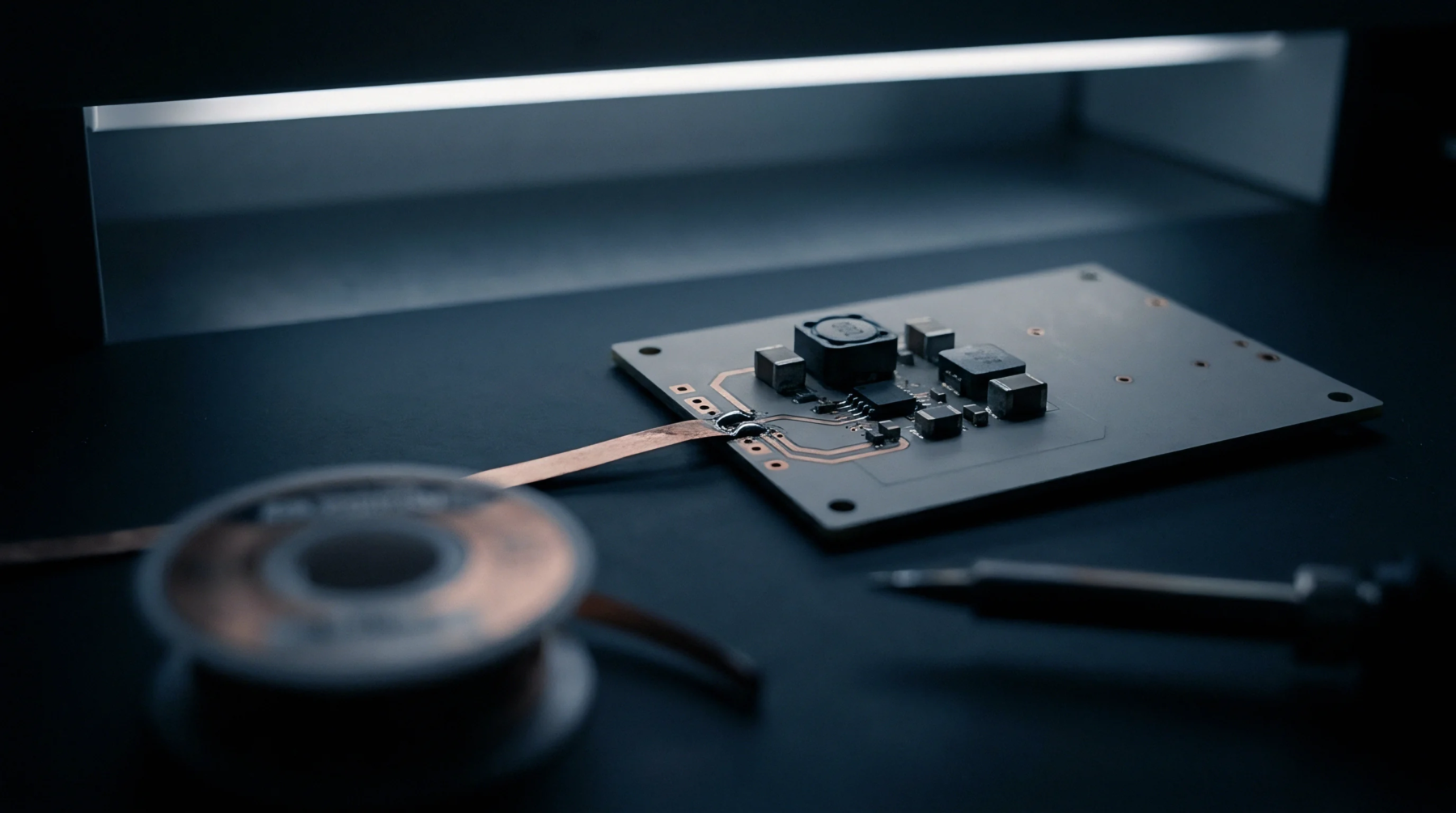
Substrate Distortion
Dimensional changes in a substrate occur when internal stresses are released during the high temperatures of the reflow oven. Measuring thermal warpage variance allows engineers to predict how much a board will bow or twist as it moves through the production line. This movement is a result of the different expansion rates between the fiberglass core and the copper layers.
Assembly Impact
Extreme heat causes the circuit board to lose its flat profile (which can lead to open circuits or bridged solder joints). Excessive thermal warpage variance is particularly problematic for large ball grid array components that require a perfectly flat surface for all pins to make contact. If the board curves too much, the outer balls may not touch the pads at all.
This defect often requires the use of specialized carriers or pallets to keep the PCB rigid during the heating cycle.
Measuring Technique
Shadow moire systems track the flatness of the board in real time across the entire temperature profile of the soldering process. These tools record the thermal warpage variance at specific increments (typically every five degrees Celsius). Data from these tests help designers adjust the copper balance on different layers to minimize the tendency of the board to bend.
Assemblies that exceed the allowed tolerance are rejected as they may fail mechanically during final enclosure fitting.