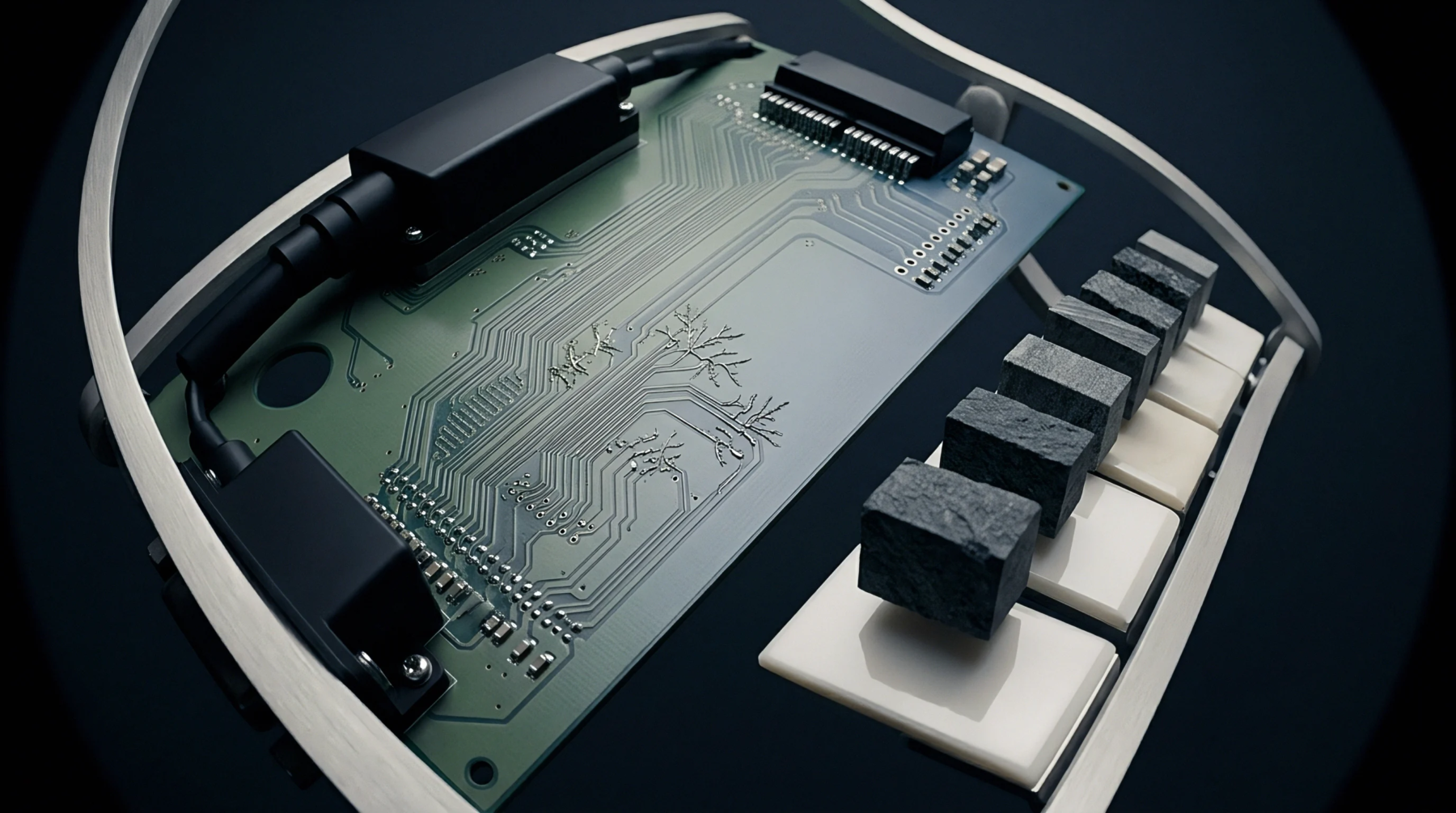
Dielectric Spectrum
Permittivity variation across a frequency band dictates board laminate signal integrity during high speed data transmission. Wideband Debye dispersion models the complex dielectric response of epoxy resin matrices under alternating electric fields through relaxation time distributions. Polarization lag generates dielectric loss inside printed circuit boards operating above ten gigahertz.
Core material selection requires precise tangent delta extraction across the whole operational range to prevent excessive insertion loss in surface mount assemblies. Laminate suppliers publish relaxation parameters derived from vector network analyzer measurements on standardized test coupons.
Resin Relaxation
Dipole orientation creates phase shifts between applied voltage and resulting current within glass reinforced substrates. Molecular chains rotate sluggishly when subjected to gigahertz frequencies, producing thermal dissipation inside the core material. Crosslinked polymer structures exhibit multiple relaxation peaks depending on hardener stoichiometry and curing temperature profiles.
Board fabrication presses must achieve complete polymerization to restrict mobile ionic impurities that broaden the relaxation spectrum. Insufficient thermal post curing leaves unreacted monomers free to oscillate, aggravating high frequency attenuation in differential pairs.
Signal Attenuation
Insertion loss escalation degrades channel operating margins inside backplanes and daughter cards. High frequency spectral components suffer disproportionate phase distortion during propagation through dispersive dielectrics. Engineers compensate for frequency dependent losses by applying preemphasis algorithms within transmitter silicon.
Automated optical inspection cannot detect subsurface resin variations, making electrical testing on coupon traces mandatory for process verification. Impedance controlled routing layouts mitigate timing jitter caused by dielectric memory effects.