Expansion Measurement
The fractional dimensional change of a printed circuit substrate perpendicular to its planar surface per degree of temperature change establishes the thickness stability of laminated composite materials. Material data sheets define the z-axis coefficient of thermal expansion to characterize how base laminates expand vertically relative to embedded metallic features under thermal loads. Below the glass transition temperature, laminate expansion remains constrained by polymer chains and resin composition chemistry.
Exceeding this thermal transition threshold initiates unconstrained volumetric expansion where the rate of thickness change surges dramatically. Designers evaluate this thermodynamic rate to prevent barrel cracking, pad lifting and inner layer separation inside plated through-hole structures during lead-free assembly reflow.
Failure Mechanism
Mismatched dimensional movement between adjacent materials drives structural fatigue inside bare and assembled printed boards. Copper electroplating within through-hole barrels exhibits a linear expansion rate near seventeen parts per million per degree Celsius, whereas standard laminate matrices expand along their vertical axis at rates ranging from forty-five to seventy parts per million below their transition temperatures. Above this glass transition point, laminate expansion rates often accelerate past two hundred parts per million per degree Celsius.
Because horizontal glass cloth fibers restrict lateral x-axis and y-axis movement, thermal expansion forces push almost exclusively into the vertical z-axis. This mechanical strain applies severe tensile stress to plated copper cylinders, pulling on corner knees and internal plane junctions. Cumulative reflow passes induce barrel cracks or microvia base separations when resin expansion exceeds the ultimate tensile strength of electrodeposited copper.
Acceptance Characterization
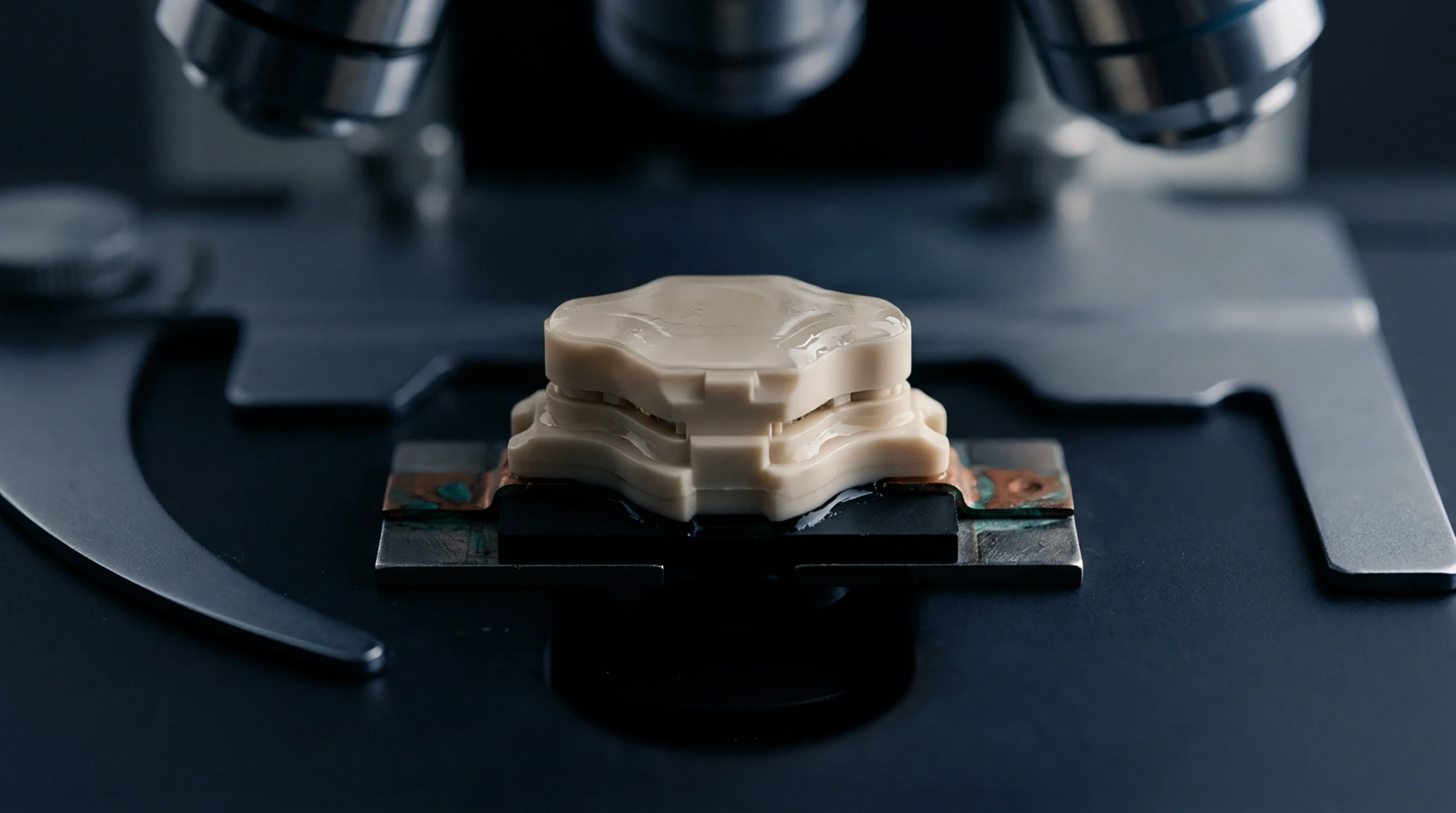
Laboratory technicians measure vertical dimensional changes using thermomechanical analysis instruments described in IPC-TM-650 test method 2.4.24. Quartz probes positioned on laminate test specimens track microscopic vertical deflection as environmental chambers ramp temperatures up to 288 degrees Celsius. The resulting thermal curves identify the precise inflection point of glass transition alongside linear expansion rates across both pre-transition and post-transition zones.
Class 3 high-reliability procurement criteria specify maximum total expansion limits, often capping vertical growth between ambient temperature and 260 degrees Celsius at under three percent. Laminate selection for complex high-layer-count substrates relies on these thermal characterizations to guarantee plated via survival across multiple assembly and rework cycles.