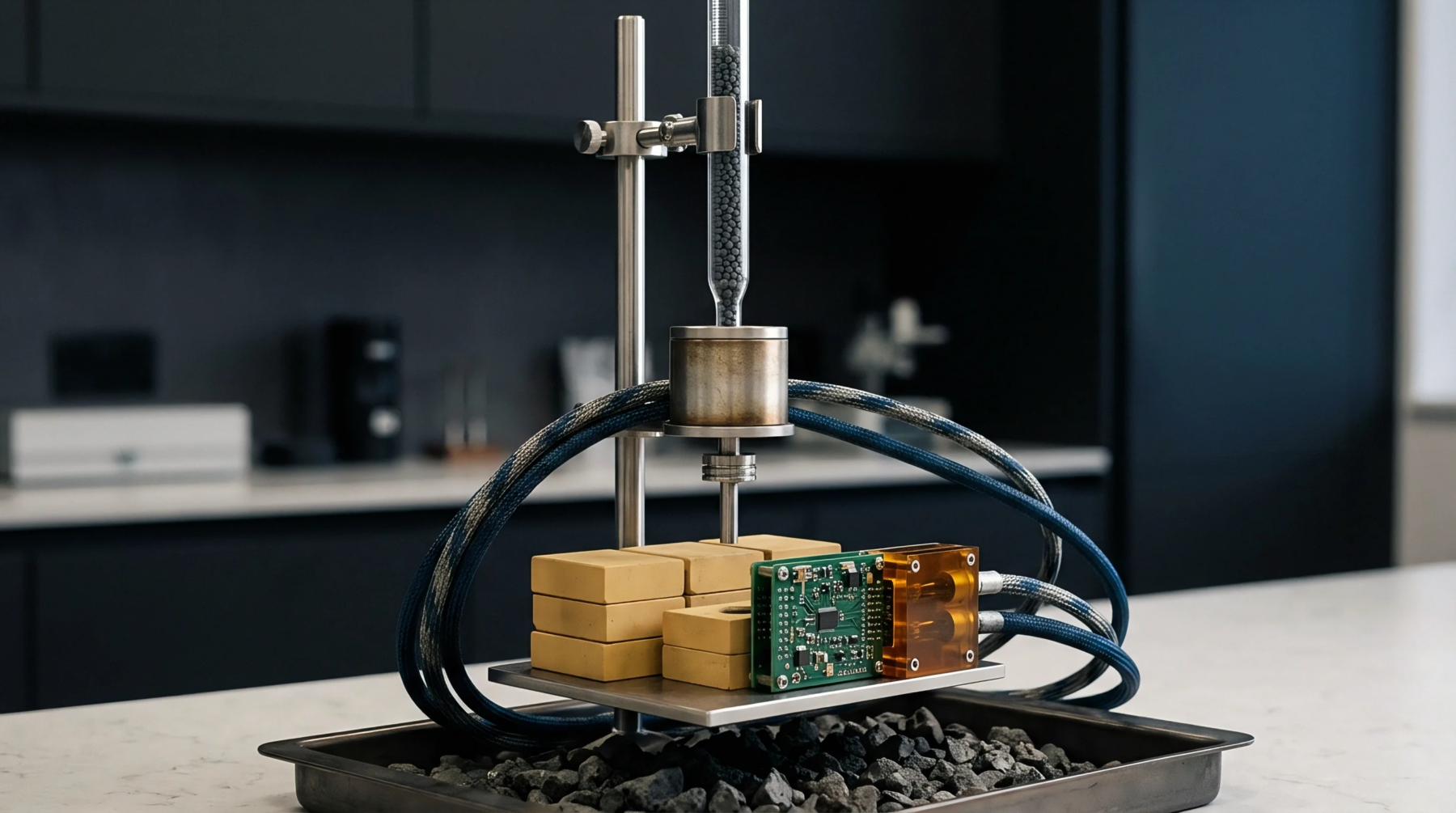
Placement Mechanics
Precision motion control systems regulate vertical acceleration and terminal velocity during automated component placement. In surface mount technology assembly, Z axis stroke dynamics governs the vertical movement profile of pick-and-place nozzles as they press electronic components into wet solder paste. The parameter determines placement force, paste squeeze-out behavior, and mechanical impact stress on delicate silicon dies.
Scope stops at physical nozzle deceleration and impact dynamics, excluding horizontal XY table positioning accuracy.
Kinematic Profile
High-speed placement heads utilize closed-loop voice coil motors or servo drives to execute controlled downward strokes. Rapid acceleration moves the component toward the substrate surface, followed by controlled deceleration just before contacting solder paste deposits. Programmed placement force compresses solder paste to a predetermined height, establishing mechanical adhesion before nozzle vacuum release.
Excessive downward velocity drives solder paste outward, creating solder bridging defects between adjacent fine pitch leads.
Impact Boundary
Sensor-based impact detection measures dynamic force spikes when component leads strike printed circuit board landing pads. Mechanical shock from uncalibrated Z-axis movement cracks ultra-thin silicon dies inside wafer-level chip-scale packages. Soft-landing control algorithms reduce impact forces while maintaining high placement throughput speeds across multi-nozzle heads.
Board flexure under placement force alters effective stroke depth, requiring rigid support pins beneath thin circuit boards. Optimizing Z axis stroke dynamics maintains reliable solder paste contact while eliminating mechanical component damage during high-volume SMT assembly.