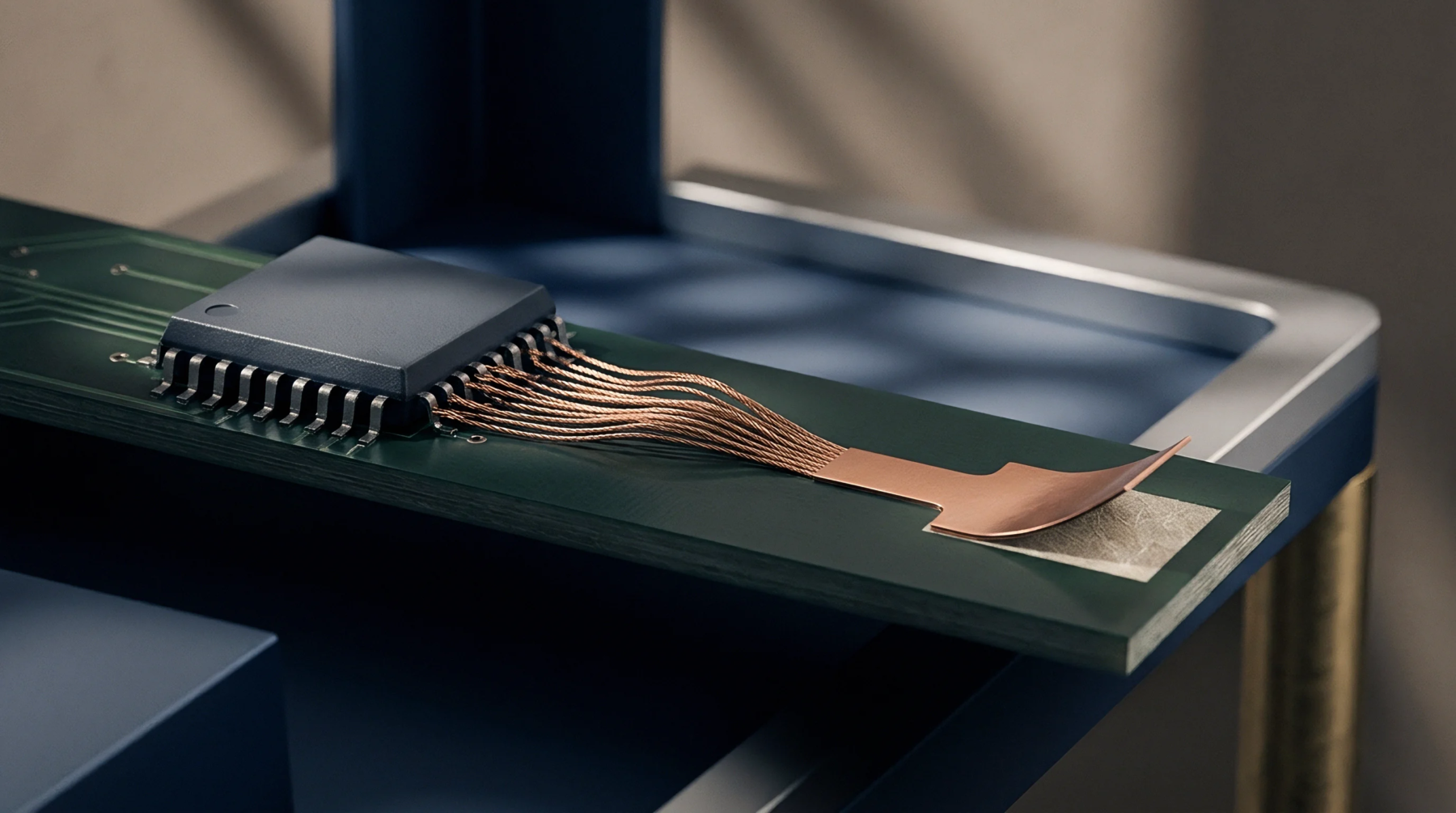
Layer Separation
Flexible circuit construction involves unbonded internal layers to enhance dynamic movement. In an air gap flex, the individual conductive layers remain separate from each other through the bend area instead of being laminated into a solid stack. This reduces the neutral axis thickness during a fold or repeat cycle.
Mechanical Movement
Physical strain on the outer layers decreases significantly when the layers are allowed to slide independently. Because the air gap flex eliminates the rigid bond between signal planes, the assembly avoids the cumulative stress of a thick dielectric core. Internal friction between layers is managed by selecting smooth base materials and maintaining cleanliness during the assembly of the unbonded segments.
The design frequently appears in high cycle life applications where a standard laminated ribbon would suffer from work hardening or early copper fatigue.
Fabrication Constraint
Fabrication complexity increases due to the requirement for selective lamination where only the ends of the circuit are bonded for connector termination. Handling these loose segments requires specialized fixturing to prevent kinks or damage to the unbonded regions during component mounting. If the air gap flex is too long without support, the individual layers may shift or snag, leading to electrical shorts or physical tearing.
Engineers must specify the precise start and end points of the gap to ensure the transition from rigid to flexible zones remains durable.