Layer Architecture
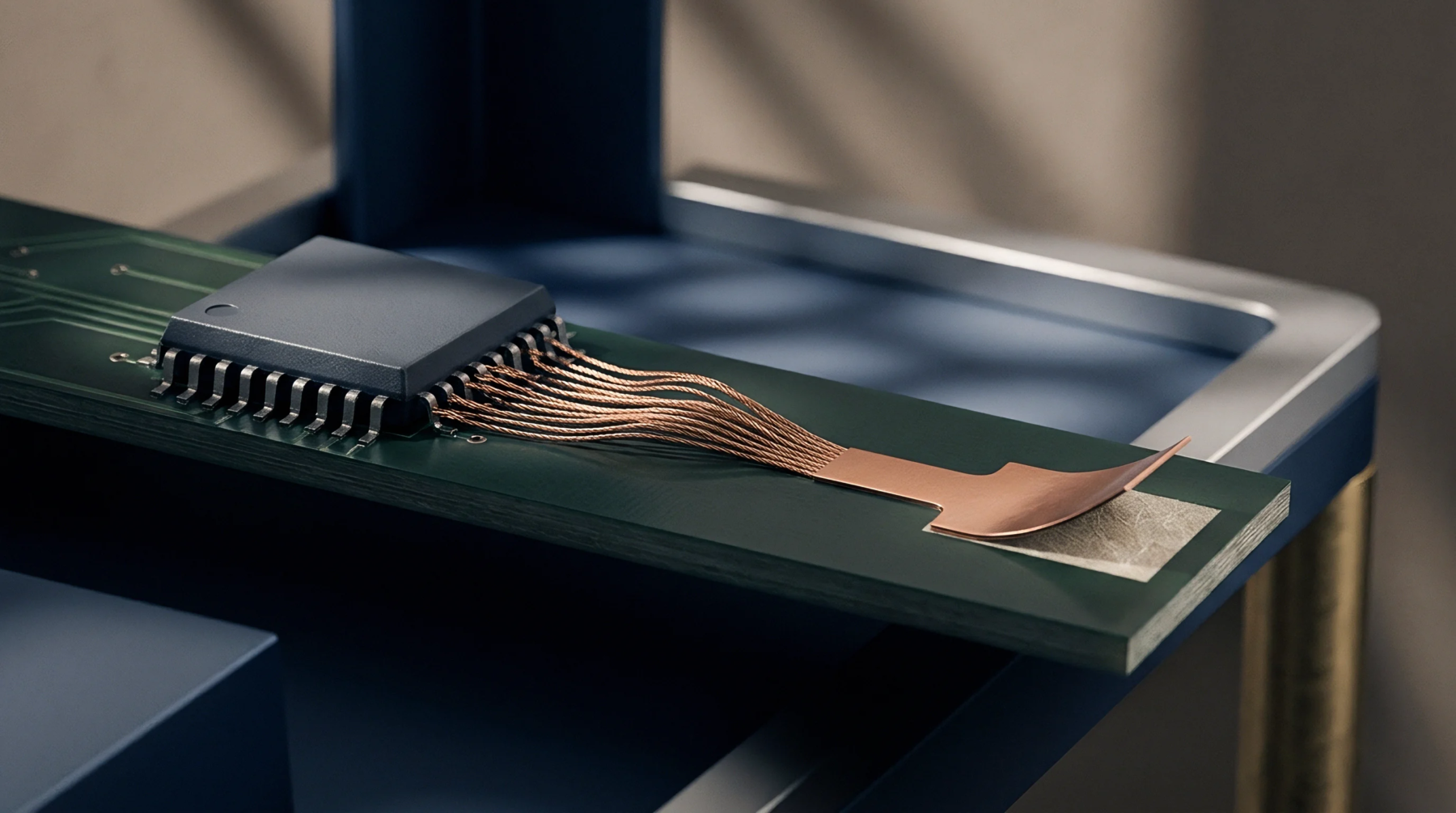
Copper foils bond directly to polyimide films through high thermal pressing methods without interposing resin adhesives. Eliminating intermediate polymer layers removes sites prone to moisture absorption during reflow soldering operations. High dimensional stability characterizes this specific laminate configuration during subsequent multi-layer stacking cycles.
Etched circuit traces maintain superior positional accuracy because differential thermal expansion coefficients drop significantly across the material stack.
Peel Strength
Mechanical anchoring relies entirely on atomic diffusion or oxide growth at the metal dielectric interface rather than chemical bonding agents. Automated peel tests measure the force required to separate the copper conductor from the underlying plastic film substrate at a constant angle. Elevated temperature exposure during lead free soldering conditions tests whether this interfacial bond degrades under thermal stress.
Tensile loads applied perpendicular to the board surface determine if processing parameters achieved complete molecular contact.
Thermal Endurance
Continuous operation at high temperatures demands materials that resist delamination when exposed to molten solder temperatures during assembly. Differential scanning calorimetry establishes the glass transition temperature of the base polyimide before fabrication begins. Blistering occurs during thermal shock testing when residual moisture trapped within the dielectric vaporizes rapidly.
Dimensional shrinkage values recorded after thermal exposure dictate spacing allowances for fine pitch component placement.