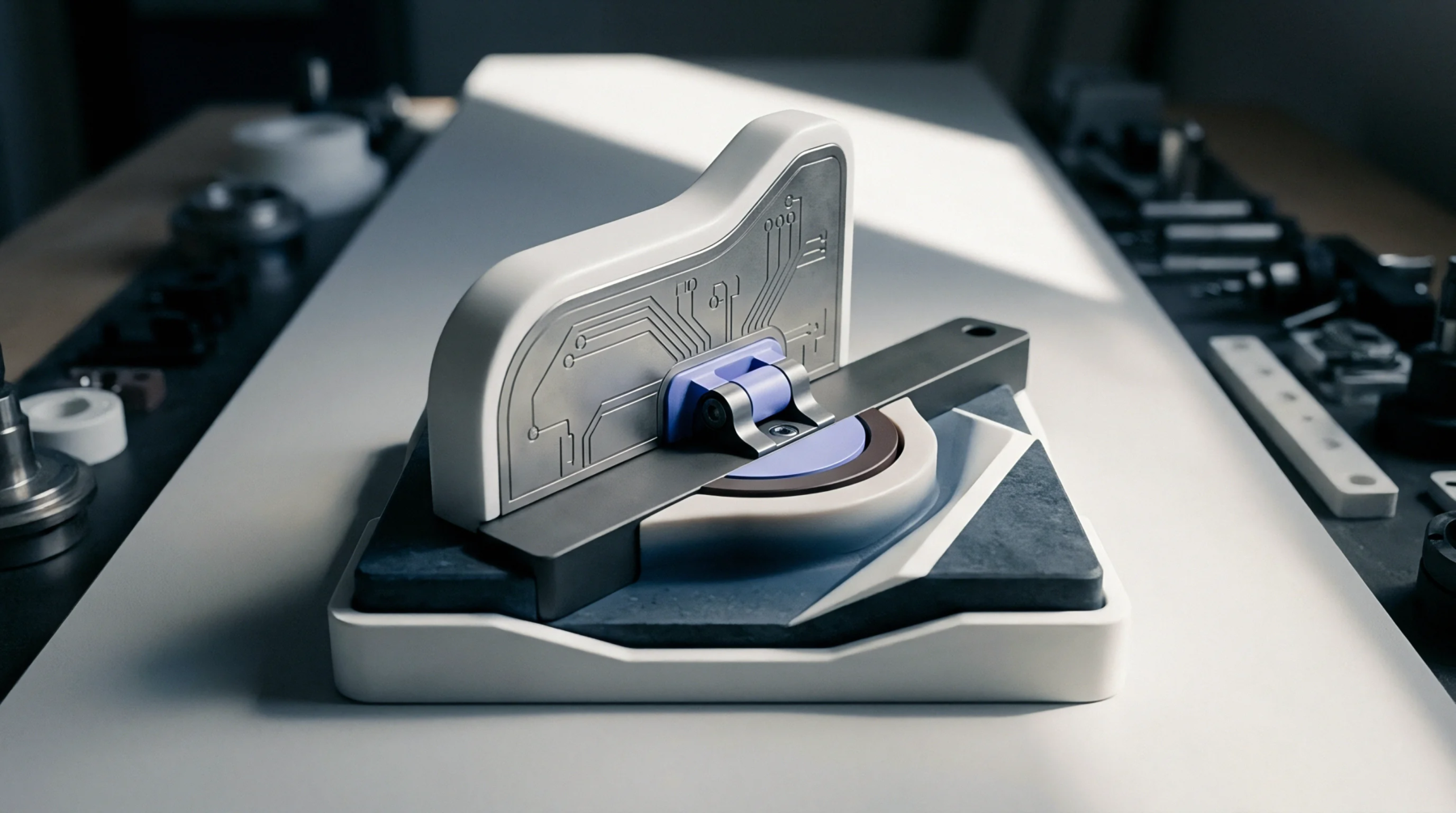
Taper Profile
Laser-cut stencil apertures incorporate a wall taper angle to reduce paste friction during squeegee separation. The aperture relief angle measures the incline between the vertical foil axis and the trapezoidal wall profile of a stencil cut. Standard foil fabrication establishes a taper between one degree and two degrees on the contact side to facilitate paste detachment.
Inspection under an optical comparator verifies that the opening on the printed circuit board side exceeds the squeegee side dimension across all pad patterns.
Wall Geometry
Cutting parameters and assist gas pressure control the sidewall bevel during stencil manufacturing. When cutting narrow apertures for zero two zero one components, an insufficient angle causes solder paste to adhere to stencil walls, leaving incomplete paste deposits on surface mount pads. Conversely, excessive bevel distorts the printed deposit footprint beyond pad boundaries, causing solder bridging during reflow assembly.
Automated optical inspection tools measure paste deposit volume to identify transfer efficiency failures caused by improper foil geometry. Chemical etch processes create double-sided tapers, whereas laser cutting produces a continuous single-sided taper from the squeegee surface to the board substrate surface.
Paste Release
Area ratio calculations determine paste detachment capability. When the aperture relief angle maintains smooth paste release, transfer efficiency remains above eighty percent across high density printed circuit board assemblies.