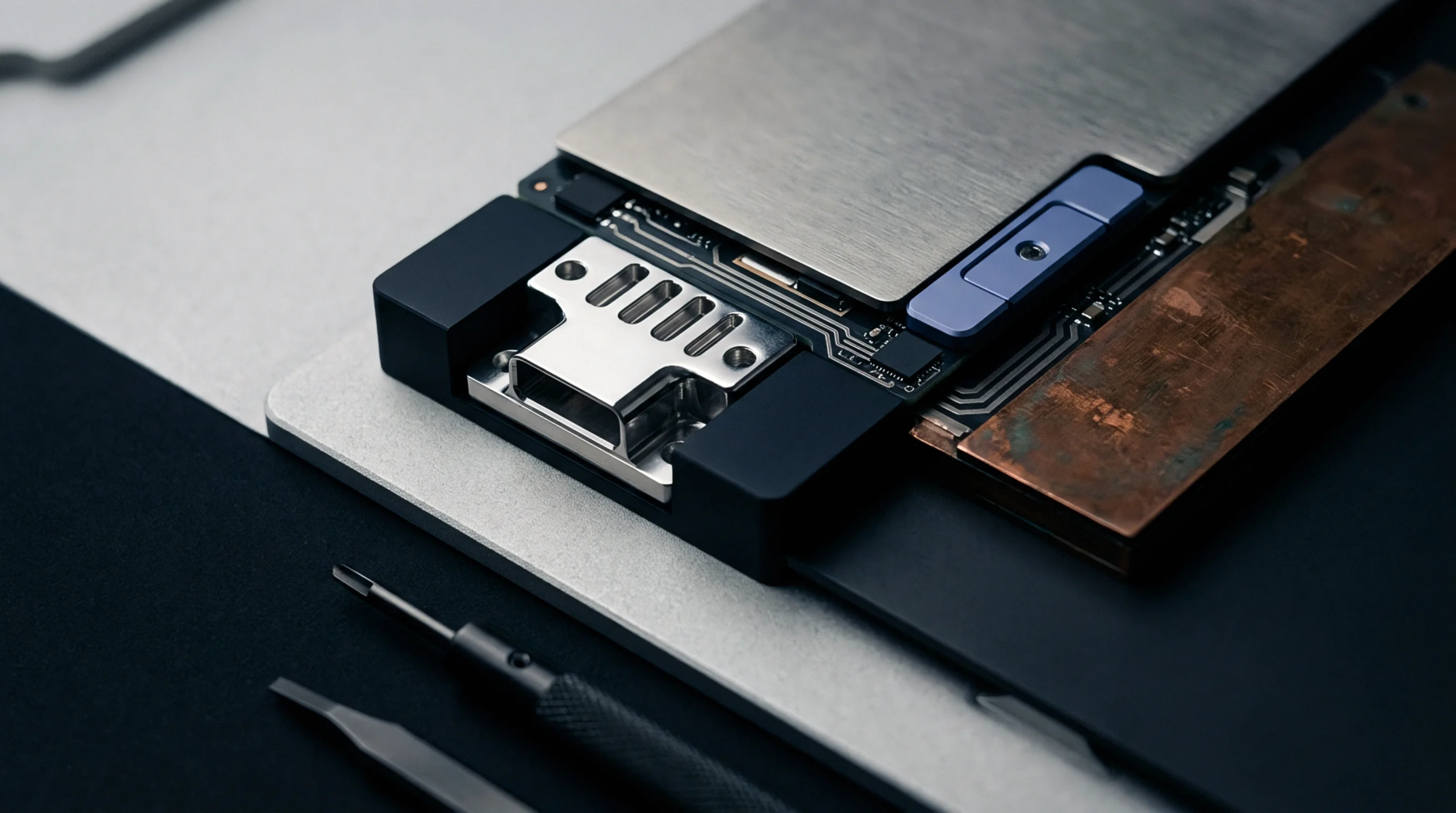
Thermal Gradient
Internal stresses arise within a printed circuit board when layers of dissimilar metals expand at different rates under heat. Bimetallic deformation triggers physical bowing or twisting in copper-clad laminates because the coefficient of thermal expansion for the metal foil diverges from the underlying resin substrate. Material stability depends upon the symmetry of this layered construction.
Manufacturing Constraint
Fabrication facilities reduce this unwanted curvature by selecting lamination materials with balanced glass transition temperatures and copper weight distributions. Press cycles control the rate of heating and cooling to minimize the residual mechanical energy stored within the copper-polymer interface. Engineers prioritize high-Tg materials for heavy copper designs to maintain dimensional integrity throughout the reflow process.
Large panels undergo stiffening procedures if the ratio of metal to insulation exceeds standard thresholds. Automatic optical inspection stations detect surface deviations that exceed local flatness requirements. Solder joint reliability relies upon this flatness for proper stencil contact and component alignment during assembly operations.
Stress Mitigation
Automated testing routines confirm that the board maintains structural flatness after multiple thermal excursions. Corrective steps involve increasing the thickness of the internal dielectric or adjusting the copper fill patterns to achieve mechanical equilibrium. Designers account for these physical shifts when they define tolerances for complex high-density interconnect structures.
Surface mount yields improve when the laminate remains rigid through high-temperature soldering. Internal tension dictates the long-term reliability of plated through holes subject to thermal cycling.