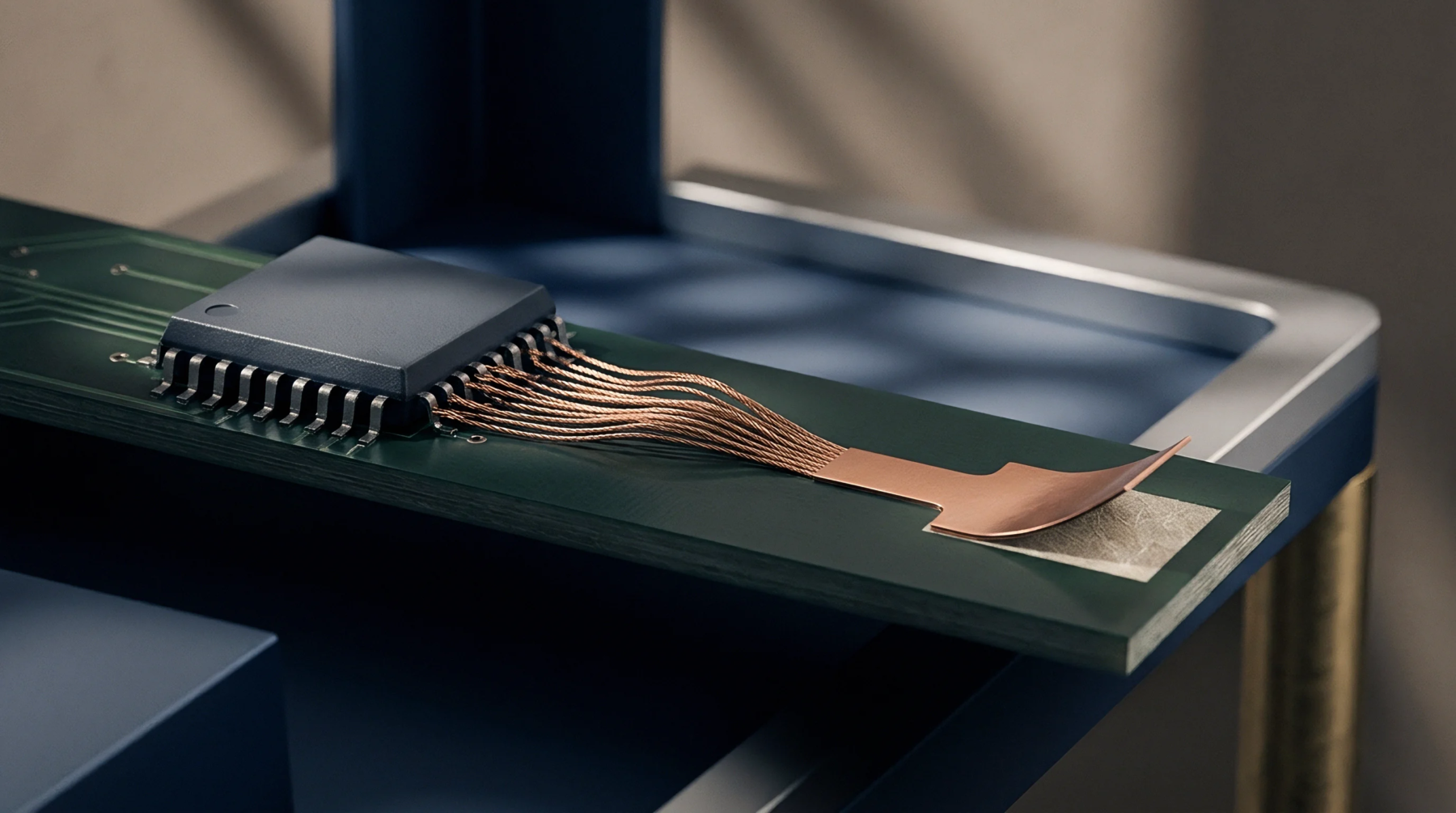
Mechanical Strain
Material displacement from a horizontal plane defines this measurement during the reflow soldering process. Board deflection quantifies how much a substrate bows or twists under thermal stress. High thermal gradients cause rapid expansion of epoxy glass laminates while copper features remain rigid.
This movement frequently results in solder joint fractures or internal layer delamination within high density interconnect designs.
Processing Limits
Assembly lines establish tolerance thresholds to prevent physical damage to sensitive surface mount components. Excessive board deflection forces stresses into ceramic capacitors and ball grid array interfaces that lack sufficient compliance. Technicians monitor this parameter by placing thermocouples across the diagonal of the panel to track heat distribution.
Uniform heat application reduces the risk of warpage during the transition through peak temperatures in the convection oven. Manufacturers often utilize support fixtures to restrain substrates that exhibit low glass transition temperatures.
Operational Consequences
Thermal cycles create permanent set conditions when the base material exceeds its yield point under continuous loading. Correcting this issue requires adjustment of conveyor rail settings or modification of the solder profile to soften the rate of temperature rise. Heavy components placed near the center of the board exacerbate the risk of bowing through increased mass and inertia.
Proper fixture design provides the necessary stiffness to maintain planarity throughout the heating stage. Rigid substrate integrity determines the overall reliability of the finished assembly after the cooling phase concludes.