Consigned Kits against Turnkey Purchasing on the Same Board
Split procurement saves component markup fees on high-cost ICs but demands strict kit audits, overage management, and clear contract defect attribution rules.

Dock
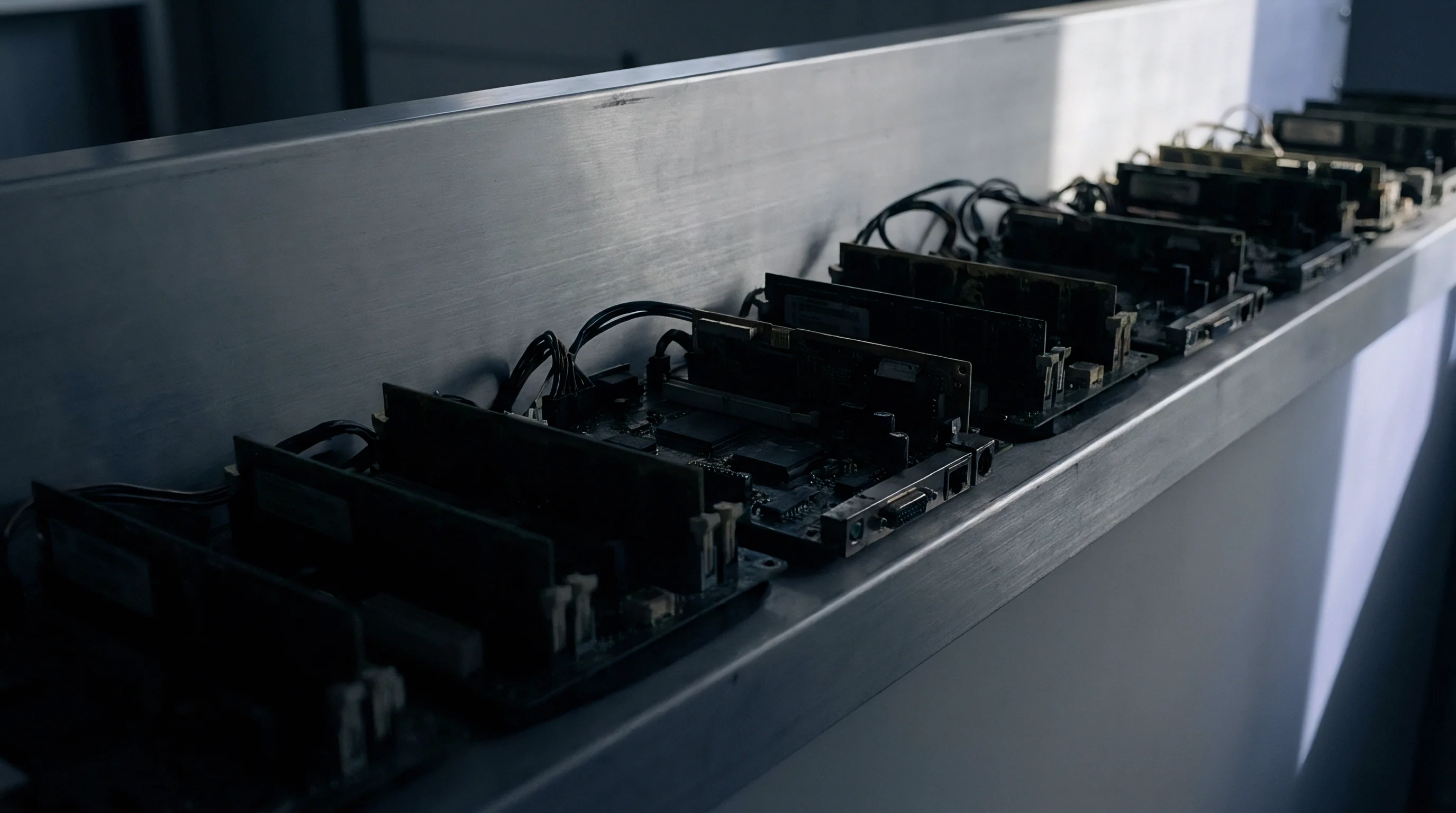
Assembly runs built on split component sourcing feed two very different material pipelines straight onto the receiving floor. Turnkey parts move through the contract manufacturer’s enterprise resource planning system, arriving with standardized barcodes, verified trace codes, and automated reel indexing. Customer-consigned kits come through independent freight channels ~ shipped from engineering stockrooms, third-party brokers, or direct factory lines.
The split between these streams opens up right at receiving, where physical inspection determines whether a job moves on to line setup or sits on a quality hold rack.
Turnkey parts enter the plant under established supplier quality agreements. The assembler controls the order parameters, specifying continuous reels, standard tape pitch, factory moisture-barrier packaging, and uniform lead finishes. Consigned kits, by contrast, show up in whatever packaging the customer had available.
A single box might hold continuous reels mixed with short cut-tape strips, re-spooled parts lacking factory labels, loose components bagged without desiccant, and legacy integrated circuits of unknown age. Merging these inputs onto a single surface mount technology line takes strict gatekeeping before anything hits the floor.

Material Receiving Procedures and Package Audits
Shipments coming from customer warehouses rarely match the documentation standards of franchised distribution channels. Receiving technicians audit line items against the bill of materials, checking packaging condition and part numbers. Consigned parts call for manual reel counts, tape pitch checks, and lead inspections under low-power stereomicroscopes.
Discrepancies between stated quantities and actual reel counts turn up constantly when parts are pulled from loose engineering stock without automated tracking.
Carrier tape must fit mechanical feeder limits. Cut tape shorter than fifteen inches will not load automatically because the leader cannot reach the pick site while engaging the drive sprockets. Technicians check consigned cut tape for leader length, carrier tape damage, missing cover tape splices, and bent pins on quad flat packages.
Loose parts sent in ESD bags have to be transferred into matrix trays or re-spooled, adding indirect labor before job scheduling can even begin.
A five percent sample audit of incoming customer-consigned cut tape catches over eighty percent of tape-pitch and bent-lead anomalies before reels hit line setup.
Labeling creates another friction point at receiving. SMT feeders scan barcodes at setup to match parts against the job program. Turnkey reels use standard barcode formats that factory scanners read immediately.
Consigned kits, however, often arrive with custom internal stickers, faded thermal labels, or no barcodes at all. Operators have to print internal tracking tags for every customer reel, re-labeling them for the shop-floor software. When consigned active parts lack manufacturer trace codes, isolating defects during automated optical inspection becomes far more difficult.

Moisture Sensitivity and Package Integrity Checks
Plastic surface-mount packages absorb ambient moisture whenever barrier bags get pinholed in transit. Standard factory procedure evaluates all moisture-sensitive devices under IPC and JEDEC J-STD-033 guidelines. Turnkey shipments arrive in intact vacuum packaging with active desiccant and fresh humidity indicator cards.
Consigned parts come with unknown exposure histories, making immediate checks on bag seals and indicator cards essential.
Any humidity indicator card showing pink at the ten percent relative humidity mark forces a mandatory bake-out, whatever the paperwork says. Baking plastic quad flat packs or ball grid arrays at one hundred twenty-five degrees Celsius for twenty-four hours drives absorbed moisture from the molding compound. That thermal cycle delays kit release by an entire operating day and ties up oven capacity.
Skipping the bake on exposed consigned parts risks delamination, internal popcorning, and micro-cracking during reflow.
| Inspection Parameter | Turnkey Procurement Standard | Consigned Kit Typical Condition | Factory Verification Protocol | Line Release Action Trigger |
|---|---|---|---|---|
| Reel Continuity | Continuous factory reels (1000+ units) | Mixed continuous reels and cut tape | Visual tape inspection & length check | Reject cut tape under 15 inches without splice |
| MSL Packaging | Sealed bag, active desiccant, valid HIC | Unsealed bags, missing or pink HIC | HIC inspection & seal integrity check | Mandatory 24hr bake at 125°C if HIC shows >10% RH |
| Barcode Traceability | Standardized 2D/1D factory barcode | Custom customer tags or raw reels | Optical barcode scan & label re-print | Generate factory internal tracking ID |
| Solderability Window | Fresh date codes within 12 months | Variable date codes up to 60+ months | Dip-and-look solderability test (J-STD-002) | Pre-tinning or rejection if wetting fails |
| Part Lead Integrity | Factory tape and reel co-planarity | Bent leads on QFP/SOP cut tape | Stereomicroscope visual audit (10x) | Manual lead straightening or scrap assignment |
Solderability deteriorates over time as lead finishes oxidize and intermetallic layers grow. Turnkey supply guarantees date codes within twelve months of assembly. Consigned kits, however, frequently contain old parts stored in unconditioned rooms for years.
Technicians run dip-and-look solderability tests under J-STD-002 on aged consigned lots. Poor wetting force or non-wetting on terminals requires pre-tinning or outright rejection before the kit moves to the line.
Handling customer-supplied material requires unambiguous receiving rules. Acceptance criteria must be enforced before freight receipts are signed. Planners turn away shipments with crushed boxes, broken static seals, or missing paperwork.
Prompt reporting protects the assembler from taking on liability for damage that happened before arrival.
Incoming consigned materials pass through four distinct verification stages to guarantee line readiness:
- Short Leader Lengths block automated feeding into pick-and-place machines, forcing operators to splice leader extensions or re-spool parts manually.
- Unbaked Moisture Sensitive Packages create heavy delamination risks during reflow, requiring twenty-four hours in the drying oven before placement.
- Oxidized Lead Finishes lead to non-wetting joints under normal reflow profiles, calling for extra fluxing or pre-tinning.
- Discrepant Reel Counts pause inventory processing whenever physical counts disagree with packing slips, holding up job release.
Material control records every discrepancy in an incoming variance report. Work orders stay locked in staging until the customer approves part swaps, accepts bake-out charges, or sends additional overage. Scheduling depends on resolving these issues before setup technicians load reels onto feeder carts.
Original manufacturer packaging is sometimes stripped to save freight weight, under the assumption that unsealed moisture bags will perform fine during reflow.


Tray
Pick-and-place machines rely on precise feeder offsets and exact carrier geometry to hit high placement speeds. Rated throughput happens only when tape feeders deliver parts without interruption. Running a line on a hybrid procurement model complicates setup considerably.
Turnkey passives arrive on standard eight-millimeter paper tape on large reels, allowing quick loading and seamless splicing. Consigned active parts arrive in matrix trays, short cut tape, or deep-embossed plastic tape that requires custom feeder setups.
Placement reliability hinges on component tolerances and consistent packaging. Feeder drive gears depend on clean, uniform sprocket holes along the tape edge. Torn sprocket holes on customer cut tape trigger indexing errors, mispicks, lost vacuum, and sudden line stops.
Every time a high-speed line pauses for manual intervention, overall efficiency drops and margins on fixed-price contracts disappear.

High Speed Feeder Loading and Attrition Dynamics
High-speed placement heads pull components from carrier tape at rates over forty thousand parts per hour. Keeping up that pace requires component overage to cover line setup, vision calibration drops, and feeder attrition. Turnkey orders automatically include overage based on package size and build quantity ~ typically three percent to five percent extra passives for 0402 and 0201 sizes, and one or two extra units for high-value integrated circuits.
Consigned kits frequently arrive with exact bill-of-materials counts and no extra parts. If a machine mispicks a zero-overage IC because of tape tension or a worn nozzle tip, the line stops immediately. The operator cannot finish the board without that component.
Running incomplete kits leaves partial assemblies that need manual touch-up or a second reflow pass, adding labor and increasing defect rates.
- The auditor checks incoming tape width and pitch against feeder specs before releasing parts to the setup cart.
- Operators splice leader extensions onto short consigned cut tape so the material reaches past the feeder drive mechanism.
- The SMT setup technician programs vision parameters using CAD data and physical package measurements.
- Inspection staff verify first-article placement before starting full-speed production to prevent systemic alignment errors.
Setting up feeders takes longer when dealing with customer-supplied matrix trays. High-density ICs packaged in JEDEC trays call for dedicated tray feeders or automated stackers. Technicians program pick coordinates for every cell, checking tray pocket levelness and pickup height.
Warped or non-standard plastic trays cause nozzle collisions that damage expensive leads during pick up. In one production run, non-standard matrix trays added forty-five minutes to line setup and caused three dropped parts on the first ten boards.

Carrier Tape Splicing and Feeder Jam Prevention
Cut tape delivered without leaders forces operators to index positions manually. Splicing brass shims and leader extensions onto short strips lets standard feeders engage the tape, but manual splices create physical seams that can catch on feeder covers. When a feeder jams, cover tape peels unevenly, exposing adjacent parts to vibration and causing them to flip inside the pockets.
Flipped components inside tape pockets create major vision errors. Placement heads scan the underside of each part to verify lead geometry before placing it. If a component sits upside down, the vision system rejects it and drops it into the scrap bin.
On a consigned kit with zero overage, losing one proprietary IC to the scrap bin shuts down the run until the customer sends a replacement.
Customer kits supplied on short cut tape without splice extensions guarantee feeder jams and lost placement cycles during line setup.
Placement accuracy depends directly on feeder calibration and nozzle selection. Nozzles use synthetic rubber or ceramic tips sized to match component surface areas. Undersized nozzles on heavy consigned connectors produce weak vacuum, letting parts drift during rapid head acceleration.
Oversized nozzles on micro-passives cause vacuum leaks, dropping parts before they reach the board.
Feeder maintenance must adapt when handling mixed kits. Setup technicians check spring tension, drive gears, and peel blades before loading customer parts. Tracking error rates continuously helps operators spot problematic consigned reels before jams trip machine alarms.
Maintaining setup discipline keeps the line running smoothly regardless of where components came from.
As a rule, cut-tape consigned parts always need manual tape leaders added before going onto high-speed feeder banks.


Attribution
When automated optical inspection flags a solder failure, determining root cause means isolating whether the fault stems from lead condition, stencil aperture design, or reflow profiling. High-volume assembly relies on predictable metallurgy between paste, board finish, and component leads. Running turnkey passives alongside customer-consigned active ICs complicates that responsibility technically and commercially.
Process settings tuned for fresh turnkey stock can fail to form reliable joints on aged consigned parts.
Attributing defects requires clear boundaries. If a turnkey 0603 resistor tombstones, the assembler absorbs the fix by adjusting stencil aperture ratios or balancing thermal traces. If a consigned BGA suffers head-in-pillow defects because its substrate warped under heat, financial liability moves to the component supplier or customer planner.
Distinguishing these causes takes thorough process documentation and micro-sectional failure analysis.

Who Pays When a Consigned Microcontroller Fails Reflow?
Financial liability for a failed run sits with whichever party introduced the defective variable into the process window. Take a six-layer board carrying a high-pin-count customer microcontroller next to turnkey surface-mount passives. During optical inspection after SAC305 reflow, forty percent of the microcontrollers show bridging across fine-pitch QFP leads.
The customer expects the contract manufacturer to cover rework and scrapped boards.
The process engineer pulls reflow profile logs and stencil print inspection records. Solder paste inspection confirms that deposit volumes on the fine-pitch pads stayed within the target transfer efficiency window of ninety-five percent with a Cpk above 1.33. Microscopic examination of unplaced leads shows heavy tin-lead oxidation and coplanarity variations over four mils.
The oxidation hindered wetting, causing solder to bead and bridge adjacent pins under surface tension. Because the defect came from improper storage before kit delivery, the customer covers the rework fees and replacement parts.
Solderability analysis follows IPC-A-610 Class 2 and Class 3 acceptance criteria. Non-wetting, de-wetting, and pinholes signal surface contamination or aged intermetallic layers on part leads. When customer-supplied parts fail wetting requirements, engineers micro-section the joints to measure intermetallic thickness.
A layer exceeding one micron points to prolonged storage under ambient heat and humidity, proving degradation occurred before assembly.
Thermal expansion mismatches create another common defect path on hybrid boards. Board substrates expand laterally during reflow based on their coefficient of thermal expansion (CTE). Large plastic BGAs supplied by customers often warp at peak temperatures (235°C to 245°C for lead-free SAC305).
That warpage lifts corner balls away from printed paste, preventing solder coalescence and creating open circuits or head-in-pillow joints.
Engineers use X-ray inspection (AXI) to check hidden solder joints under bottom-terminated parts and BGAs. IPC-7093 rules cap voiding inside BGA solder spheres at twenty-five percent of total ball area. Excessive voiding under customer QFN ground pads usually stems from volatile outgassing from old lead plating or incompatible solder pastes.
Separating paste outgassing from component lead outgassing requires residual gas analysis or thermal gravimetric testing.
X-ray measurement of voiding under bottom-terminated components exceeding twenty-five percent triggers immediate line stoppage under Class 2 acceptance criteria.
| Observed Defect Type | Physical Root Cause | Primary Process Indicator | Attribution Category | Responsible Party |
|---|---|---|---|---|
| Head-in-Pillow (BGA) | Component substrate warpage at peak temp | Coplanarity drift under thermal camera | Consigned Component Defect | Customer Sourcing |
| Tombstoning (0402 Chip) | Unequal solder paste deposit volume | SPI volume delta > 30% across pads | Assembly Process Defect | Contract Manufacturer |
| Solder Bridging (QFP) | Oxidized pin finish causing poor wetting | Non-wetting on unsoldered spare leads | Consigned Component Defect | Customer Sourcing |
| Pad Delamination | Excessive thermal mass exposure / rework | Multiple iron touch-up passes logged | Assembly Process Defect | Contract Manufacturer |
| Voiding >25% (QFN) | Moisture outgassing from IC package | Unbaked MSL component placement | Consigned Component Defect | Customer Sourcing |

Inspection Sign off and Escape Isolation
Optical and X-ray systems check dimensional geometry across bottom-terminated devices and passive arrays, comparing joints against IPC-A-610 standards. False calls run significantly higher on hybrid builds due to color variations, non-standard markings, and irregular lead shapes on consigned parts. High false-call rates slow down operators and increase the risk that real defects escape detection.
Escapes happen when bad joints slip past inspection. If a customer receives assembled boards that fail testing because of cold solder joints on consigned parts, formal dispute resolution kicks in. The plant pulls line records, SPI charts, reflow profiles, and AOI images for each serial number.
Detailed traceability lets the facility show that process parameters stayed within controlled limits throughout the build.
Rigorous first-article sign-off prevents widespread defects. The manufacturer builds a first-article board, running full AOI scans, X-ray checks, and lead inspections before releasing the run. Customer engineering approval confirms that physical geometries and alignments meet expectations, after which production continues under standard process controls.
Reflow control relies on thermal profiling. Thermocouples attached to high-mass BGAs and delicate passives monitor temperature gradients across the board. Peak temperature deltas across the assembly must stay within ten degrees Celsius to melt solder uniformly without scorching heat-sensitive parts.
Good profile engineering balances heat across every component, no matter where it came from.
Defect isolation protocols need to be transparent. When joint failures fall between material condition and profile management, the facility must open its logs for customer review. Objective physical evidence resolves quality disputes quickly and keeps production on schedule.
During a high-density server assembly run, the plant floor absorbed thirty-two hundred dollars in scrap charges when unbaked customer-consigned ICs popcorned during reflow because incoming moisture tags were logged as pass without inspecting seal integrity.


Markup
Contract manufacturers price line time by balancing direct machine operating costs against material management fees. Pure turnkey contracts generate revenue through two primary streams: labor and machine charges, plus procurement markups on components. Markups cover purchasing overhead, inventory carrying costs, supplier payment terms risk, incoming inspection, and scrap absorption.
When a customer shifts high-value parts to consigned sourcing, the plant loses material markup margins while keeping full operational assembly risk.
To protect margins on hybrid runs, manufacturers adjust line rates, setup fees, and non-recurring engineering charges. A pure turnkey quote often carries lower machine hourly rates because component markups offset setup labor. A consigned or hybrid quote raises line charges and setup fees to make up for lost procurement margin.
Supply chain managers need to understand this rebalancing when calculating total landed assembly costs.
Commercial Models for Line Time Allocation
Assembly plants evaluate profitability by weighing setup time against active placement throughput. High-speed SMT lines represent capital investments between five hundred thousand and two million dollars per line. Overhead models require each line to hit target hourly revenue figures ~ typically two hundred fifty to six hundred dollars per hour, depending on machine density, placement precision, and regional labor rates.
Setting up a hybrid job consumes more unbilled time than a turnkey build. Technicians must inspect customer cut tape, splice leaders, program custom geometries into vision libraries, and verify unbarcoded reels manually. If a consigned kit arrives incomplete, the line sits idle during its scheduled window.
Manufacturers pass those delay costs back through downtime penalties or line-reservation fees.
Turnkey markups vary by spend volume and component type. Standard passives carry higher percentage markups (ten to twenty-five percent) to cover bulk handling, while expensive microprocessors carry lower markups (three to seven percent). Consigning costly active parts strips high-margin items from the bill of materials, forcing the assembler to rebalance charges across setup, engineering, and inspection services.
Worked Financial Comparison across Procurement Models
A batch of one thousand double-sided board assemblies shows how split sourcing plays out financially. Each board carries six hundred passives (turnkey value: $12.00) and two complex integrated circuits (turnkey value: $80.00), making total turnkey component cost $92.00 per board. The plant charges a standard placement rate of $0.005 per solder joint (1200 joints = $6.00 per board) plus setup and inspection.
Under a Pure Turnkey arrangement, the plant applies an average eight percent markup on all parts ($7.36 per board), generating $7,360 in material margin across the one thousand unit run. Combined with placement fees ($6,000) and fixed setup charges ($1,500), the customer invoice totals $106,860 ($106.86 per assembled unit).
Under a Hybrid Sourcing arrangement, the customer consigning the two ICs avoids component markup on $80,000 in parts. To maintain line profitability, the plant adjusts contract terms: setup charges increase to $2,500 for kit auditing and leader splicing, placement fees rise to $0.007 per joint ($8.40 per board) to recover lost margin, and a 2.5% material handling fee applies to the turnkey passives balance. Total payment to the factory comes to $11,200 ($11.20 per unit), which combined with direct IC procurement ($80,000) brings total project cost to $91,200 ($91.20 per unit).
Under a Pure Consigned arrangement, the customer supplies all components. The plant charges no material markup, but increases setup fees to $3,500, placement rates to $0.010 per joint ($12.00 per board), and adds a $2.00 per board kit auditing fee. Invoice cost from the assembler equals $17,500 ($17.50 per unit), while the customer absorbs all procurement labor, shipping, and scrap liability internally.
| Cost Component | Pure Turnkey (1000 Units) | Hybrid Procurement (1000 Units) | Pure Consigned (1000 Units) |
|---|---|---|---|
| BOM Material Value | $92,000 ($92.00/unit) | $12,000 turnkey / $80,000 customer | $0 factory billed ($92,000 customer) |
| Factory Material Markup | $7,360 (8% avg) | $300 (2.5% on turnkey passives) | $0 |
| Line Setup & NRE Charges | $1,500 | $2,500 | $3,500 |
| Placement & Joint Labor | $6,000 ($0.005/joint) | $8,400 ($0.007/joint) | $12,000 ($0.010/joint) |
| Kit Auditing & Handling Fees | $0 (included in markup) | $0 (factored in setup) | $2,000 ($2.00/unit) |
| Total Factory Invoice Cost | $106,860 | $11,200 | $17,500 |
| Total Project Landed Cost | $106,860 ($106.86/unit) | $91,200 ($91.20/unit) | $109,500 ($109.50/unit) |
| Assumptions: 1000 board run; 600 passives (1200 joints) + 2 ICs per board; factory target hourly revenue = $350/hr; setup time varies from 3 hrs (turnkey) to 8 hrs (pure consigned). Direct customer internal procurement overhead excluded from pure consigned landed cost total. | |||

Inventory Carrying Cost and Shortage Exposure
Carrying electronic components in inventory incurs storage overhead and stock risk. Contract manufacturers handling turnkey stock absorb holding costs, buffer stock calculations, and obsolescence risks. With customer-consigned components, inventory liability stays on the buyer’s balance sheet until parts are placed and reflowed onto boards.
Shortages in consigned kits derail production schedules and invite line holding fees. If a customer delivers ninety-nine out of one hundred line items, the factory cannot start SMT setup without risking a line halt. If that missing part takes six weeks to arrive, the other ninety-nine items sit in staging racks, occupying space and tying up plant working capital.
Contractual limits on component scrap liabilities cap factory responsibility at two percent of total turnkey line value unless explicit lot-level inspection records exist prior to placement.
Sourcing strategy must balance unit component savings against administrative costs. Split procurement saves money when high-value ASICs or microcontrollers show large price differences between direct customer contracts and distributor pricing. Split models fail financially when applied to cheap passive arrays where kit handling fees swallow any savings on material markup.
Choosing the optimal procurement model requires evaluating specific operational conditions across four core metrics:
- Unit Cost Threshold favors consigned sourcing when component unit prices exceed fifty dollars and distributor markups add significant per-unit cost.
- Lead Time Variance dictates turnkey purchasing for standard passives to leverage factory distribution channels and buffer stock guarantees.
- Market Availability Risk points toward customer consignment when proprietary allocation channels provide access that EMS purchasing agents cannot get.
- Traceability Obligations demand single-source turnkey procurement for medical or aerospace builds requiring unbroken chain-of-custody records.
Calculating assembly cost requires analyzing landed charges rather than unit prices alone. Procurement teams must build setup escalations, handling surcharges, and shortage delay risks into their financial models from the start. Thorough modeling prevents surprise cost overruns mid-production.
What financial adjustments occur when a customer consignment reel carries hidden component mixing, introducing three wrong part values into an automated placement run before first-article inspection flags the deviation?


Rider
Legal terms governing component ownership determine who absorbs financial losses when lines hit defective customer parts. Standard turnkey assembly operates under manufacturing service agreements that spell out warranties for workmanship, component authenticity, and yield targets. Bringing consigned materials onto the floor requires contract riders covering bailment legalities, risk transfer points, and shortage liabilities.
Bailment clauses define legal title transfer. While consigned components sit in the contract manufacturer’s warehouse, legal ownership stays with the customer. The facility acts as a bailee, holding temporary custody for assembly.
Bailment terms require the factory to maintain proper storage conditions (ESD controls, climate control, MSL storage) while waiving facility liability for component loss caused by inherent material defects.

Customer Material Bailment and Inventory Title
Ownership of consigned parts stays with the buyer while physical reels sit in the warehouse. Contracts define care standards, requiring static-safe storage, ESD handling, and humidity-controlled cabinets under IPC-A-610 guidelines. If fire or water damage destroys customer stock, insurance responsibility depends strictly on the contract’s bailment provisions.
Risk of loss transfers at specific milestones. For turnkey materials, the factory carries full risk until finished boards pass acceptance testing and ship. For consigned materials, component performance risk stays with the buyer through storage and assembly.
The assembler carries liability only for physical damage caused by operator error or proven equipment failure.
Contract riders define incoming inspection rights and rejection windows. Plants typically require five to ten business days from kit receipt to complete audit counts, package checks, and MSL evaluations. If the factory fails to log variances within that window, it waives the right to claim shortage fees or setup delay adjustments caused by incomplete kits.

Shortage Liability and Stop Work Triggers
Production halts caused by missing customer parts create unallocated overhead on high-speed equipment. Manufacturing contracts include stop-work clauses that trigger when kits arrive incomplete or fail audit. If a shortage prevents setup on the scheduled date, contract terms allow the facility to assign the line slot to another client, pushing the delayed build back by weeks.
Downtime charges kick in if shortage delays happen after setup has begun. If a consigned kit runs out of parts mid-run due to mispicks or insufficient overage, the plant logs active delay hours. Contracts define standard standby rates, charging the customer for idle machine time while replacement parts are in transit.
Scrap allowances establish acceptable attrition limits during assembly. Standard riders set a baseline, typically capping unrecovered component loss at one to two percent of total placement volume. On customer kits sent with exact bill-of-materials counts, any component loss from mispicks or vision setup drops final yield below target.
Manufacturing contract riders must contain explicit clauses defining operational parameters for hybrid procurement runs:
- Scrap Cap Limits establish maximum allowable attrition rates during placement before financial scrap reimbursement kicks in.
- Standby Delay Rates define hourly billing charges incurred when incomplete kits force assembly lines to halt during production windows.
- Title Retention Provisions clarify component ownership, ensuring customer inventory is protected from factory creditor claims in commercial disputes.
- Workmanship Warranty Boundaries separate assembly defect liability from pre-existing solderability or lead coplanarity failures.
Assembly agreements must specify dispute resolution frameworks for root-cause arbitration. When board failures occur on hybrid builds, independent lab analysis (micro-sectioning, SEM-EDX, solderability testing) serves as the binding arbiter for financial settlement. Pre-defining testing procedures within contract riders minimizes legal costs and protects business relationships.
Comprehensive legal frameworks protect both parties during split-procurement manufacturing. Clear risk allocation eliminates ambiguity, ensuring assembly teams and procurement managers operate under identical commercial expectations throughout the project lifecycle.
Section 14.3 of the Standard Electronics Manufacturing Services Rider specifies that customer-supplied components delivered without continuous leaders or with expired moisture barrier windows automatically release the contract manufacturer from final board yield guarantees, shifting all post-reflow rework labor billing to a time-and-materials basis.