Intake Verification Procedures for Customer Consigned Moisture Sensitive Devices
Intake verification requires immediate vacuum bag inspection, rapid indicator card reading within one minute, and automated floor life tracking.


Dock

Unbroken Moisture Barrier Verification
Intake staging begins at the receiving bay the moment a customer-consigned carton leaves the pallet. The operator checks the outer transport container for punctures, crushed corners, and broken security tape before logging the carrier tracking code. Moisture barrier bags constructed under IPC/JEDEC J-STD-033 require continuous electrostatic and water vapor containment.
The barrier itself is typically a multi-layer laminate: biaxially oriented nylon for puncture resistance, vacuum-deposited aluminum film to block water vapor, and an inner virgin polyethylene seal layer. Any creased foil showing pinholes under backlighting fails containment instantly.
The clerk cuts along the taped seam with an auto-retracting safety blade held at forty-five degrees so the blade never reaches the inner contents. Consignments arrive in three common primary packaging forms: sealed moisture barrier bags holding dry-packed reels or matrix trays, cut tape segments stapled into antistatic bubble envelopes, or loose bulk parts dumped into conductive zip bags. Both cut tape and bulk packs are classified as fully saturated on arrival.
Saturated lots bypass floor-life calculations and move directly into quarantine.
For factory-sealed moisture barrier bags, verification centers on an intact vacuum seal. The operator feels the bag exterior to confirm the packaging draws tight against the foil wall. A loose, billowy bag points to a compromised seal, ambient air leaks, and an exhausted desiccant charge.
The clerk logs the label, cross-referencing the manufacturer part number, lot code, and date code against the consigned bill of materials. The log also notes ambient dock conditions ~ twenty-two degrees Celsius and fifty-two percent relative humidity are typical in an unconditioned warehouse.
The receiving clerk rejects compromised foil enclosures before the lot touches receiving inventory.
Inspection tags trace each lot back to the customer shipment manifest. Consigned stock often lacks the single-lot traceability typical of franchised distribution orders; split reels, mixed-date trays, and repackaged distributor overages require their own individual container tags. If the bill of materials description diverges from the package markings, the operator flags the discrepancy.
The line holds the shipment until the client resolves the part numbering mismatch in writing.
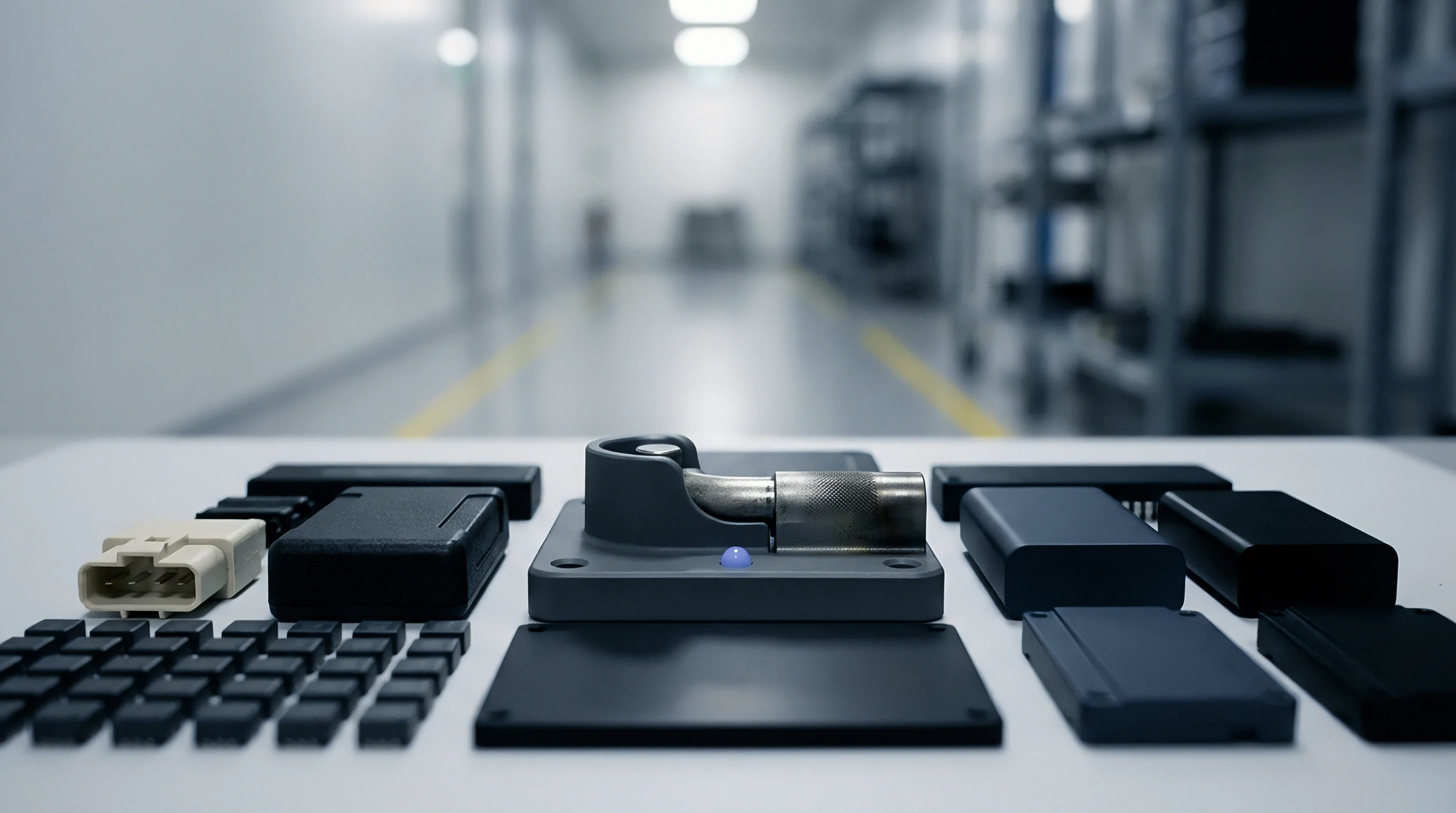

Seal

Desiccant Condition and Card Transition Points
Slitting the moisture barrier bag triggers a strict clock. The operator cuts across the bag top with shear-action shears, staying five millimeters below the heat seal so enough foil lip remains for resealing later. The reel or tray stack is pulled into view alongside the humidity indicator card and desiccant packs.
The inspector has exactly one minute to read the card before ambient warehouse air shifts the indicator chemistry.
Cards made to J-STD-033 and MIL-M-8835 use chemically treated spots that change hue at fixed relative humidity thresholds. Standard three-spot cards monitor five percent, ten percent, and sixty percent relative humidity points; six-spot versions scale from ten percent to sixty percent in ten-percent increments. The active chemistry is usually cobalt chloride, turning from azure blue to pale lavender and finally saturated pink as water vapor coordinates with the cobalt cation.
The operator checks the lowest threshold spot first. A five percent spot turned fully pink alongside a ten percent spot showing a lavender ring confirms that moisture has breached the barrier. In that state, the desiccant pouch ~ whether filled with bentonite clay or synthetic amorphous silica gel ~ has hit saturation.
The clerk records the card lot code, card maker, and spot colors directly on the traveler. Surface illumination on the inspection bench must stay between six hundred and one thousand lux for an accurate reading.
| Card Spot Rating | Indicated Color | Package Condition | Floor Action |
|---|---|---|---|
| Five Percent Spot | Solid Blue | Desiccant Active | Release to staging stock |
| Five Percent Spot | Lavender Ring | Desiccant Saturating | Bake before surface mount |
| Ten Percent Spot | Pink Transition | Barrier Breached | Mandatory vacuum thermal reset |
| Sixty Percent Spot | Pink Saturated | Severe Ambient Intrusion | Quarantine for moisture bake-out |
Desiccant sizing calculations show whether the consignment was adequately protected during transit. A standard twelve-inch reel holding fifteen-millimeter plastic ball grid arrays inside a twelve-by-twenty-inch barrier bag requires at least three units of desiccant under normal sealing parameters. One unit adsorbs a minimum of three grams of water vapor at twenty percent relative humidity and twenty-five degrees Celsius.
Consignments packed with undersized, uncertified, or unlabeled desiccant receive automatic non-conformance tags, and the assembly facility disclaims liability for internal delamination when the customer supplies insufficient desiccant.
A recent packaging date of three days prior to arrival yields to the physical state of the chemical indicator card upon initial cut under contract logistics agreements.


Bake

Thermal Reset Schedules and Intermetallic Growth Risks
When intake checks fail at the humidity card, the lot requires a controlled thermal bake to drive moisture below the critical threshold. During reflow soldering, trapped moisture within the plastic encapsulant, leadframe interface, or die-attach paddle vaporizes abruptly. That expansion causes internal delamination, wire-bond shearing, and package ruptures commonly known on the floor as popcorning.
Thin, high-density components like quad flat no-lead devices and fine-pitch ball grid arrays are especially prone to this failure mode.
J-STD-033 sets baking schedules based on package thickness, moisture sensitivity level, and chamber temperature. Baking at one hundred twenty-five degrees Celsius removes moisture from standard epoxy novolac molding compounds within nine to forty-eight hours, depending on package depth. However, standard polyolefin carrier tape, polyvinyl chloride tubes, and low-temperature polystyrene matrix trays cannot survive that heat.
Polystyrene trays warp and soften above sixty-five degrees Celsius, which jams placement nozzles and ruins feeder pick pockets.
Components consigned in low-temperature carriers must either be transferred by hand into high-temperature metal trays or baked at forty degrees Celsius and under five percent relative humidity. Low-temperature desorption takes drastically longer: a Level 4 component measuring two millimeters thick needs sixty-eight days at forty degrees Celsius to release what twenty-four hours drives off at one hundred twenty-five degrees Celsius. That schedule penalty either stalls production or forces a costly manual repack.
Low-temperature bake-out times escalate by factors exceeding thirty compared to atmospheric high-temperature cycles.
Repeated baking promotes solid-state diffusion across component terminations. Elevated temperatures cause tin-finished copper leadframes to grow Cu6Sn5 and Cu3Sn intermetallic layers, turning solderable surface tin into brittle intermetallic phases. If this growth reaches the outer pad interface, molten solder cannot wet the base metal during reflow, leaving void-ridden joints or outright non-wetting electrical opens.
The qualification lab verifies termination solderability after extended baking through dip-and-look testing under IPC/JEDEC J-STD-002. Any lot put through a second consecutive thermal reset risks falling below the ninety-five percent wetting coverage requirement. Component owners face a direct trade-off: bake the part to prevent popcorning, or preserve the surface finish to maintain joint integrity.
Consignment agreements charge baking fees per oven shelf per twelve-hour shift, typically forty-five dollars per tray lot per heating cycle. The customer carries both the processing charge and the schedule delay that follows.


Clock

Floor Life Tracking and Ambient Exposure Accounting
Opening a verified dry pack starts an irreversible operational clock. IPC/JEDEC J-STD-020 classifies non-hermetic surface mount devices into Moisture Sensitivity Levels from Level 1 through Level 6. Level 1 parts have unlimited floor life at factory conditions up to thirty degrees Celsius and eighty-five percent relative humidity.
Level 3 parts allow one hundred sixty-eight hours of exposure at thirty degrees Celsius and sixty percent relative humidity prior to reflow, while Level 5 parts tolerate only forty-eight hours under those same conditions.
Floor management requires strict lot logging. Component exposure is tracked using barcoded travelers tied directly to the manufacturing execution system, with the intake operator recording the minute the foil seal breaks. When a reel sits on a placement feeder during changeovers or feeder calibration, that time logs against the part’s floor-life budget.
Ambient conditions matter: a cleanroom held at twenty-two degrees Celsius and forty percent relative humidity slows moisture uptake compared to unconditioned production floors.
- Barcode Assignment links the component reel identification number directly to the enterprise moisture management traveler.
- Intake Timestamp records the precise minute the barrier bag seal is breached under ambient cleanroom atmosphere.
- Feeder Bank Registration accrues elapsed floor life hours while the reel remains mounted on the high-speed placement carriage.
- Reflow Entry Gate verifies that residual floor life remains above zero prior to sending the populated board into the tunnel.
- Nitrogen Storage Transfer pauses floor life accrual when the job breaks down and unplaced components return to dry storage cabinets.
When line stoppages or print adjustments interrupt a run, partial reels return to nitrogen-purged cabinets held at or below five percent relative humidity. This stops the exposure clock, but it does not roll it back. A Level 3 part exposed for one hundred twenty hours still has only forty-eight hours of floor life left when retrieved for a later shift.
Once total exposure reaches the allowable limit, the lot must go through a full bake before it can enter the reflow tunnel.
Line layout also affects moisture uptake. Reels staged near reflow oven exhaust stacks encounter warm, moving air that speeds vapor absorption along package seams. Routine audits ensure staging tables stay at least ten meters clear of oven exhaust ports.
Line managers reject kits if floor-life records show untracked gaps across shift handoffs. While waiting for customer approval to bake unverified components, line downtime is billed at two hundred fifty dollars per hour.

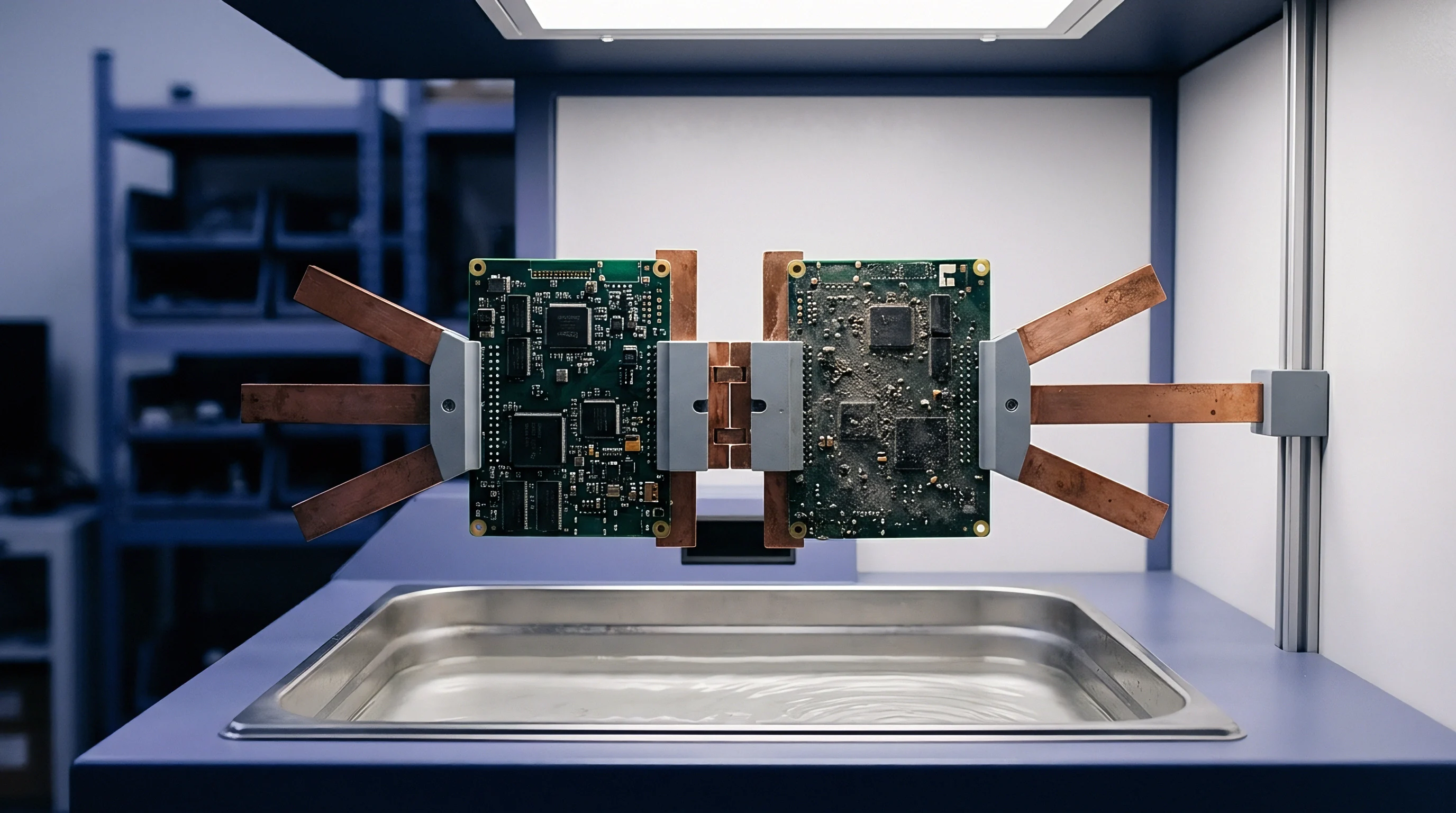
Inspection

Lead Integrity and Carrier Media Verification
Physical inspection confirms that tape pockets, cover tapes, and tray matrices held the devices secure without applying mechanical stress. Consigned cut-tape strips sourced from broker inventory often arrive with bent leads, twisted bodies, or adhesive residue from cheap splices. Any micro-leadframe or quad-flat package with coplanarity deviations beyond zero point zero eight millimeters will cause solder opens or bridging on the line.
Inspectors mount component strips under an optical station with twenty-times magnification and telecentric optics. Solder spheres on ball grid arrays undergo shadow-moiré or stereoscopic inspection to catch oxidation, flattening, or surface debris. Leads must remain clean and unoxidized; gouges, scratches revealing nickel or copper sub-layers, and handling stains result in immediate rejection.
| Component Format | Inspection Parameter | Acceptance Threshold | Defect Mechanism |
|---|---|---|---|
| Plastic BGA | Sphere Coplanarity | Under 0.10 mm variation | Head-in-pillow open joints |
| Fine-Pitch QFP | Lead True Position | Within 0.05 mm of nominal | Solder bridging, toe lift |
| DFN and QFN | Exposed Pad Flatness | Less than 0.03 mm bow | Excess thermal pad voiding |
| Embossed Carrier Tape | Cover Tape Peel Force | Between 0.1 N and 1.3 N | Feeder jams, part ejection |
Cover tape peel strength governs feeder reliability on high-speed mounters. IPC-5688 and EIA-481 set acceptable peel forces between ten grams and one hundred thirty grams on standard eight-millimeter carrier tape. Consigned reels frequently exhibit deteriorated tape adhesive that tears midway through feeding, or adhesive so strong it pulls the carrier off the drive sprockets.
Either condition causes mispicks, dropped parts, and feeder alarms that halt the line.
Tray checks ensure proper pocket seating and verify that matrix trays have not warped. JEDEC trays must sit flat within one point two seven millimeters across the diagonal. Warped trays cause vacuum nozzles to collide with pocket walls, cracking ceramic packages or abrading delicate mold caps.
Broken tray clips and mixed lots are rejected before parts reach feeder staging.
IPC-A-610 Class 3 acceptance fails instantly when package termination coplanarity deviations exceed eighty micrometers.
Any defect found during visual intake generates an electronic non-conformance report with supporting high-resolution micrographs. The report records the reel serial number, carrier pocket position, and the out-of-spec measurement. Assembly lines will not load parts with mechanically compromised terminations.


Quarantine

Segregation Controls and Commercial Disposition
Non-compliant customer-consigned materials go straight to physical quarantine once verification fails. The quarantine cage is segregated from active production inventory and secured behind badge-controlled gates. Inspectors place non-conforming reels, trays, or tubes into red-striped ESD bins with yellow rejection placards.
The traveler records the specific failure mode: missing humidity card, saturated indicator spot, breached vacuum seal, missing date code, or lead damage.
Physical segregation prevents saturated or damaged devices from mixing with active turnkey stock. In the ERP system, the lot code receives an allocation hold across all scheduling modules. Material handlers cannot generate pick lists or load feeder carts with quarantined lots, and the MES blocks work order release until quality engineering signs off on the non-conformance ticket.
- Material Quarantine Tagging marks each rejected component reel with traceable non-conformance report numbers and failure classifications.
- ERP Transaction Locking restricts inventory movement within the warehouse database to prevent accidental line staging.
- Customer Notification Dispatch transmits photographic evidence of breached packaging alongside formal baking disposition proposals.
- Scrap Hold Disposition isolates non-recoverable damaged lots pending client return material authorization or destruction waivers.
- Secondary Inspection Sign-off certifies that recovered lots satisfy all moisture and mechanical criteria before inventory reclassification.
The intake engineer then drafts a formal disposition report presenting the customer with three options: authorize a thermal reset at standard baking rates, supply a replacement lot from franchised distribution, or sign an absolute liability waiver. The waiver releases the plant from all solder joint, yield, package integrity, and warranty obligations for those parts. Customers rarely choose the waiver once they understand that unbaked, saturated devices fracture internally during lead-free reflow.
When a customer opts to replace the material, the quarantine custodian holds the rejected lot pending return shipping details. Freight, customs re-entry fees, and administrative handling are billed to the customer. Any lot left in the quarantine cage beyond thirty calendar days incurs a storage fee of fifteen dollars per shelf location per day, and contracts specify that unclaimed parts face certified e-waste destruction after ninety days.
Quarantine holds carry immediate financial weight through line disruption. A surface mount line running high-volume builds bills setup and changeover at three hundred to six hundred dollars per instance. Swapping in an alternate job because consigned parts failed intake burns three to five hours of changeover labor, and that reallocation expense is billed directly to the customer.
Standard assembly agreements hold the consigned material provider liable for all unrecovered setup charges caused by packaging failures found during intake.