Chemical Structure
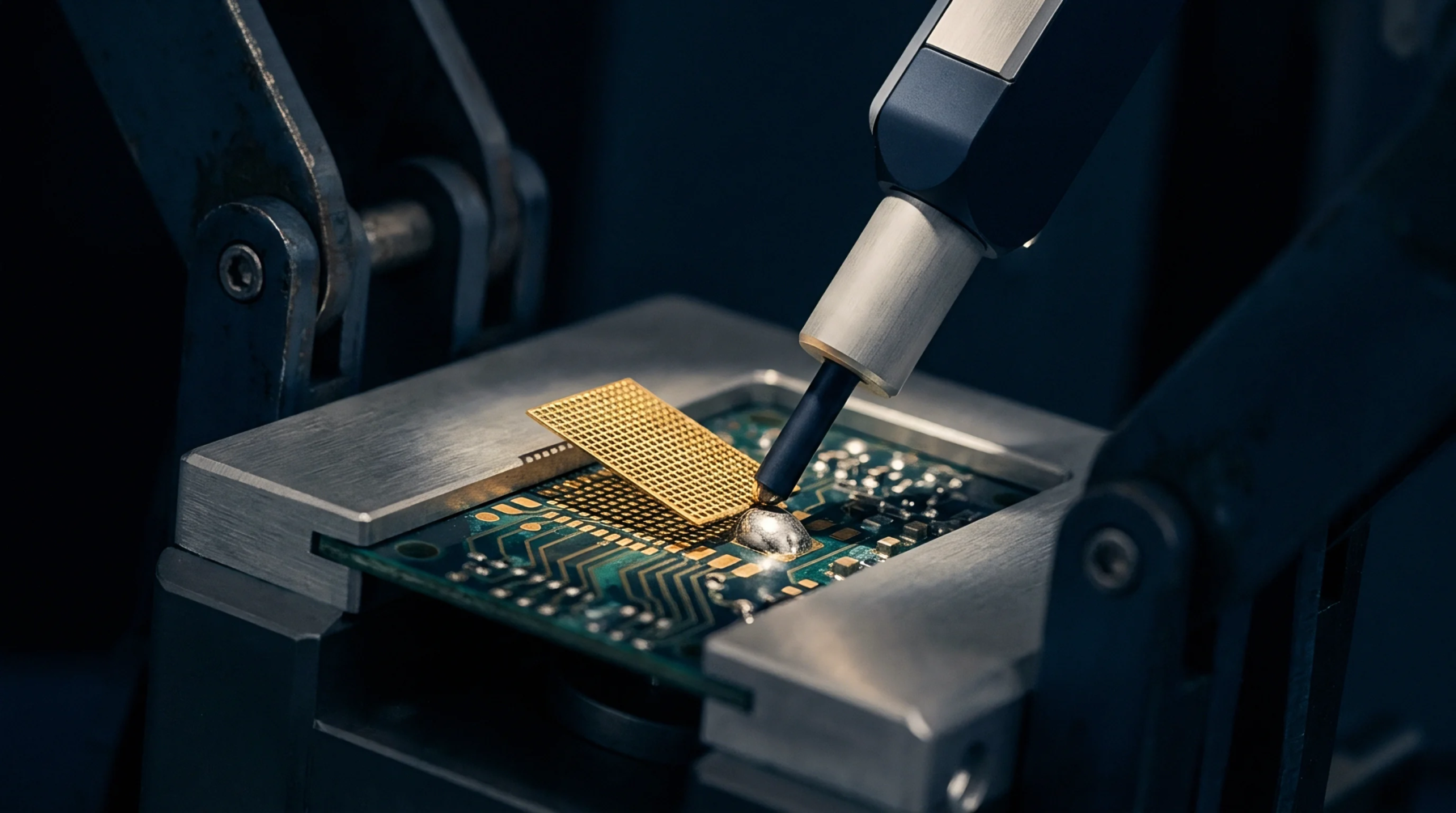
Formation of distinct crystalline phases at the boundary between a metal pad and molten solder establishes the essential atomic connection in a solder joint. This boundary region, containing an intermetallic compound of copper and tin or nickel and tin, grows during the thermal reflow process. The composition and thickness of this alloy layer determine the baseline mechanical and electrical performance of the electrical connection.
Joint Integrity
Moderate development of this alloy zone is necessary for a strong attachment, but excessive growth can result in brittle failures under mechanical shock or vibration. While a thin layer of intermetallic compound provides a solid metal-to-metal connection, continuous exposure to high operating temperatures causes the layer to thicken over time. This growth consumes the ductile copper or nickel underlayer, making the solder joint vulnerable to fracturing at the interface.
Thickness Verification
Cross-sectional microsection analysis and scanning electron microscopy are used to measure the thickness and check the uniformity of this interphase layer. If the intermetallic compound exceeds a thickness of three microns, it indicates either an excessively long reflow dwell time or a history of multiple thermal exposures. Measuring this boundary layer provides a direct assessment of the assembly’s reliability and helps optimize reflow oven profiles to minimize the risk of joint failure.
These measurements are crucial during the qualification of lead-free assemblies, where the higher reflow temperatures typically accelerate the growth rate of these boundary phases.