Deformation Physics
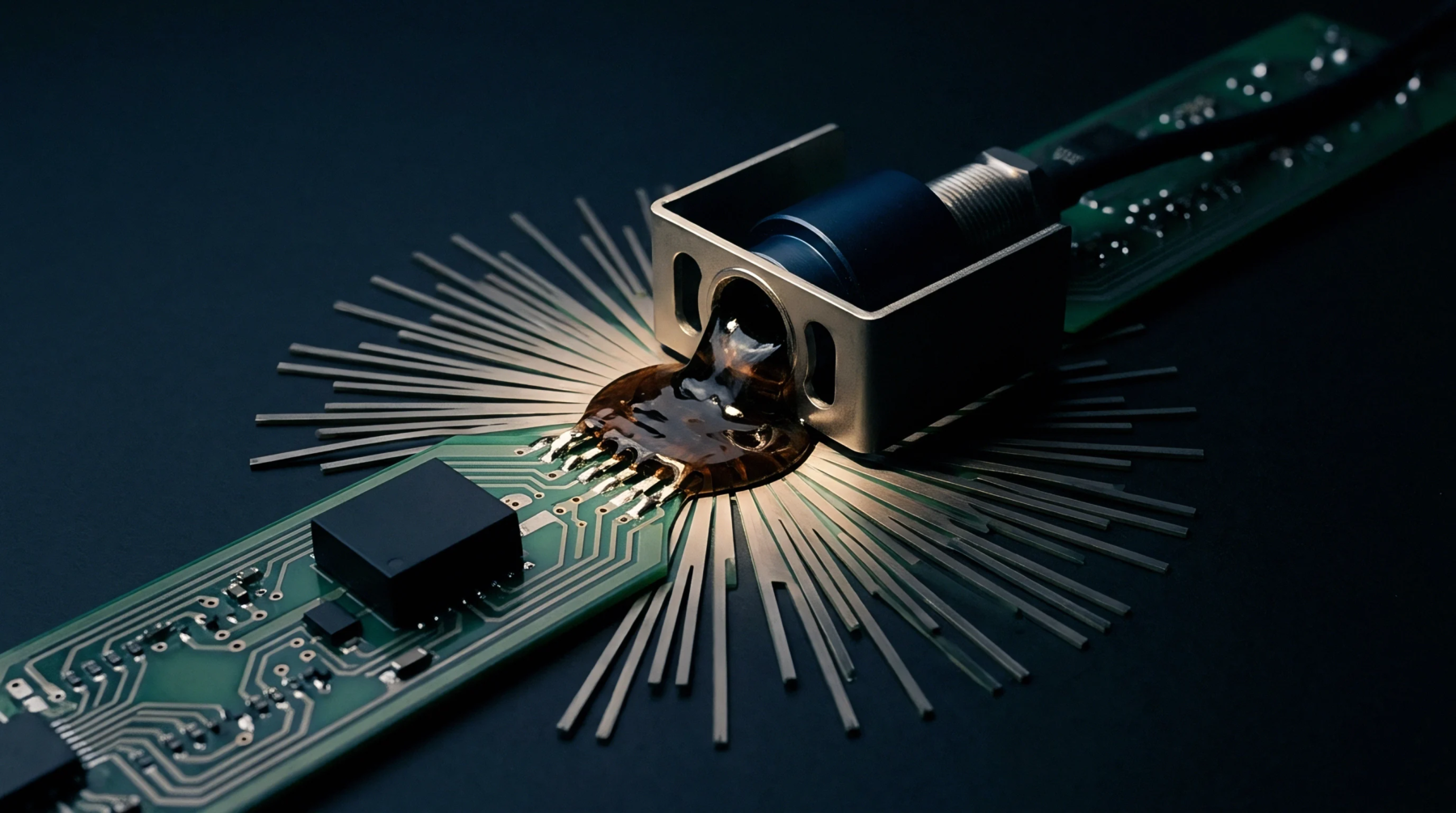
Laminate curvature analysis defines the reaction of a planar substrate to external forces such as support pin engagement or probe compression. Understanding board flexure mechanics allows for the prediction of internal stress concentrations that threaten the integrity of copper traces and barrel vias. These forces move based on the thickness of the glass-reinforced epoxy and the presence of heavy copper internal planes.
Joint Impact
Tensile strains develop on the outer surface of the curve while compressive forces focus on the inner radius. Within the context of board flexure mechanics, these reactions are most dangerous to ceramic capacitors and ball grid arrays. Ceramic bodies lack the ductility to follow the movement of the circuit board, leading to cracks that typically begin near the termination point.
Solder joints experience prying forces that seek to peel the copper land away from the laminate resin. By measuring the maximum displacement in millimeters per millimeter, manufacturers determine if the assembly process stays within the safe operating margins prescribed by the industry. High local curvature indices trigger changes in support density or probe sequence to prevent physical failure during high volume testing cycles.
Material Limits
Resistance to bending increases with the cube of the board thickness. Double-sided assemblies display more complex flexural behavior due to the offsetting stiffening effects of top-side and bottom-side soldered components.