Mechanical Fixture
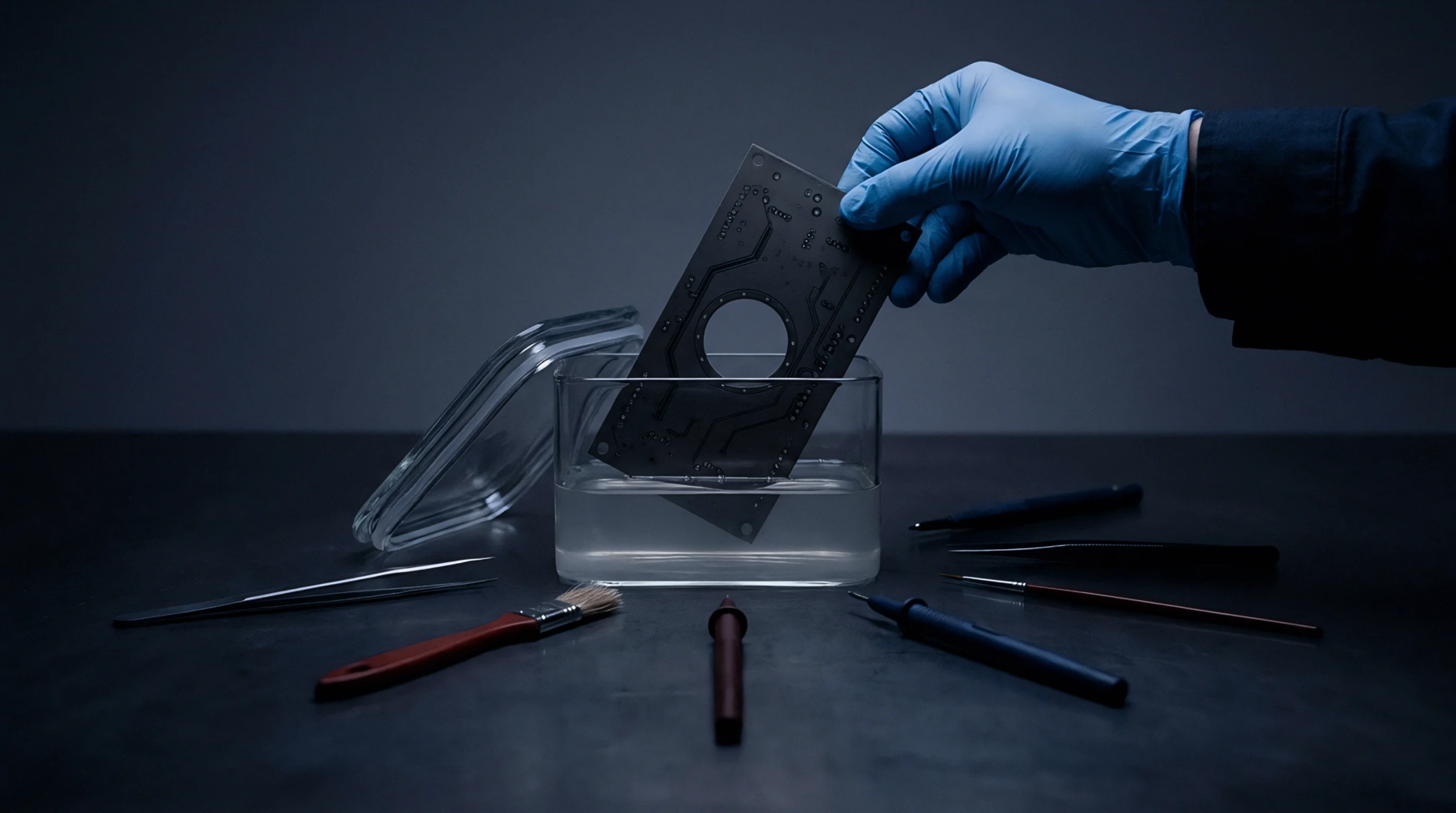
Custom machined board carriers support printed circuit assemblies through automated transport and selective wave soldering operations. When high temperatures or mechanical stresses threaten thin substrates, carrier pallet tooling stabilizes the panel geometry across conveyors. These fixtures mask surface mount components on the bottom side while exposing through-hole pin fields to molten solder alloys.
Mechanical hold-down clamps prevent board warping during thermal exposure. Solder skips or underside flooding occur when fixture tolerances degrade.
Thermal Interaction
Thermal management within wave soldering requires composite materials with low thermal expansion and low heat absorption. Durostone or synthetic resin composites isolate sensitive bottom-side components from direct contact with molten solder waves. In high-volume operations, carrier pallet tooling absorbs thermal cycles without delamination or dimensional creep.
Pallet mass directly affects preheat profiles, demanding higher top-side infrared settings to achieve target flux activation. Insufficient thermal margin leads to incomplete barrel fill on heavy multi-layer ground planes. Pallets cool down between passes to avoid cumulative preheating of successive boards.
Machining Tolerance
Dimensional accuracy in pocket machining dictates solder flow dynamics and bridge formation. Pocket wall chamfers promote laminar solder flow across open apertures. Gasket seals or silicone barriers prevent solder intrusion into masked zones.
Inspection protocols verify pocket wall flatness with coordinate measuring machines. Fixture wear appears as loose seating clips or eroded composite walls.