Calculating Landed Cost Crossover between Flying Probe and Fixture Tooling
Landed cost crossover balances fixture NRE against probe runtime fees, shifting financial advantage to fixtures once batch volume savings offset tooling costs.
Pin
Finding the economic threshold between flying probe testing and dedicated bed-of-nails fixtures comes down to weighing non-recurring engineering fees against per-unit runtime and board density. Flying probe systems avoid up to twenty thousand dollars in upfront tooling costs by steering four to eight moving test heads across pads via software vectors. The machine trades initial capital expense for longer cycle times: a complex assembly with two thousand nets often takes four to eight minutes of probe time per board.
Dedicated fixture testing flips that trade-off. A bed-of-nails fixture contacts all accessible nodes at once using custom spring probes, cutting test execution down to fifteen seconds while demanding a heavy upfront investment in mechanical fabrication. Sourcing decisions ultimately depend on finding the exact production volume where accumulated runtime costs match the initial fixture expense.
Physical access limits established by test point layout take precedence before any financial modeling starts. High-density boards often squeeze out dedicated test pads because of micro-via fanouts, fine-pitch ball grid arrays, and cramped routing. Flying probe needles can land directly on component leads, exposed surface-mount pads, and micro-vias down to four mil diameters without dedicated test lands.
Fixture spring pins, on the other hand, need defined targets. Standard bed-of-nails probes require pads thirty-five to fifty mils across, spaced seventy-five to one hundred mils center-to-center, to ensure reliable mechanical contact across a full production run.
Board layout constraints directly shape the test coverage each setup can achieve.
- Target Density Limitations dictate whether spring probes make reliable contact on dense assemblies without missing targets due to mechanical misalignment.
- Double Sided Contact Requirements double fixture complexity by requiring dual-sided clam-shell mechanisms, raising initial tooling costs.
- Topographical Keep Out Zones prevent tall electrolytic capacitors and heat sinks from colliding with probe plates during actuation.
- Component Heights Near Test Nodes force specific probe tip choices and custom relief pockets milled into the bottom fixture plates.
Buying fixture tooling too early for an unsettled board layout leads to steep cost overruns whenever design revisions hit. Moving a single component can render drilled top plates, wiring harnesses, and custom personality cards useless. Flying probe setups adapt to schematic updates simply through software revisions completed in hours.
Teams that overlook revision frequency risk paying for three separate mechanical fixtures across one build cycle.
Arithmetic
Calculating the true landed-cost crossover requires accounting for fixture fabrication, software setup, labor rates, machine hourly tariffs, and transport fees. Flying probe setups keep upfront non-recurring engineering fees low, covering just CAD translation and test vector programming. Fixture builds, by contrast, demand precision CNC drilling of G10 probe plates, custom wire-wrapping, press alignment, and physical calibration.
The resulting crossover point shifts with board complexity, test duration, and manufacturing region.
Variable Runtime Dynamics across Probe and Bed
Test execution pricing runs on opposing financial drivers. Flying probe systems carry high hourly depreciation and maintenance expenses, generating a per-board cost that scales directly with probe travel time. Bed-of-nails fixtures deliver fast cycle times where per-unit test costs stem mainly from operator loading labor.
| Cost Parameter | Flying Probe System | Dedicated Bed-of-Nails Fixture |
|---|---|---|
| Initial Non-Recurring Engineering | $300 to $1,200 | $4,500 to $18,500 |
| Unit Test Cycle Duration | 180 to 480 Seconds | 12 to 35 Seconds |
| Machine Hourly Rate | $95 to $145 | $45 to $75 |
| Engineering Change Re-Tooling | $150 per Software Update | $1,800 to $5,200 per Plate Milled |
| Tooling Physical Lifespan | Unlimited Machine Software | 100,000 to 500,000 Actuations |
Calculating the actual crossover point uses a simple balance equation: total cost equals initial tooling fees plus unit volume multiplied by individual test operational expense.
Flying probe testing achieves cost equivalence against a twelve-thousand-dollar fixture at sixteen hundred units when unit probe runtimes reach three hundred seconds.
The mathematical crossover point is reached where the total cost of flying probe testing equals that of fixture testing. Let NRE represent non-recurring engineering fees, T represent test time in hours, R represent the fully burdened hourly operational rate, and V represent total production volume.
Amortizing Fixed Tooling NRE against Batch Volumes
Setting total flying probe expense equal to total fixture expense produces the crossover volume equation:
V_crossover = (NRE_fixture – NRE_probe) / ((T_probe R_probe) – (T_fixture R_fixture))
Assuming an eight-hundred-dollar software setup fee for flying probe, a ten-thousand-eight-hundred-dollar fixture cost, a four-minute probe run at one hundred twenty dollars per hour, and a twenty-second fixture test at sixty dollars per hour makes the math concrete. Variable costs work out to eight dollars per board for flying probe and thirty-three cents for the fixture. Dividing the ten-thousand-dollar gap in non-recurring expenses by the seven-dollar-and-sixty-seven-cent savings per board places the theoretical crossover point at thirteen hundred and three units.
Volume projections below this threshold favor flying probe testing. Runs above it justify a dedicated fixture, assuming the board layout remains locked against further engineering changes.
Decisions made without accounting for physical probe wear and replacement schedules risk running over budget during long production runs.
Obsolescence
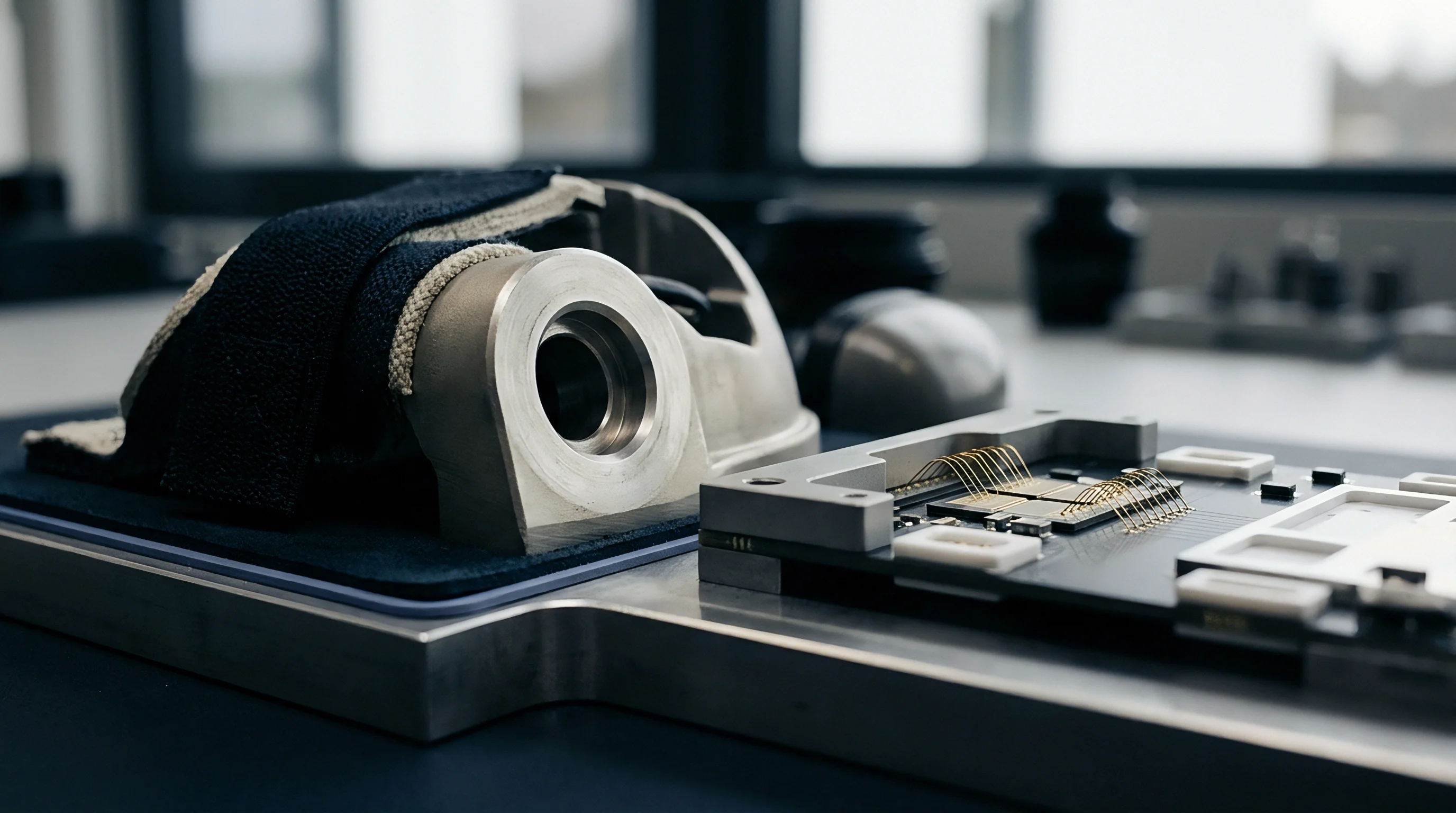
Design changes destroy fixture amortization plans by forcing physical rework. Engineering change orders triggered by component shortages, schematic tweaks, or silicon re-spins frequently alter footprints and trace routing mid-production. Flying probe setups absorb these layout shifts through digital node remapping, protecting capital investment.
Bed-of-nails fixtures require mechanical modification, probe extraction, plate re-milling, or total replacement.
Which Circuit Factors Shift the Economic Crossover Point?
Design stability determines whether a physical fixture ever reaches its planned payback period. Early-stage products average 2.4 engineering changes across their first three production runs. Factoring revision risk into landed cost calculations requires applying an obsolescence factor directly to the fixture invoice.
- Assess layout stability by auditing component lifecycle status and potential second-source footprint variations before releasing manufacturing files.
- Calculate potential fixture modification fees by requesting structured re-tooling price schedules from the contract manufacturer before signing off on tooling.
- Establish flying probe fallback programs during initial prototype runs so production can proceed if engineering change orders delay fixture delivery.
- Compare full fixture replacement charges against software re-vectoring costs whenever schematic changes alter more than five percent of total net locations.
Ignoring revision frequency artificially lowers calculated crossover thresholds. A project projected to cross over at two thousand units that undergoes a major re-spin at fifteen hundred units incurs double non-recurring engineering fees, pushing real economic crossover past thirty-five hundred units.
Contractual guarantees covering fixture modifications must specify max limits on labor charges for probe plate re-drilling.
Contract manufacturers frequently assure customers that minor layout tweaks incur minimal modification fees. On the shop floor, however, moving a single decoupling capacitor or shifting connector pitch by just one millimeter forces full probe extraction, plate re-drilling, and rewiring. Sourcing teams end up paying standard engineering rates for these mechanical fixes, adding unexpected expenses to batch invoices.
Escape
Defect detection capabilities differ significantly between flying probes and dedicated fixtures, directly impacting downstream failure costs. Flying probe machines rely on precise pin positioning to identify opens, shorts, resistance deviations, and wrong component orientations. What they lack is the simultaneous multi-node access needed for complex functional clusters, unpowered analog vectorless tests, or full-speed boundary scan routines.
Bed-of-nails fixtures energize entire circuit sections concurrently, enabling backdrive in-circuit testing, IC programming, and complex parametric validation.
Escaped defects that slip past primary electrical test manifest as system failures during final box-build assembly or in the field.
| Defect Category | Flying Probe Detection Rate | Bed-of-Nails Detection Rate | Escaped Defect Financial Impact |
|---|---|---|---|
| Solder Bridges and Shorts | 98.5% | 99.9% | $15 Rework at Board Level |
| Open Joints and Unsoldered Pins | 94.0% | 99.2% | $25 Diagnostics on Bench |
| Incorrect Passive Values | 96.0% | 98.5% | $45 Module Level Replacement |
| IC Orientation and Missing Chips | 99.0% | 99.9% | $60 Component Level Scrap |
| Functional Boundary Scan Faults | 45.0% | 95.0% | $350 System Level Field Return |
Incorporate escape costs into landed cost calculations by multiplying estimated escape percentages by the fully burdened repair cost per unit. Higher detection rates on fixture systems help offset initial tooling costs when producing high-reliability assemblies destined for automotive or aerospace applications.
IPC-9252 Class 3 requirements establish strict fault detection minimums that frequently force multi-probe or bed-of-nails execution.
Quantifying test coverage relies on mapping physical probe access against the full fault spectrum.
- Un-probed Node Populations raise field escape risks when layout constraints omit test pads on power rails or high-speed differential pairs.
- Capacitive Plate Vectorless Testing detects IC pin opens without direct physical contact, though it needs careful calibration to avoid false passes.
- Parallel Passive Component Networks limit component-level value verification unless isolation probes guard individual circuit legs.
- Substrate Flexure Strain caused by mechanical probe strikes risks cracking ceramic multilayer capacitors during high-speed flying probe runs.
Failing to account for escape costs distorts financial comparisons, making lower-cost testing look cheaper up front while dumping heavy repair burdens onto downstream assembly.
Transit
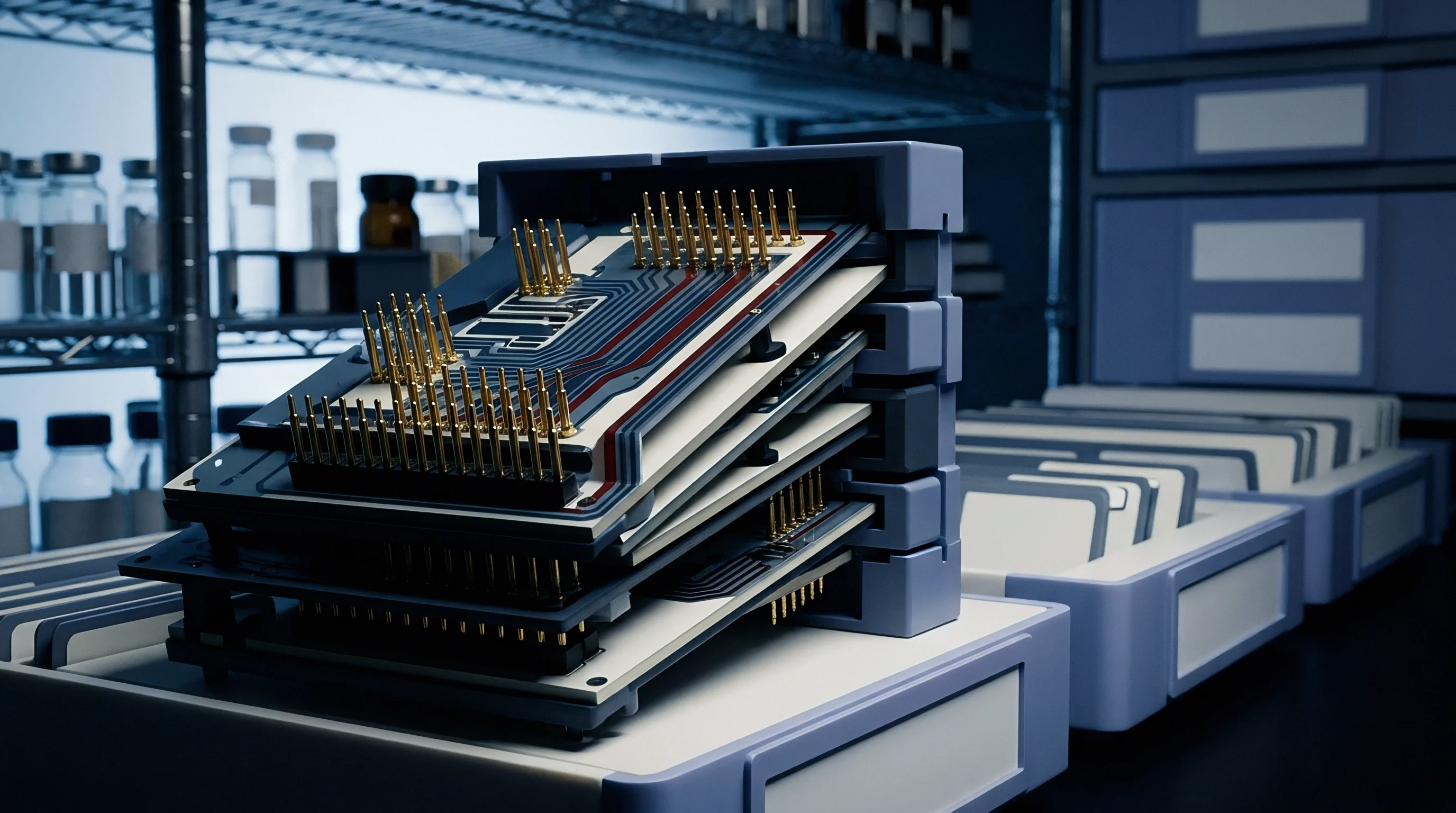
Moving custom physical tooling across international borders introduces freight tariffs, customs duties, and logistics delays that alter total landed cost calculations. Bed-of-nails fixtures are heavy, bulky assets built from precision-machined aluminum plates, dense G10 composite blocks, and heavy pneumatic press frames. A typical dual-stage fixture weighs between twenty-five and seventy kilograms, requiring reinforced packaging and specialized air freight.
Flying probe setups bypass physical shipping entirely, transferring test files digitally over secure networks to offshore facilities.
Customs authorities classify test fixtures under Harmonized System code 9030.90, applying import duty rates determined by country-of-origin rules and trade agreements. Importing a fifteen-thousand-dollar fixture into certain Asian manufacturing hubs incurs import tariffs ranging from three to eight percent, plus local value-added taxes calculated on the combined value of the fixture and international freight. These cash outflows add directly to the initial tooling investment.
Tooling assets transported cross-border accumulate freight and tariff surcharges that add up to twelve percent onto original fabrication costs.
Shipping physical fixtures between plants creates schedule risk and exposes hardware to transit stress. Vibration during international transit can misalign spring probe target plates, loosen wire-wrapped connections, or crack delicate personality interface boards. Sourcing budgets must account for recalibration and mechanical alignment once the fixture arrives at the destination plant.
Customs holds at border checkpoints pose a direct threat to tight production launch windows. A fixture held in customs for tariff clearance or documentation audits halts board production entirely. Flying probe setups eliminate physical transit risks, allowing immediate program deployment across parallel manufacturing sites worldwide.
Factoring freight logistics, customs duties, local import taxes, and potential transit damage into tooling budgets ensures landed cost models accurately reflect the real price difference between physical bed-of-nails fixtures and software-driven flying probe testing.