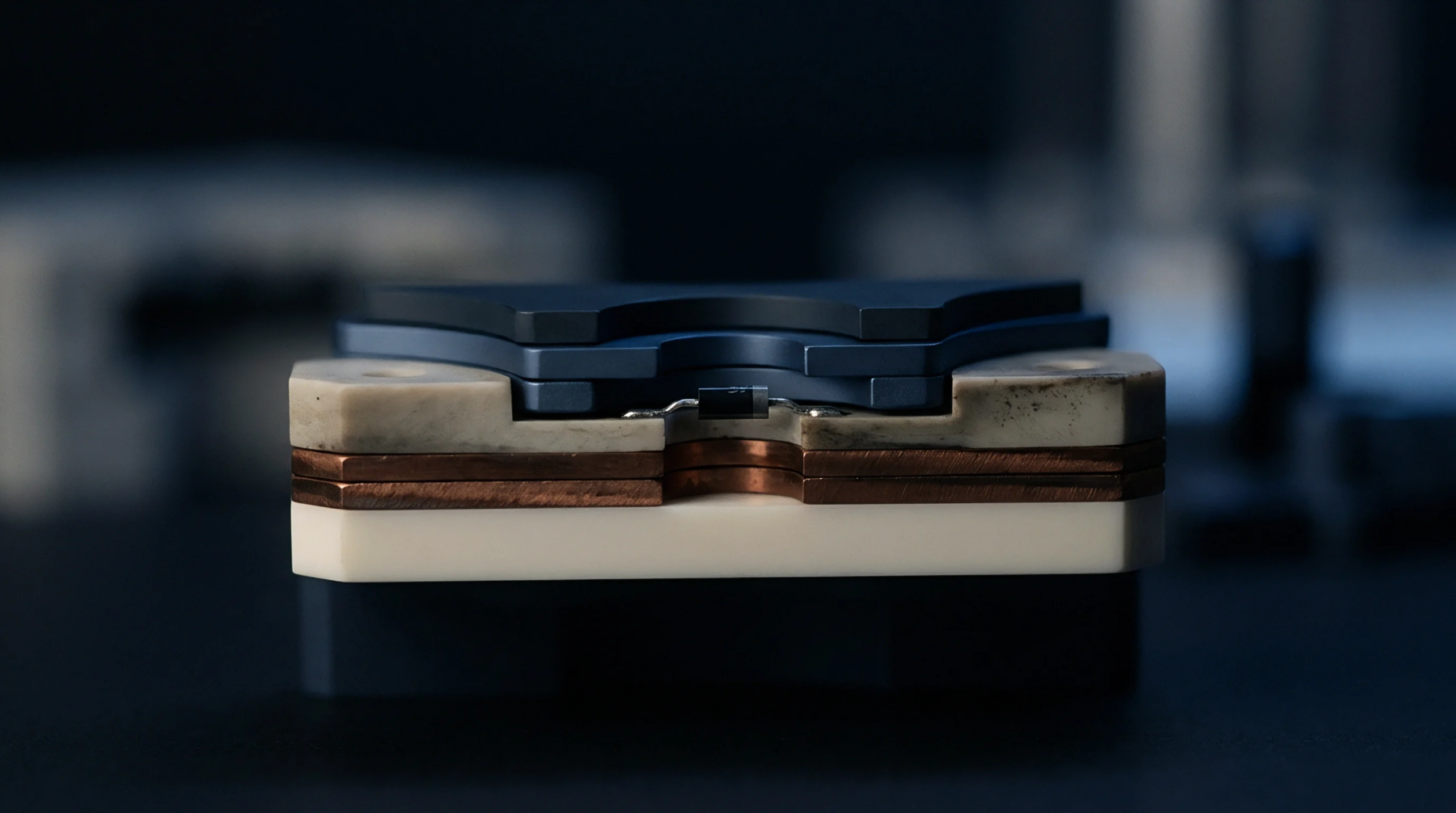
Thermal Displacement
Metal pressing tools generate mechanical strain when elevated temperatures during lamination curing force the material to grow against structural constraints. Caul plate expansion describes the dimensional change of steel sheets inside the hot press as they reach equilibrium with the platens. This physical shift occurs because the coefficient of thermal expansion for the steel exceeds that of the underlying copper and glass transition materials during the rapid heating cycle.
Precise control over these growth vectors prevents registration drift in multilayer circuits where alignment between internal layers is strict.
Strain Mitigation
Tooling designers incorporate oversized registration holes or specialized floating pins to account for these predictable movements without inducing mechanical stress on the layup. High pressure environments force the laminate to flow into the gaps created by shifting plates, which risks resin starvation at the edges of the active circuit area. Fabricators manage this phenomenon by calibrating the heat ramp rates to ensure that the steel plates reach their stable dimensions before the epoxy resin cures into a solid state.
Compensation factors remain standard for specific material thicknesses and temperature gradients during the pressing sequence.
Dimensional Accuracy
Excessive plate growth forces internal features away from their intended coordinates during the final stages of bonding. Engineers mitigate this variance through the application of controlled cooling cycles that return the steel to its nominal dimensions at a rate consistent with the shrinking laminate, ensuring that the finished panels maintain required copper feature positioning without internal board fractures or layer misalignment.