Calibrating Supersonic Expansion Nozzle Pressure for Argon Cluster Mass Distribution Profiling
Calibrating supersonic nozzle stagnation pressure sets the argon cluster size distribution, locking impact energy per atom to preserve interfacial chemistry.


Stagnation
Inlet gas reservoirs feed high-purity argon into conical apertures under regulated backing pressure. When profiling delicate electronic metallization layers or organic solderability preservatives, gas cluster ion beams preserve chemical stoichiometry only if the cluster size distribution matches the target bond energy. Monoatomic argon beams disrupt organic coatings and mix sub-surface layers through ballistic cascades.
Expanding high-pressure argon through a microscopic orifice induces rapid cooling, driving van der Waals condensation into neutral aggregates of hundreds to thousands of argon atoms. Backing pressure dictates this transition by establishing the collision frequency in the nozzle contraction zone.
Gas molecules convert random thermal motion into directed axial velocity during adiabatic expansion. As stagnation pressure rises from 0.2 megapascal to 1.5 megapascal, the molecular mean free path in the reservoir drops by an order of magnitude. This density jump drives the three-body collisions in the nozzle throat required to form cluster nuclei before downstream rarefaction sets in.
Fluctuations in supply pressure shift the condensation zone along the expansion axis, destabilizing cluster sizes before the neutral stream reaches the skimmer aperture.
Argon stagnation pressure set to 0.8 MPa at 293 Kelvin yields a condensation parameter of 1,850 and an average cluster size of 1,200 atoms.
Temperatures fall within the first few millimeters downstream of the orifice. Because the expansion proceeds isentropically, directed Mach numbers quickly exceed unity, concentrating energy into bulk longitudinal flow. Below the condensation threshold, argon exits primarily as monomers or dimers.
Upon ionization, these smaller species carry excessive kinetic energy per atom, eroding barrier films and mixing intermetallic interfaces during depth profiling.
Uncorrected line pressure drift shifts the mass distribution toward lighter fragments, resulting in crater-floor roughening and premature loss of depth resolution across test samples.
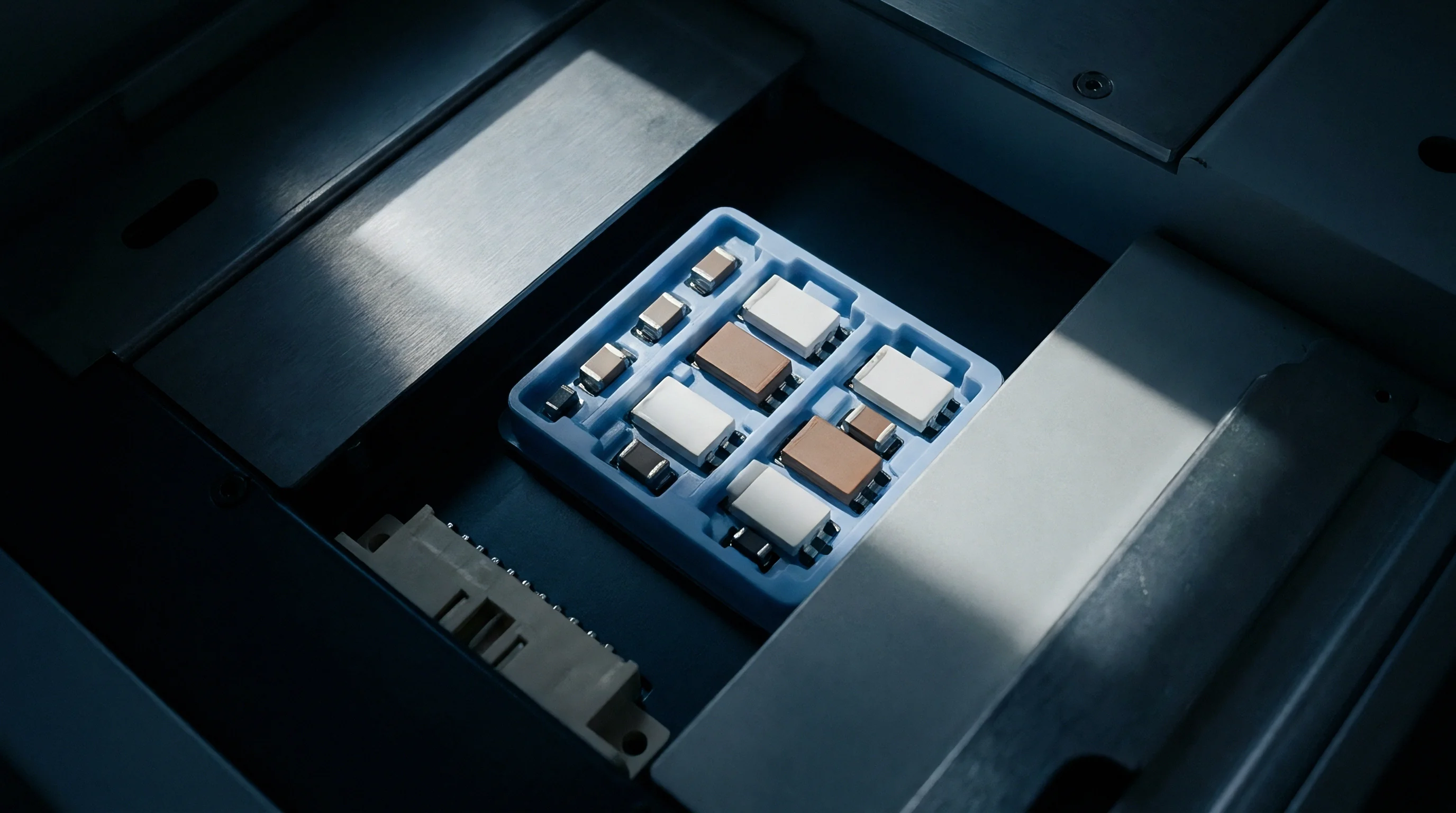

Throat
The sonic restriction marks the transition from subsonic reservoir feed to hypersonic flow, with Mach unity reached at the narrowest cross-section of the aperture. Downstream divergent cones facilitate supersonic expansion where thermodynamic cooling forces the argon into supersaturation. Sonic throat diameters, typically between 50 and 120 micrometers, establish the mass throughput alongside stagnation pressure.
Conical taper angles between ten and thirty degrees maintain stable boundary layers along the nozzle walls. If the divergent angle exceeds critical design limits, boundary layer separation triggers re-compression shocks that reheat the expanding core. The empirical Hagena parameter tracks condensation onset as a function of throat diameter, stagnation pressure, and source temperature.
Keeping operation within the cluster growth regime requires micrometer-level dimensional accuracy at the throat orifice.
Supersonic cooling drops gas temperature below condensation thresholds within ten nozzle throat diameters.
- Pre-expansion pressure stabilization isolates pneumatic supply line fluctuations to prevent erratic nucleation during beam formation.
- Thermal regulation of the source chamber maintains uniform stagnation enthalpy across extended analytical runs to prevent condensation drift.
- Differential vacuum staging exhausts unclustered background monomer loads, protecting ultra-high vacuum flight tubes from pressure surges.
- Downstream skimmer alignment samples the core supersonic stream along the centerline to prevent peripheral re-heating shocks.
Orifice wear skews mass distributions over extended campaigns, though systematic backing pressure adjustments compensate for minor throat erosion across thousands of operating hours.

Sonic Orifice Geometry and Mach Development
Divergence geometry sets the maximum Mach number the free jet can reach. Values between five and fifteen develop within two millimeters of the throat. Mach numbers in this range correspond to local temperatures below 30 Kelvin, where argon saturation vapor pressure drops toward zero.
In this regime, clusters grow via monomer accretion until rarefaction halts intermolecular collisions entirely.

Will Stagnation Enthalpy Alter Mean Cluster Size?
Source temperature offsets shift condensation thresholds across the entire expansion envelope. Raising nozzle temperature at a constant stagnation pressure lowers the Hagena parameter and reduces the average cluster size. Conversely, chilling the nozzle assembly with closed-cycle refrigeration units induces condensation at lower backing pressures, relieving gas loads on primary vacuum pumps.
| Stagnation Pressure (MPa) | Throat Diameter (μm) | Hagena Parameter | Mean Cluster Size (Atoms) | Terminal Mach Number |
|---|---|---|---|---|
| 0.20 | 80 | 460 | 120 | 6.2 |
| 0.40 | 80 | 920 | 450 | 8.5 |
| 0.60 | 80 | 1,380 | 880 | 10.1 |
| 0.80 | 80 | 1,840 | 1,350 | 11.4 |
| 1.00 | 80 | 2,300 | 1,920 | 12.3 |
| 1.20 | 80 | 2,760 | 2,600 | 13.1 |
Higher stagnation pressure shifts the mass distribution peak toward larger cluster sizes without changing the asymptotic gas velocity.


Skimmer
Conical skimmers sample the core of supersonic neutral beams while deflecting peripheral shock structures. Positioned along the central expansion axis, the skimmer isolates the zone of silence from scattered ambient gas. A barrel shock and Mach disk envelop the jet inside the expansion housing; if the skimmer tip penetrates the Mach disk, background monomers flood the stream and break apart clusters through collisional heating.
Aperture positioning relative to the nozzle exit governs neutral particle transmission. The nozzle-to-skimmer separation distance must account for boundary layer development at the selected stagnation pressure. As backing pressure increases, the Mach disk moves further downstream, accommodating longer extraction distances.
Operating outside this envelope degrades cluster size uniformity before the neutral stream reaches the ionization source.
Skimmer placement inside the zone of silence prevents background gas scattering from collapsing cluster yields.
- Mach disk detachment permits ambient monomer backstreaming into the central beam line, inducing premature cluster fragmentation.
- Orifice edge bluntness creates detached bow shocks that thermally dissociate passing argon clusters through localized viscous dissipation.
- Axial misalignment samples peripheral low-velocity gas instead of the cold supersonic core, broadening the extracted mass distribution profile.
- Chamber pressure rise causes background scattering attenuation when turbomolecular pumping speeds fall below expansion throughput.
Detached shock structures and viscous boundary heating dissociate fragile argon aggregates before extraction.

Shock Separation Distance and Core Sampling
Centerline extraction demands clean aerodynamic sectioning of the supersonic plume. Skimmer diameters between 0.3 and 1.0 millimeter balance neutral gas throughput against the pumping speed of downstream vacuum stages. An oversized aperture floods the ionization chamber with unclustered gas, increasing secondary collisions.
An undersized opening clips the core beam, dropping target ion currents below levels required for practical depth profiling.

Boundary Layer Collimation and Cluster Stripping
Peripheral shear zones shed residual background gas before the aggregates enter the ionizer. Gas striking the outer cone diverts into high-capacity roots blowers or turbomolecular pumps. Inside the skimmer aperture, the beam enters free molecular flow, freezing the cluster size distribution.
Whether non-equilibrium vibrational relaxation within large argon clusters distorts mass measurements over cryogenic drift paths remains an ongoing debate among beam metrologists.


Deflection
Electrostatic optics filter charged species by their mass-to-charge ratios. Once the neutral cluster stream clears the skimmer, an electron impact ionizer generates positive ions, dominated by single-charge cluster cations. Ionization potentials for large argon clusters level out near 15.5 electronvolts, slightly below the 15.76 electronvolt threshold of monomeric argon.
Downstream electrostatic deflection filters low-mass fragments from large clusters, fixing the kinetic energy delivered per atom to the sample surface.
Curved deflection plates establish uniform transverse fields to separate ions by momentum, sweeping unclustered monomers away from the sample axis. Retarding potential analyzers or time-of-flight drift tubes record the arrival distribution, correlating flight times with cluster mass. Adjusting the nozzle stagnation pressure tunes this distribution to avoid lattice damage on sensitive substrates.
Electron impact energies above 70 electronvolts cause multiple ionization, introducing doubly and triply charged aggregates into the flight path. These multicharged species register as smaller clusters in electrostatic analyzers, distorting the recorded mass profile. Restricting ionization to roughly 30 electronvolts alongside calibrated stagnation pressures limits fragmentation artifacts and preserves accurate distribution measurements.
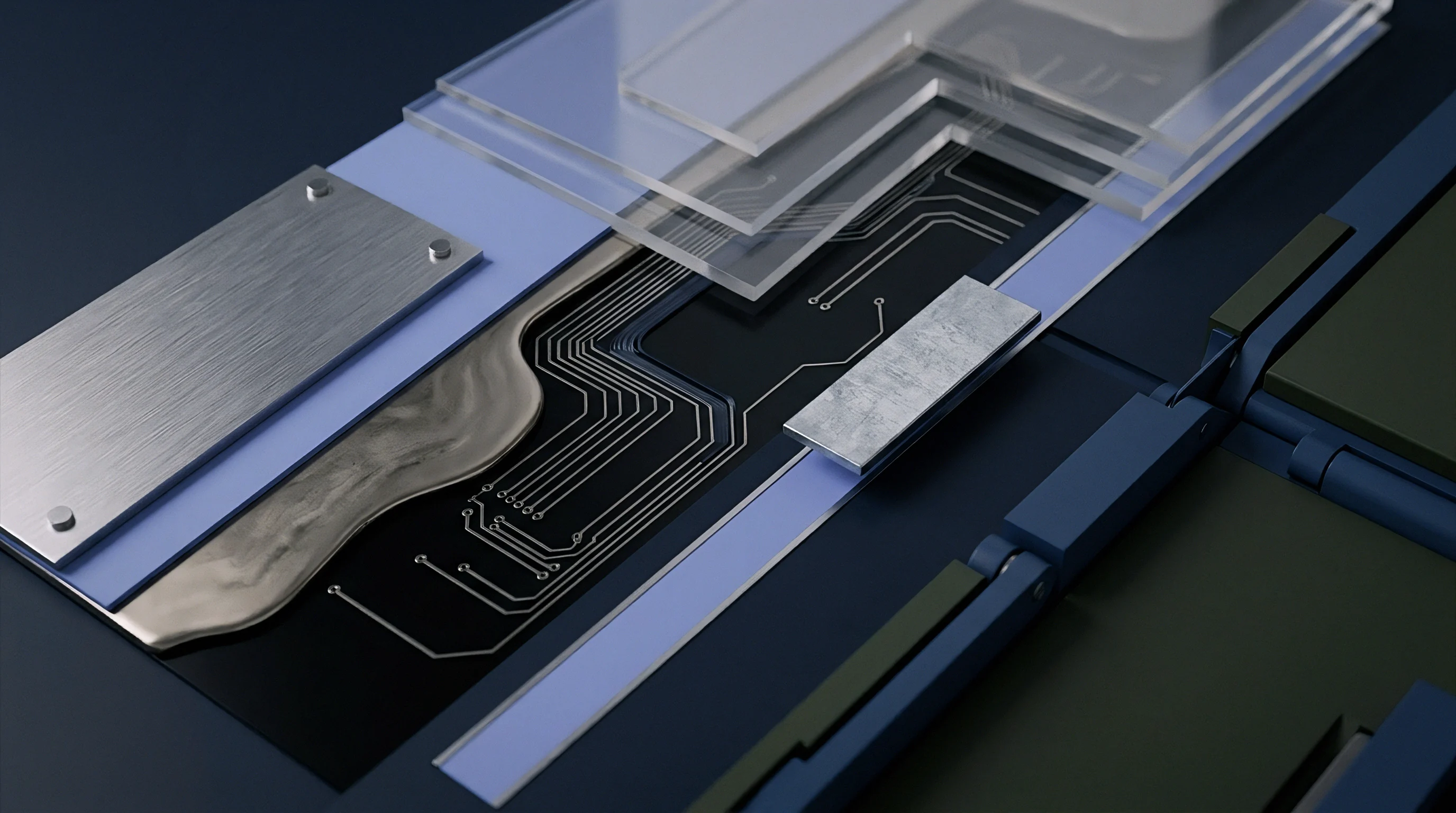
Electrostatic Sector Sizing across Mass Envelopes
Bandpass electrostatic energy analyzers isolate specified cluster size windows. In secondary ion mass spectrometry depth profiling of immersion gold surface finishes, narrow cluster distributions near Ar2000+ prevent preferential sputtering of softer components. By tuning the nozzle backing pressure to center the distribution at 2,000 atoms and biasing deflection plates to filter outliers, the ion beam delivers 2.5 electronvolts per atom at a 5 kilovolt total acceleration potential.
| Mean Size (Atoms) | Energy per Atom (eV) | Deflection Field (V/mm) | Flight Time (μs) | Sputter Yield Ratio (Ta2O5) |
|---|---|---|---|---|
| 500 | 10.0 | 310 | 42.5 | 0.45 |
| 1,000 | 5.0 | 220 | 60.1 | 0.28 |
| 2,000 | 2.5 | 155 | 85.0 | 0.14 |
| 3,000 | 1.7 | 125 | 104.1 | 0.08 |
| 5,000 | 1.0 | 98 | 134.4 | 0.03 |
Larger clusters lower the atomistic impact energy, keeping molecular bonds intact during organic interface profiling.

Should Backpressure Fluctuations Invalidate Secondary Electron Gain?
Detector stages show non-linear amplification during chamber pressure spikes. When nozzle pressure swings alter total ion flux, microchannel plates suffer localized gain depletion. This saturation distorts time-of-flight peaks, shifting the apparent distribution toward lower mass ranges.
- Coulomb explosion splits multiply charged clusters inside electrostatic sectors, producing false low-mass background signals.
- Evaporative cooling loss sheds neutral monomers during long drift paths, reducing the detected mass relative to the nozzle exit state.
- Secondary electron suppression errors distort Faraday cup current readings, creating false cluster ion density calculations.
Automatic gas regulation manifolds are specified to counteract thermal gradients along the nozzle housing, yet downstream beam current logs show persistent mass envelope drift across extended production shifts.

Settlement
Commercial acceptance of sensitive semiconductor interfaces depends on uncontaminated sputter profiling. In high-reliability PCB manufacturing, gold pad embrittlement and black pad defect audits demand sub-nanometer depth resolution across nickel-phosphorus boundary layers. Standard monoatomic sputtering drives gold atoms deep into the phosphorus-rich nickel matrix, obscuring interfacial contamination.
Calibrated gas cluster beams preserve intact layer boundaries, confirming whether corrosion or galvanic attack caused assembly failure.
Material removal rates dictate depth calculation accuracy during failure analysis. A five percent drift in nozzle stagnation pressure alters mean cluster size and shifts the sputtering yield per impact, skewing layer thickness values on cross-border quality audit reports. Conflicting interface profiles from uncalibrated beams routinely trigger commercial lot rejections.
ISO 14606 Annex B disqualifies secondary ion mass spectrometry depth profiles when ion beam current density drifts past five percent during boundary transitions.
Quality documentation records instrument backing conditions for every component audit. Batch conformity reports carry gas stagnation pressure logs alongside measured cluster arrival spectra. Traceability protocols link supplier claims directly to verified sputter rate standards on calibrated tantalum pentoxide reference foils.
| Beam Species | Energy per Atom (eV) | Interfacial Broadening (nm) | Chemical Shift Artifacts | Batch Disposition Risk |
|---|---|---|---|---|
| Ar+ Monoatomic | 3,000.0 | 8.4 | Severe chemical reduction | High false-defect rate |
| Ar500+ Cluster | 10.0 | 2.1 | Moderate bond dissociation | Borderline acceptance |
| Ar2000+ Cluster | 2.5 | 0.6 | Zero detectable reduction | Full audit compliance |
ISO 18115 Section 5 specifies that when reporting interface widths in surface chemical analysis, laboratories must state the source expansion backing pressure and verified cluster size distribution, otherwise the technical dossier fails compliance audits during commercial dispute arbitration.