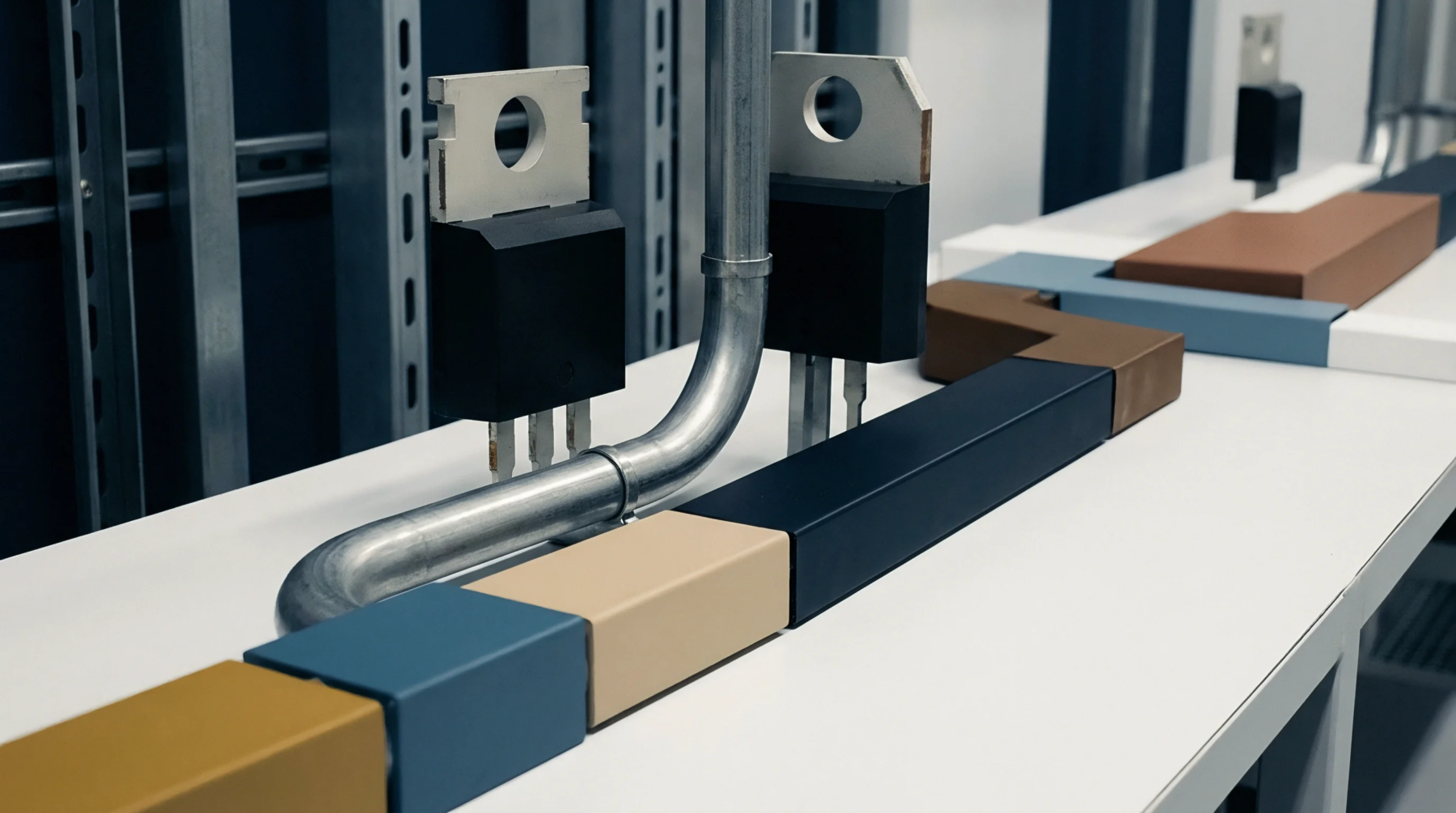
Air Insulation
Printed circuit board assembly production applies clearance and creepage parameters to govern high voltage isolation paths across bare copper routes and populated dielectric surfaces. Clearance measures the shortest distance through air between two conductive parts, while creepage calculates the shortest path along the surface of the insulating solid material between those same conductors. Automated optical inspection equipment verifies these dimensional gaps during bare board fabrication, preventing potential arc discharge events that compromise operational reliability.
Manufacturing processes maintain these specified margins until the final protective conformal coating stage seals the completed unit.
Voltage Breakdown
Dielectric property failure occurs when electric field intensity exceeds the local breakdown threshold of the surrounding medium, leading to catastrophic short circuits on the assembled printed circuit board. Moisture accumulation or airborne particulate contamination on the board surface bridges the insulating gap, reducing the effective electrical distance between adjacent high voltage nodes. High potential testing subjects the production run to targeted voltage stresses, forcing current leakage through substandard isolation boundaries before the hardware ships to customers.
Corrective tooling adjustments during the routing phase restore the required physical separation when optical verification flags a dimensional violation.
Isolation Standard
Regulatory compliance testing validates that circuit board assemblies withstand transient overvoltage spikes without sustaining permanent insulation damage. Design rules dictate minimum dimensional limits based on working voltage levels, pollution degrees and comparative tracking index ratings of the base laminate material. Safety laboratories evaluate these physical boundaries during certification testing, ensuring the hardware prevents electric shock hazards under worst case operating conditions.
Proper layout geometry ensures long term reliability across power supply electronics without relying entirely on supplementary potting compounds.